After successfully reducing emissions of pollutants like sulfur and nitrogen, the global shipping industry now is focused on ratcheting down — and eventually eliminating — its emissions of carbon dioxide (CO2) and other greenhouse gases (GHGs). It’s no easy task. Crude-oil-based bunker like low-sulfur fuel oil (LSFO) and marine gas oil (MGO) are readily available, relatively inexpensive, and pack a lot of energy into each gallon. But GHG-reduction goals are in place, both globally and in the European Union (EU), and shipping companies are taking steps to meet them, initially with more LNG-fueled vessels and later with ships powered by clean methanol, clean ammonia and biofuels. In today’s RBN blog, we discuss the shift in bunker fuel consumption since IMO 2020 was implemented five years ago and the efforts to transition to even cleaner shipping fuels through the late 2020s and beyond.
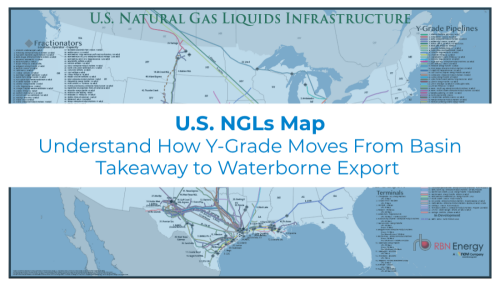
Visualize the infrastructure behind U.S. NGL movement.
The U.S. NGLs Map provides a comprehensive view of the transport, processing, and export networks moving NGLs across the U.S.
Global shipping — the 50,000-plus tankers, dry bulkers, container ships, cruise ships, and other commercial vessels plying international waters — accounts for up to 3% of the total energy consumed on the planet every day and a roughly similar share of GHG emissions. Ships operating on the high seas are subject to rules developed and implemented by the International Maritime Organization (IMO), including IMO 2020, which kicked in on January 1 of that year. As we explained in All Around the World, IMO 2020 slashed the allowable sulfur content in bunker fuel to 0.5% from the old 3.5% — quite a change, considering that shippers for many years had relied on low-cost high-sulfur fuel oil (HSFO) to meet their needs.
There had been some concern at the time that refineries would have trouble keeping pace with the rising demand for IMO-2020-compliant fuels like LSFO and MGO, but those worries were mitigated by, among other things, the efforts by many shippers to install on-board “scrubbers” that removed most of the sulfur from ships’ emissions and enabled the vessels to continue using HSFO. Also, COVID hit within a few weeks of IMO 2020’s implementation, sharply reducing demand for global shipping and bunker fuels for several months, thereby giving shipping companies and refiners more time to adjust to the new regulatory regime. Today, the market for distillates used in shipping is pretty well balanced.
The Focus on GHGs
As we said in the introduction to today’s blog, the IMO also has had GHGs on its radar. In 2018, the organization’s members approved an “initial strategy” that called for the shipping industry to begin reducing its overall GHG emissions as soon as possible and achieve a 50% reduction (from 2008 levels) by 2050. Given that shipping activity is expected to increase over that period, the strategy also called for a 40% reduction in shipping’s carbon intensity by 2030 and a 70% reduction by 2050.
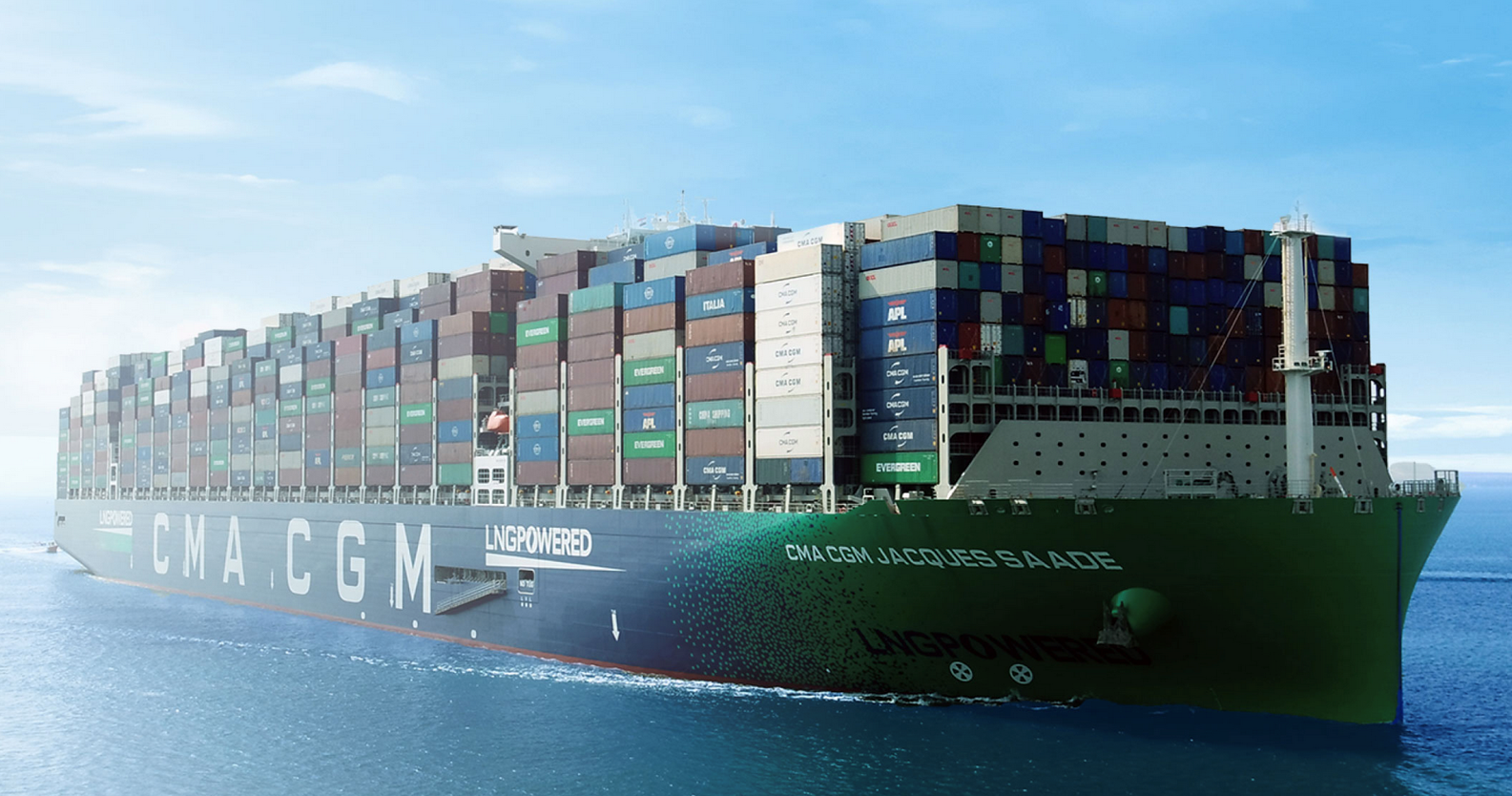
An LNG-fueled Container Ship. Source: CMA CGM

About the song
“It Don’t Come Easy” was written by Richard Starkey (Ringo Starr) and released by Ringo Starr as a non-album single in April 1971. Recorded at Trident Studios in London in March 1970, the record was produced by George Harrison. It was Starr’s first worldwide-released single since The Beatles officially broke up in 1970. It went to #4 on the Billboard Hot 100 Singles chart and has been certified Gold by the Recording Industry Association of America. It has remained Starr’s biggest hit as a solo artist. Personnel on the record were: Ringo Starr (lead vocals, drums), George Harrison (guitars), Klaus Voormann (bass), Gary Wright (piano), Ron Cattermole (sax, trumpet), Mal Evans (tambourine), Jim Keltner (maracas), and Pete Ham and Tom Evans (backing vocals).
Ringo Starr (Sir Richard Starkey) is an English drummer, singer, songwriter, musician and actor who achieved worldwide fame as the drummer for The Beatles. He joined The Beatles in 1962, replacing their drummer, Pete Best. As a member of The Beatles, Starr released 13 studio albums, five live albums, 54 compilation albums, 36 EPs, and 63 singles. As a solo artist, he has released 20 studio albums, 11 live albums, six compilation albums, three EPs, and 46 singles. Starr has been inducted into the Rock and Roll Hall of Fame twice — as a Beatle in 1988 and as a solo artist in 2015. He also been cited as the wealthiest drummer in the world, with a net worth of over $350 million. Starr continues to record and tour with his All-Starr Band, which has a revolving crew of superstar musicians. They plan on hitting the road again in June.