The demand for ethane by Alberta’s petrochemical industry has experienced a slow expansion in the past 20 or so years. However, that demand is likely to increase sharply by the end of the decade now that Dow Chemical has sanctioned a major expansion at its operations in Fort Saskatchewan, AB, that will more than double the site’s ethane requirements. As we discuss in today’s RBN blog, this will call for an “all-hands-on-deck” approach to increasing Alberta’s access to ethane supplies from numerous sources.
Visualize the infrastructure behind U.S. NGL movement.
The U.S. NGLs Map provides a comprehensive view of the transport, processing, and export networks moving NGLs across the U.S.
Long known as an energy powerhouse producing vast quantities of crude oil and natural gas, the Western Canadian province of Alberta is also, unsurprisingly, Canada’s largest producer of natural gas liquids (NGLs), which emerge from gas-focused wells with methane (the primary component of natural gas) as a “raw” gas mix. Ethane is the most abundant of the so-called NGL “purity products” that can be extracted from this raw-gas flow either at a traditional gas processing plant, at one of Alberta’s three large “straddle plants” (more on these in a moment), or at a fractionation plant that separates a mixed NGL stream into ethane, propane and other purity products.
The best use for ethane is to produce more chemically complex building blocks such as ethylene and its derivatives, including polyethylene, the prime ingredient for the production of plastics in everyday items such as bottles, bags, food packaging, and many other uses. Easy access to ethane in Alberta over the years has spurred the development of a large, world-class petrochemical industry. In fact, the province hosts one of the largest ethylene producing complexes in the world at Joffre (green dot in Figure 1 below), owned and operated by Nova Chemicals, which utilizes three ethane crackers. We estimate that the ethane intake capacity for the Joffre complex is approximately 180 Mb/d. A fourth ethane cracker is in Fort Saskatchewan (red dot); it is owned and operated by Dow Chemical and has an estimated ethane intake capacity of 95 Mb/d.
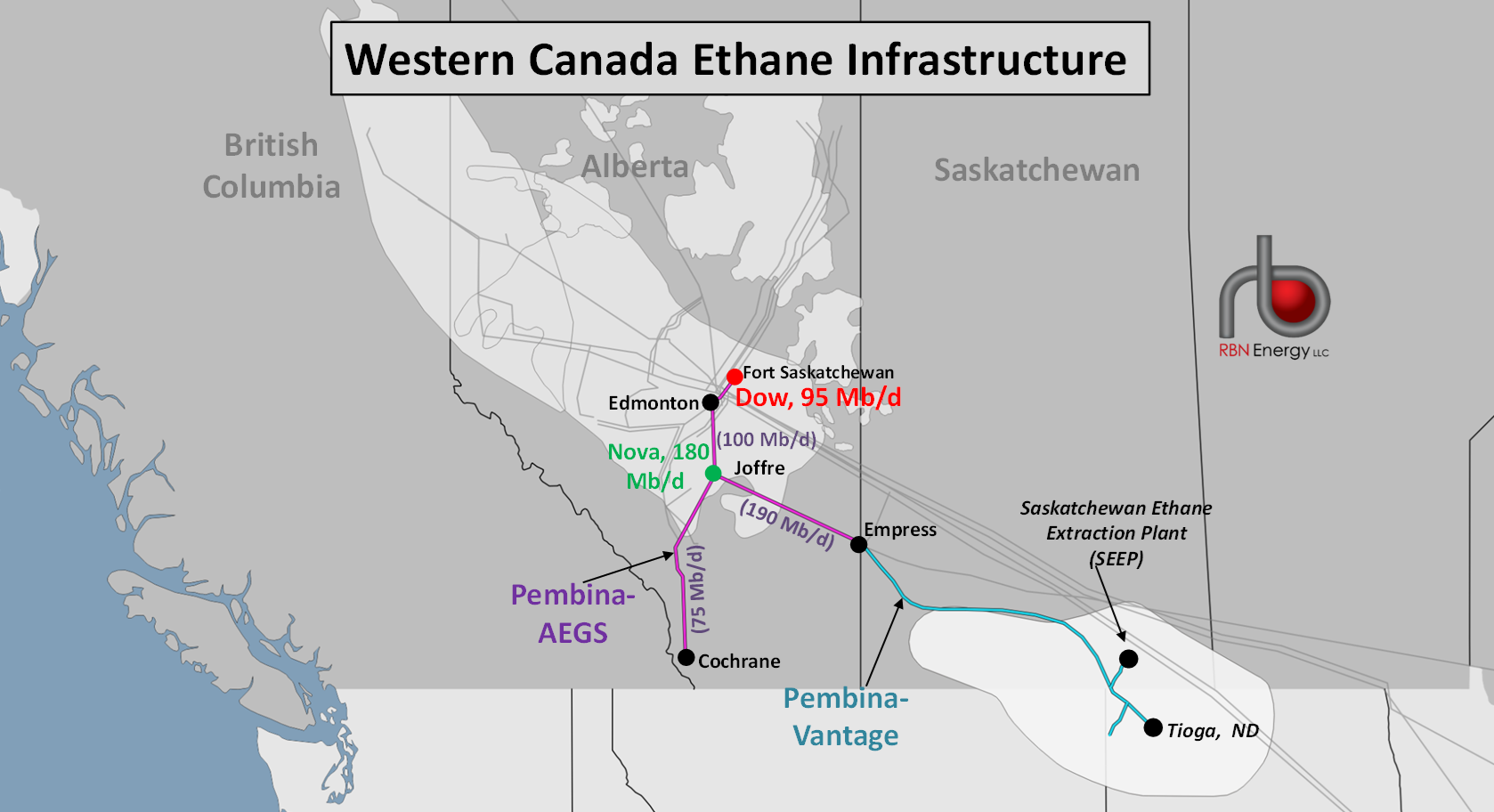
Figure 1. Western Canada Ethane Infrastructure. Source: RBN
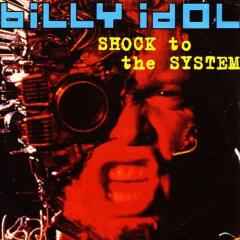
About the song
“Shock to the System” was written by Billy Idol and Mark Younger-Smith. It appears as the fourth song on Billy Idol’s fifth studio album, Cyberpunk. The song was inspired by the 1992 L.A. riots. The cyborg-themed video for the song was nominated for “Best Special Effects in a Video” and “Best Editing in a Video” at the MTV Video Music Awards in 1993. A single of the song was released in June 1993, going to #7 on the Billboard Mainstream Rock Singles chart and becoming a Top 40 hit in six countries, including the UK. Personnel on the record were: Billy Idol (vocals, keyboards, programming), Mark Younger-Smith (guitar, keyboards, programming), Robin Hancock (keyboards, programming), Jamie Muhoberac (keyboards), Doug Wimbish (bass), and Tal Bergman (drums).
Cyberpunk was recorded between April 1992-January 1993 at Billy Idol’s home studio in Los Angeles, Ameraycan in Hollywood, and Golgatha in Hawaii. Produced by Robin Hancock, the album was released in June 1993, going to #48 on the Billboard 200 Albums chart. While recovering from a bad motorcycle accident in Los Angeles in 1990, Idol started investigating cyberpunk fiction and technology. Taking a cue from his friend and rock journalist Legs McNeil, Idol decided to base his next album on a cyberpunk theme. The album was met with many negative reviews and did not fare well in sales. Four singles were released from the LP.
Billy Idol (William Michael Albert Broad) is a British and American singer, songwriter, musician and actor. He began his professional career in 1976 as the guitarist in the punk band Chelsea. In 1977 he became the lead singer in Generation X, which released three studio albums before Idol moved to New York City in 1981 to pursue a solo career. He joined forces there with guitarist Steve Stevens and ex-KISS manager Bill Aucoin. He released his first EP, Don’t Stop, in 1981. It included the hits “Dancing with Myself” and the Tommy James cover, “Mony Mony.” As a solo artist, Idol has released eight studio albums, one live album, two EPs, six compilation albums, and 37 singles. He has won one ASCAP Pop Music Award, one MTV Video Music Award, and has a star on the Hollywood Walk of Fame. He continues to record and tour as a solo artist and also performs with Generation Sex, a quartet composed of Generation X members Idol and Tony James, along with Sex Pistol members Steve Jones and Paul Cook. Idol will begin a series of solo concerts in the U.S. beginning in February 2024.