The 450-Mb/d Dakota Access Pipeline (DAPL) has broken away from the pack of out-of-the-Bakken crude takeaway projects. On August 2, Enbridge Inc., through its master limited partnership Enbridge Energy Partners, agreed to take a large stake in DAPL from Energy Transfer Partners (ETP) and Sunoco Logistics Partners (SXL), a move that suggests Enbridge’s own 225-Mb/d Sandpiper Pipeline may drop out of the race soon. Joining Enbridge in the $2 billion deal is Marathon Petroleum, its former joint venture partner and anchor shipper on Sandpiper. Today, we consider these recent developments in the long-running effort to transport North Dakota crude oil to market more efficiently.
The apparent demise of Sandpiper could potentially change the outlook for the future balance between Williston Basin production and takeaway/in-region refining capacity. In our recent With or Without You – Could the Bakken End Up with Too Much Pipeline Capacity?, we noted that during the run-up in Bakken production earlier in this decade a lot of new crude-by-rail capacity was built, as were incremental additions to pipelines. Midstream companies also made big plans for more takeaway capacity, but some of those plans were reconsidered after the plunge in oil prices that started two years ago. As a result of that price decline, Bakken production fell from 1.3 MMb/d in December 2014 to an estimated 998 Mb/d in July 2016, according to the Energy Information Administration’s (EIA’s) Drilling Productivity Report. Based on our production economics analysis, it looks like the decline in production will be continuing until prices get back above $50/bbl netback to the basin. In the meantime, some producers are taking drastic action. For example, we hear that Continental Resources will be shutting in (yes, you read that right, shutting in) about 20 Mb/d of Bakken production in September. No doubt declines in production are one reason for the pullback in new pipeline takeaway projects, leaving only about 500 Mb/d of incremental pipeline and regional refining capacity on the drawing board. But that is still a big number. If it all gets built, pipeline takeaway/refining capacity in the Bakken would total 1.35 MMb/d (excluding rail capacity). So the big question remains, is that still too much?

The NATGAS Appalachia weekly report provides the data and insights to monitor the northeast natural gas market’s twists and turns and identify the risks and opportunities along the way, including tracking supply-demand trends, outbound capacity and their impact on takeaway pipeline utilization, and regional prices.
Dakota Access Pipeline (DAPL) is the most critical factor in all of this. As shown in Figure 1, DAPL will carry at least 450 Mb/d of crude (it’s expandable to 570 Mb/d) from the heart of the Bakken 1,124 miles to the Patoka Hub in Illinois. From Patoka, Bakken crude will be able to move south on the planned Energy Transfer Crude Oil Pipeline (ETCOP) –– a reversal of an existing 30-inch-diameter natural gas pipeline that is part of the Trunkline system, plus 66 miles of new connecting pipe –– to Sunoco Logistics’ terminaling facilities in Nederland, TX. DAPL and ETCOP are the two primary element of the Bakken Pipeline system, which is currently owned by a joint venture (JV) of ETP/SXL (with a 75% stake) and Phillips 66 (with 25%). As we said, Enbridge and Marathon announced August 2 that they have formed a 75-25 JV of their own that has agreed to buy a 49% share of ETP/SXL’s 75% stake in Bakken Pipeline. For those without a calculator handy, that will divvy up the new Bakken Pipeline ownership pie like this: 38.3% ETP/SXL, 27.5% Enbridge, 25% Phillips 66, and 9.2% Marathon.
About the song
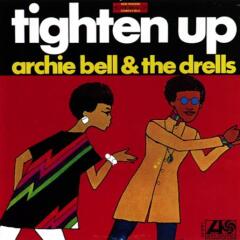
“Tighten Up” was written by Archie Bell and Billy Butler, and was originally released as a single by Archie Bell and the Drells on the Houston independent label Ovide Records in October 1967. The origins of the song start with popular KCOH-AM Houston deejay and business entrepreneur Skipper Lee Frazer hearing a two-chord funk instrumental song being played in live shows and filling the dance floor by the TSU Tornadoes. He suggested Archie Bell add some vocalizations to the tune, and Bell, with the Drells and the Tornadoes, cut the song at Jones Town Studios in Houston. Produced by LJF Productions (Skipper Lee Frazer), the Ovide Records (Frazer’s label) version quickly became a hit in the Houston market, attracting the attention of Atlantic Records, which picked it up and released it on its label in April 1968. The record then went to #1 on the Billboard Hot 100 and Hot Rhythm and Blues charts. It has been certified Gold by the Recording Industry Association of America. Personnel on the record were: the TSU Tornadoes, featuring Cal Thomas (guitar), Will Thomas (guitar), Jerry Jenkins (bass), Robert Sanders (organ), Dwight Burns (drums), Darryl Bursby (sax) and Clarence Harper (trumpet). The Drells featured: Archie Bell, James Wise, Willie Parnell and Billy Butler.
Due to the success of the single, Atlantic quickly released an album made up of songs from the Drells and Tornadoes’ Houston sessions. The Tighten Up album went to #15 on the Billboard Hot Rhythm and Blues Albums chart and #142 on the Billboard Top 200 Albums chart. Ironically, Archie Bell was serving in Vietnam as his records were on the charts. In 1968, due to an injury, Bell was reunited with his group, and the band recorded a new album with Gamble and Huff’s Philadelphia International label, which produced their second hit single, “I Can’t Stop Dancing,” which went to #9 on the Billboard Hot 100 chart.
Archie Bell and the Drells were a rhythm and blues vocal group that formed in Houston in 1966. They were active from 1966 to 1980. The group released eight studio albums and 24 singles. Archie Bell has released one solo album and three singles.