Any number of things can impact the price of specific types of crude oil at various locations — supply interruptions, takeaway constraints and refinery outages, to name just a few. Every so often, the stars align and just about all those factors narrow the differential between, say, Western Canadian Select (WCS) and West Texas Intermediate (WTI) at the U.S. Gulf Coast to near-record levels. Well, that’s happening now, for the first time in five years. In today’s RBN blog, we discuss the shockingly small WCS/WTI differential and what’s driving it.

The Natural Gas Master Class is a one-day online event focusing on understanding flow analysis, interpreting pipeline data and forecasting future flows. This course is designed to equip you with the knowledge and skills to effectively analyze the complexities of natural gas markets, flow analysis, and pipeline modeling. Join us online
October 21 | Online
In recent months, the price differential for WCS — and Access Western Blend (AWB), another grade of Canadian heavy crude that is actively traded for physical delivery to Gulf Coast refiners and exporters — have held near their narrowest values since the depths of the pandemic in 2020 (dashed red rectangle in Figure 1 below). Based on data collected in RBN’s weekly Crude Oil TradeView report, these two grades of heavy oil, priced in the spot market for physical delivery as a differential to the NYMEX-CME Calendar Month Average (CMA) crude oil price, have been sustained at discounts tighter than US$(3)/bbl under CMA since the beginning of June (dashed black rectangle).
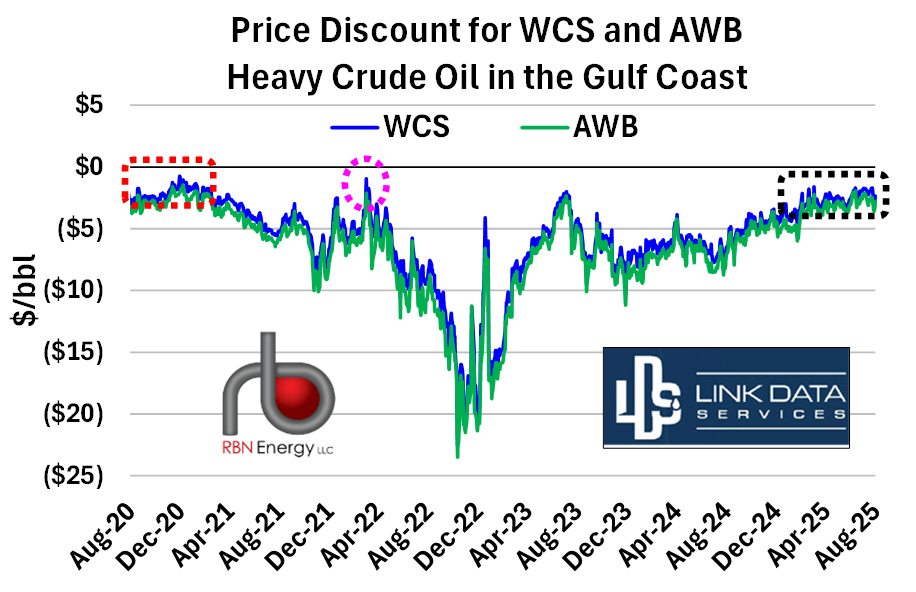
Figure 1. Price Discount for WCS and AWB Heavy Crude Oil in the Gulf Coast. Source: Crude Oil TradeView
This is the longest run of tight price differentials since the second half of 2020, when Canadian production curtailments in the wake of COVID disruptions created turmoil for the physical oil market. Only for a brief time in March 2022 (dashed pink circle) were differentials comparable to the current and 2020 tight price differential cycles. For most of the past five years, the differential has been between $(5)/bbl and $(20)/bbl, with the widest differentials coming in late 2022 and early 2023 when a host of international factors pressured the price discounts wider (see I Go to Extremes). These included the nearly yearlong sale of competing medium-sour barrels from the U.S. Strategic Petroleum Reserve (SPR) and the heavy discounting of Russian medium-sour Urals crude that came about after its invasion of Ukraine and the international sanctions on that country as a result (see Synchronicity).
About the song
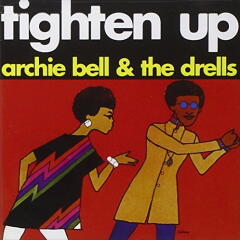
“Tighten Up” was written by Archie Bell and Billy Butler, and was originally released as a single by Archie Bell and the Drells on the Houston independent label Ovide Records in October 1967. The origins of the song start with popular KCOH-AM Houston deejay and business entrepreneur Skipper Lee Frazer hearing a two-chord funk instrumental song being played in live shows and filling the dance floor by the TSU Tornadoes. He suggested Archie Bell add some vocalizations to the tune, and Bell, with the Drells and the Tornadoes, cut the song at Jones Town Studios in Houston. Produced by LJF Productions (Skipper Lee Frazer), the Ovide Records (Frazer’s label) version quickly became a hit in the Houston market, attracting the attention of Atlantic Records, which picked it up and released it on its label in April 1968. The record then went to #1 on the Billboard Hot 100 and Hot Rhythm and Blues charts. It has been certified Gold by the Recording Industry Association of America. Personnel on the record were: the TSU Tornadoes, featuring Cal Thomas (guitar), Will Thomas (guitar), Jerry Jenkins (bass), Robert Sanders (organ), Dwight Burns (drums), Darryl Bursby (sax) and Clarence Harper (trumpet). The Drells featured: Archie Bell, James Wise, Willie Parnell and Billy Butler.
Due to the success of the single, Atlantic quickly released an album made up of songs from the Drells and Tornadoes’ Houston sessions. The Tighten Up album went to #15 on the Billboard Hot Rhythm and Blues Albums chart and #142 on the Billboard Top 200 Albums chart. Ironically, Archie Bell was serving in Vietnam as his records were on the charts. In 1968, due to an injury, Bell was reunited with his group, and the band recorded a new album with Gamble and Huff’s Philadelphia International label, which produced their second hit single, “I Can’t Stop Dancing,” which went to #9 on the Billboard Hot 100 chart.
Archie Bell and the Drells were a rhythm and blues vocal group that formed in Houston in 1966. They were active from 1966 to 1980. The group released eight studio albums and 24 singles. Archie Bell has released one solo album and three singles.