It’s been an awesome run for the Port of Corpus Christi’s crude oil export business, which captured about 60% of total U.S. volumes in 2022, up from only 28% in early 2018. But the rate of increase has slowed way down, even though shipping economics give Corpus a distinct advantage. The problem? Pipeline capacity, or more accurately, a lack thereof. The pipelines from the Permian to Corpus that were the driving force behind the Corpus export success story are filling up. The only questions are, how much time is left before the pipes are truly maxed out and what is likely to be done about it? In today’s RBN blog, we examine the data to see what it reveals about the looming capacity constraints.

Join industry leaders in Calgary on October 29 for market insights, technical presentations, Duvernay inventory analysis, an expert panel, and networking focused on the next chapter of Canadian energy.
We teed up this issue in Calling the Shots, the first episode in this series on crude oil exports, exploring why barrels move where they do and what it means for U.S. producers, midstreamers, refiners, marketers, and exporters. Figure 1 shows how much has changed over the past five years, with the map on the left indicating which terminals we include in our port aggregations, and the graph on the right showing export volumes by port area by month. Back in 2018, only about 28% of crude exports moved out of Corpus, compared with 35% coming out of Houston, 30% from Beaumont and the remainder moving out of Louisiana, including the Louisiana Offshore Oil Port (LOOP). Fast forward to 2022, and Corpus enjoyed the 60% share noted above, while Houston’s piece of the pie was down to 23% and Beaumont and Louisiana together made up only 17%.
About the song
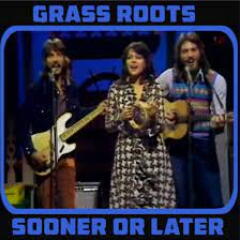
“Sooner or Later” was written by Mitchell Bottler, Edward McNamara, Adeniya and Ekundayo Paris, and Gary Zekley. It appears as the first song on side one of The Grass Roots’ third hits compilation album, Their 16 Greatest Hits. Released as a single in May 1971, it went to #9 on the Billboard Hot 100 Singles chart. The song has a Philly Soul feel to it, which is contributed in large part by songwriters McNamara and Bottler, who had penned The Grass Roots’ previous hit single, “(I’d) Wait a Million Years,” in the same vein. It was The Grass Roots’ first Top 10 hit since “Midnight Confessions,” which was released three years prior. Personnel on the record were: Rob Grill (lead, backing vocals); Dennis Provisor (lead, backing vocals, organ); Warren Enter and Creed Bratton (backing vocals); and various uncredited members of the Los Angeles Wrecking Crew session musicians.
Their 16 Greatest Hits is the third compilation album released from The Grass Roots. It was the only Grass Roots album that was also available in Quadraphonic Sound. Released in September 1971, the LP went to #58 on the Billboard 200 Albums chart and has been certified Gold by the Recording Industry Association of America. All the songs except “Sooner or Later” had appeared on The Grass Roots’ previous greatest hits albums, Golden Grass and More Golden Grass.
The Grass Roots are an American rock band formed in Los Angeles in 1965 by record producer Lou Adler and songwriters P.F. Sloan and Steve Barri. Their first single, “Where Were You When I Needed You,” featured P.F. Sloan on vocals and guitar, with Los Angeles session players Larry Knechtal on keyboards, Joe Osborn on bass, and Bones Howe on drums. Sloan and Barri were looking for a rock band that could become The Grass Roots and tour under that name. They found one in The Bedouins from San Francisco. This first version of the band lasted until 1966, when Sloan and Barri enlisted Creed Bratton, Warren Entner, Rick Coonce, and Kenny Fukomoto to become the band. Rob Grill would later replace Fukomoto. They released 11 studio albums, two live albums, seven compilation albums, and 35 singles and have sold more than 20 million records worldwide. An astounding 56 (!) members have passed through the group since its invention in 1965. Rob Grill owned the rights to the name and continued to lead the band until his death in July 2011. Rick Coonce died in February 2001. Dennis Provisor lives with his family in Wisconsin and plays in a local cover band called The Hits. Creed Bratton (William Charles Schneider) has released several solo albums and singles and is a well-known actor, having appeared in several motion pictures and television shows. He played a character based on a fictional version of himself in the hit comedy series, The Office, from 2005-13. Warren Entner became a successful manager for several high-profile rock bands, including Angel, Quiet Riot, Faith No More, Deftones, and Rage Against the Machine. A current version of The Grass Roots, authorized by the late Rob Grill to use the name, continues to tour with no original members.