Amid all the turmoil and negative news in energy markets this year, U.S. propane has been the exception, turning in a stellar performance. Even with exports up almost 10% in November from the same period last year, averaging 1.3 MMb/d for the month, inventories remain in good shape at 92.6 MMbbl, or about 5% above stocks in November 2019. Part of the reason has been strong production numbers, which are down only 5% since January, and up a whopping 14% since May. Weather has been another contributor to robust stock levels, with November 2020 coming in as one of the warmest on record. But winter is just arriving. And with export volumes now greater than total U.S. winter consumption, market dynamics have shifted. It now takes more inventory in the ground throughout the winter to support the combination of U.S. demand and exports. But how much more inventory is enough? And how should we factor in the potential for further increases in exports? At the same time, the market is still facing the possibility of another round of declining production due to COVID-related drilling cutbacks. This blog series is about making sense of what’s going on in the propane market today, and what may be coming up in the months ahead.
In Part 1, we started by showing how strong propane prices have been this year on a relative basis, meaning in comparison to crude oil. Focusing on the period between June and November, in 2019 the price of propane was only 34% of crude, while this year it has averaged a much higher 53%. (As a general rule, propane is considered to be expensive relative to crude when that ratio is above 50%, and cheaper when the ratio is below 50%.) Which begs the question, why would propane prices be so strong in 2020 when in 2019 prices were weak relative to crude?
One clue has been the magnitude of export growth relative to domestic consumption during the winter season. Total winter domestic demand has been relatively steady, ranging between just under 1.0 MMb/d in 2016-17, up to a high of almost 1.2 MMb/d in 2013-14. Demand the last couple of winters has averaged about 1.1 MMb/d. In contrast, export volumes have stepped up almost every year for the past decade — in both the summer and winter, with no discernable seasonal pattern. Exports are up from about 0.6 MMb/d in 2015 to 1.3 MMb/d in November 2020. In winter 2019-20, exports exceeded average domestic demand for the first time.

About the song
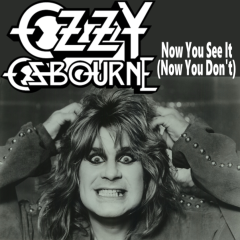
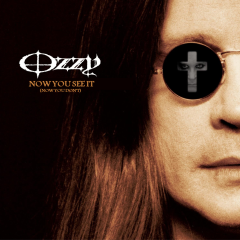
"Now You See It (Now You Don't)” is credited as being written by Ozzy Osbourne, but in fact was co-written by Bob Daisley and Ozzy Osbourne. The song appears as the third tune on Osbourne's third solo studio album, Bark at the Moon. Although all of the songwriting credits on the album are attributed to Ozzy Osbourne, bassist Bob Daisley and guitarist Jake E. Lee have said that they wrote most of the lyrics and music on the record. They claim that they signed a buyout contract with Ozzy's wife and manager Sharon Osbourne forgoing any songwriting credit on the record. Personnel on the record were: Ozzy Osbourne (vocals), Jake E. Lee (guitars, backing vocals), Bob Daisley (bass, backing vocals), Tommy Aldridge (drums), and Don Airey (keyboards).
Bark at the Moon was recorded at Ridge Farm Studios in Rusper, England, in early 1983. Produced by Ozzy Osbourne, Bob Daisley, and Max Norman, the album was released in November 1983. It went to #19 on the Billboard Top 200 Albums chart, and has been certified 3X Platinum by the Recording Industry Association of America.
Ozzy Osbourne is an English singer, songwriter, and television personality. He came to prominence as the lead singer and front man of British heavy metal band, Black Sabbath, and has also had a successful career as a solo artist. He has released 10 albums as a member of Black Sabbath, as well as 12 studio albums, five live albums, seven compilation albums, five EPs, and 63 singles as a solo artist. Osbourne has won one Grammy Award, and is a member of the Rock and Roll Hall of Fame with Black Sabbath, and the UK Music Hall of Fame as a member of Black Sabbath and as a solo artist. In the early 2000s, Osbourne became a reality television star, appearing as himself, along with wife Sharon and two of their three children, Kelly and Jack, on the hit series, The Osbournes. He still records and tours, and is currently at work with producer Andrew Watt on the follow-up album to his February 2020 release, Ordinary Man.