Understanding whether propane production is up or down over the past few months is a bit more difficult than you might think, depending on which set of EIA numbers you choose to look at. The U.S. Energy Information Administration provides monthly numbers on the last day of the month lagged by about two months, and weekly numbers on Wednesdays, lagged by only five days. Both time series are closely watched by the propane market to assess the availability of supply for retail customers, petrochemical feedstock demand, and exports. Usually, these two sets of numbers move in tandem. But not always. The monthly numbers show production down by about 70 Mb/d from April to June, which is what you would expect given what was happening with crude and gas production at that point in time. Yet EIA weekly production numbers showed production increasing by about 90 Mb/d for the same period. So which way is propane production really trending? If you want to understand what’s going on, and you don’t mind delving into some deeply wonky NGL analytics, hang on for today’s blog.
In recent weeks, we’ve done a few blogs about the changes that the U.S. propane market has been undergoing over the past few months. In our Hold on to Your Hat blog series, we talked about how propane exports from the Ridley Island Propane Export Terminal (RIPET) in British Columbia have tightened up surplus supplies that previously moved out of Alberta to U.S. markets via rail to the Midwest and Pacific Northwest — as well as through the U.S. to Mexico. It’s a similar story on the East Coast, where growing exports out of Energy Transfer’s Marcus Hook terminal near Philadelphia have been ramping up following completion of the Mariner East 2 pipeline from the Marcellus/Utica production area to the terminal in December 2018. Until then, surplus propane from the region had been fanning out by rail to the Conway, KS, NGL hub and across propane-consuming territory, all the way down to Florida. Like Alberta surpluses, exports have since dried up those Marcellus/Utica surplus rail volumes too (see Caught in the Balance).
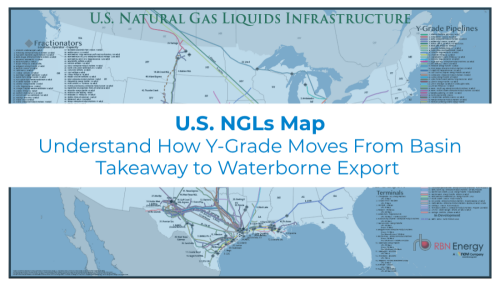
Visualize the infrastructure behind U.S. NGL movement.
The U.S. NGLs Map provides a comprehensive view of the transport, processing, and export networks moving NGLs across the U.S.
All of which makes understanding the trajectory of production growth — or decline — critically important as the market prepares for the winter of 2020-21. After all, it might actually get cold this year.
Before getting into the different stories that weekly and monthly numbers are telling us, we need to do a deep dive into what makes these two time series different, both in terms of what gets included and what the data sources for the numbers are.
About the song
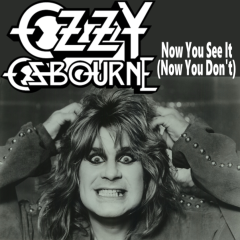
"Now You See It (Now You Don't)” is credited as being written by Ozzy Osbourne, but in fact was co-written by Bob Daisley and Ozzy Osbourne. The song appears as the third tune on Osbourne's third solo studio album, Bark at the Moon. Although all of the songwriting credits on the album are attributed to Ozzy Osbourne, bassist Bob Daisley and guitarist Jake E. Lee have said that they wrote most of the lyrics and music on the record. They claim that they signed a buyout contract with Ozzy's wife and manager Sharon Osbourne forgoing any songwriting credit on the record. Personnel on the record were: Ozzy Osbourne (vocals), Jake E. Lee (guitars, backing vocals), Bob Daisley (bass, backing vocals), Tommy Aldridge (drums), and Don Airey (keyboards).
Bark at the Moon was recorded at Ridge Farm Studios in Rusper, England, in early 1983. Produced by Ozzy Osbourne, Bob Daisley, and Max Norman, the album was released in November 1983. It went to #19 on the Billboard Top 200 Albums chart, and has been certified 3X Platinum by the Recording Industry Association of America.
Ozzy Osbourne is an English singer, songwriter, and television personality. He came to prominence as the lead singer and front man of British heavy metal band, Black Sabbath, and has also had a successful career as a solo artist. He has released 10 albums as a member of Black Sabbath, as well as 12 studio albums, five live albums, seven compilation albums, five EPs, and 63 singles as a solo artist. Osbourne has won one Grammy Award, and is a member of the Rock and Roll Hall of Fame with Black Sabbath, and the UK Music Hall of Fame as a member of Black Sabbath and as a solo artist. In the early 2000s, Osbourne became a reality television star, appearing as himself, along with wife Sharon and two of their three children, Kelly and Jack, on the hit series, The Osbournes. He still records and tours, and is currently at work with producer Andrew Watt on the follow-up album to his February 2020 release, Ordinary Man.