Back in 2015, U.S. production of superlight crude oil and condensate had been on the rise for five years, driven primarily by boom times in the Eagle Ford shale play in South Texas. Condensate was selling for several bucks-a-barrel less than light-crude benchmark West Texas Intermediate (WTI), the U.S. government had recently approved the export of minimally processed condensate, and new condensate splitters were being built to allow refineries to use more high-API-gravity liquids. Fast forward to now, though, and production of superlight crude and conde is off by one-third — the lighter the material, the steeper the decline — a barrel of conde is selling for several dollars more than WTI and a lot of those new splitters are running at far less than full capacity. As for exports of neat conde, they’ve dropped to almost zero, and whatever superlight crude and conde that is being exported goes out as part of blended crude. But things could be about to change again, possibly in a big way. Today, we begin a new blog series on the chaotic U.S. conde and superlight crude market.
Any discussion of superlight crude and condensate needs to begin with definitions, or at least attempts at definitions. First of all, crude oil isn’t a single commodity — instead, there’s a wide spectrum of crude oil types that emerge from wells, ranging from molasses-like, high-sulfur heavy crude to easily poured, sweet (or low-sulfur) superlight crude. And then there’s field (or lease) condensate, commonly called conde (rhymes with Gandhi), which is even lighter, more like cream soda. As we said in our Drill Down Report, Blinded by the Lights, crude oil and condensate are categorized by their API gravity (API standing for American Petroleum Institute), which measures (in degrees) a petroleum liquid’s density relative to water — the lighter or less dense the crude, the higher its API gravity number. We should note that each and every type of crude has value; the most complex refineries have the sophisticated equipment to break down the heaviest, sourest (highest-sulfur) crudes into gasoline, distillate and other refined products, and simpler refineries (with fewer bells and whistles) consume lighter, sweeter crudes.

Crude Oil TradeView provides up-to-date data and insights into the behavior of differentials for 33 crude assessments across North America. Each week, it also walks you through the reasoning of why differentials widen, narrow, flip (premium vs. discount), or blow out.
Just like there’s a lot of disagreement in Houston about where to find the best barbecue, Tex-Mex food or craft beer, there is no real consensus on where to draw the API-gravity line between light and superlight crude, or between superlight and condensate. For instance, some say superlight crude is 45 API or higher; some say 50 and up. While we will not take sides in debates over Houston’s best BBQ, fajitas or local brew, we will (for this blog series) define superlight crude as oil with API gravity of 50.1 to 55.0 degrees, and condensate as having API gravity of 55.1 or higher — sometimes as high as 70. These categories fit with the API gravity categories for crude collected by the Energy Information Administration (EIA).
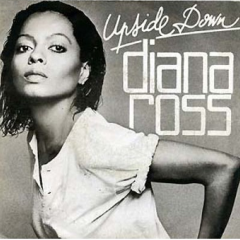
About the song
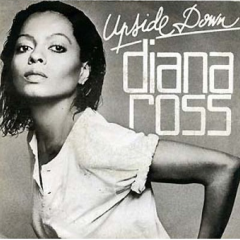
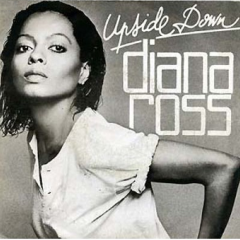
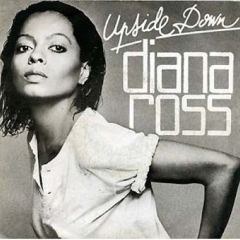
“Upside Down” was written by Nile Rodgers and Bernard Edwards (Chic) and appears as the first song on side one of Diana Ross’s 11th studio album, diana. Released as the first single from the album, the song went to #1 on the Billboard Hot 100, Disco, and Soul Singles charts. It has been certified Gold by the Recording Industry Association of America. Personnel on the record were: Diana Ross (lead vocals), Bernard Edwards (bass), Nile Rodgers (guitar), Tony Thompson (drums), Andy Barrett (piano), Raymond Jones (keyboards), and Alfa Anderson, Fonzi Thornton, Luci Martin, Michelle Cobbs (backing vocals).
Recorded between December 1979 and March 1980 at the Power Station in New York, diana was produced by Bernard Edwards and Nile Rodgers. Ross and her production team had a falling out over the mixes, and she and Russ Terrana rerecorded her vocals and remixed the album at Electric Lady in New York, and Motown/Hitsville USA studio in Hollywood. The album was released in May 1980 and went to #1 on the Billboard Top R&B/Hip-Hop Albums, and #2 on the Billboard 200 Albums charts. It has been certified Platinum by the RIAA. Three charting singles were released from the LP.
Diana Ross is an American singer, songwriter and actress from Detroit. Ross rose to fame as the lead vocalist for The Supremes, Motown’s most successful act in the ’60s. She left The Supremes in 1970 to embark on a solo career that continues to this day. As a solo artist, she has released 25 studio albums, five live albums, 30 compilation albums, one EP, four soundtrack albums, and 91 singles. As an actress, Ross has starred in five motion pictures and been featured in 35 television shows. She has won seven American Music Awards, one Grammy Award, one Golden Globe Award, and one Tony Award. She has been awarded a Lifetime Achievement Grammy Award, a Presidential Medal of Honor, a Kennedy Center Honor, and has a star on the Hollywood Walk of Fame. She still records and tours, and released her 25th studio album, Thank You, in November 2021.