We all hope that by the time you read this the operators of the ransomware-impacted Colonial Pipeline will have been able to restore service to more of the 5,500-mile refined products delivery system — maybe even to all of it. In any case, the shutdown of the Houston-to-New-Jersey pipeline system on Friday both exposes the vulnerability of the North American pipeline grid to malevolent hackers and reveals how, by its very nature, that same grid offers at least some degree of redundancy and resiliency built into it. A lot of that ability to respond to a crisis, whether it be a pipeline leak or a hack by an Eastern European criminal group called DarkSide, involves what you might call “market-inspired workarounds” — alternative suppliers reacting to an anticipated supply void and potentially higher prices by jumping into action. Today, we look at what the ransomware attack on the U.S.’s largest gasoline, diesel, and jet fuel transportation system can teach us.

It’s rare for a pipeline to top the national news, but that’s what’s been happening since Friday, when Colonial Pipeline announced that, in response to a ransomware attack, it had shut down its entire system for the first time ever. A few segments of the 13-state system have since been restored to service, but it remains unclear how long it might take to bring the rest of Colonial back online — Colonial indicated on Monday that it hopes to have most or all of the system up and running by the end of this week. As we said in Move It On Over, the 2.5-MMb/d Colonial Pipeline (yellow line in Figure 1) is a leading source of refined products supply for the states along the system’s path, including Mississippi and Alabama in PADD 3 (light green-shaded states), Tennessee in PADD 2 (tan-shaded states), and just about all of PADD 1 (blue-shaded states). Historically, Colonial has operated at or near its full capacity, with the system’s operators allocating the vast majority of the space to regular shippers using a complicated formula, with a lottery to divvy up a small portion of the system’s total capacity among new shippers (see Space Oddity for details).
The balance of the demand for motor gasoline, diesel, and jet fuel from these Colonial-dependent states is mostly met through a combination of pipeline deliveries on the 720-Mb/d Plantation Pipeline system (purple line) into the Southeast (sub-PADD 1C; sky blue-shaded states), refineries in the Mid-Atlantic (sub-PADD 1B; dark blue-shaded states and orange dots), and waterborne deliveries into PADD 1 from international sources (mostly Europe) and, when the price spread is wide enough between the two U.S. regions, from Gulf Coast ports via Jones Act-compliant tankers (see Time Will Tell for more on Jones Act shipping rates).
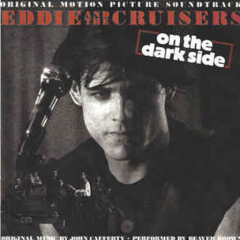
About the song
"On the Dark Side" was written by Vince DiCola and was performed by John Cafferty and The Beaver Brown Band on the Eddie and The Cruisers (Original Motion Picture Soundtrack) album. Appearing as the first track on the album, it was originally released as a single in September 1983, and only went to #64 on the Billboard Hot 100 Singles chart. However, after the movie was released on home video and pay-per-view cable in early 1984, the single was re-released and went to #1 on the Billboard Rock Tracks, and #7 on the Billboard Hot 100 Singles charts.
Cafferty and The Beaver Brown Band were a bar band performing in Providence, RI, that were hired to play the music in the film by director Martin Davidson, who was looking for a band that sounded like Bruce Springsteen and the E Street Band. Personnel on the record were: John Cafferty (vocals, guitar), Gary Gramolini (lead guitar), Pat Lupo (bass), Bobby Cotoia (keyboards), Kenny Jo Silva (drums), and Michael Antunes (sax).
The album Eddie and The Cruisers (Original Motion Picture Soundtrack) was recorded in 1982 and produced by Vince DiCola and Ed Fruge. Featuring the music of John Cafferty and The Beaver Brown Band, it was originally released in September 1983 to coincide with the film's debut. After the success of the movie on video and pay-per-view cable, the album was re-released in September 1984, and went to #13 on the Billboard Top 200 Albums chart. Two singles were released from the LP.
John Cafferty and The Beaver Brown Band are a rock band formed in Narragansett, RI, in 1972. Originally known as Beaver Brown, the band got its name from a vintage paint can. The group has released two studio albums, two soundtrack albums, three compilation albums, and 10 singles, and continues to tour.