Just a couple of years ago, TC Energy finally threw in the towel on its long-planned, long-delayed Keystone XL pipeline project, which would have substantially increased the flow of Western Canadian heavy crude to Gulf Coast refineries and export docks. It was a bitter loss. Since then, however, two other companies headquartered north of the 49th parallel have assumed leading roles in the U.S. crude oil market or, more specifically, crude exports. First, Enbridge acquired the U.S.’s #1 oil export terminal — now called the Enbridge Ingleside Energy Center (EIEC) — and related assets for US$3 billion and then, on August 1, Gibson Energy announced that it had closed on the US$1.1 billion purchase of the nearby South Texas Gateway (STG), which is #2 in crude export volumes. In today’s RBN blog, we discuss the increasing role of Canada-based midstream companies along the South Texas coast.
Canada has a way of producing great musical talent — bands like Rush and The Guess Who and singer-songwriters like Neil Young, Joni Mitchell and Shania Twain come to mind (some may also include Justin Bieber, but we won’t go there) — and the U.S. has a way of pretending that they’re really Americans, often to the chagrin of our northern neighbors. (Canadians are technically Americans, too — Canada is, after all, the largest country by area in North or South America — but we won’t go there either.) Our point is, sometimes it seems that Canada doesn’t get the respect it deserves, either in music or the energy industry. For example, since 1999, Canada has been the U.S.’s largest source of imported oil (edging out both Saudi Arabia and Venezuela that year), and in 2022 it supplied an astonishing 60% of total crude imports. (It’s nice to have a friendly neighbor you can rely on.) Canada also accounts for 99% of U.S. natural gas imports (more than 8 Bcf/d last year, on average) and helps out on LPGs as well (152 Mb/d in 2022).

The Natural Gas Master Class is a one-day online event focusing on understanding flow analysis, interpreting pipeline data and forecasting future flows. This course is designed to equip you with the knowledge and skills to effectively analyze the complexities of natural gas markets, flow analysis, and pipeline modeling. Join us online
October 21 | Online
But even great friends have their squabbles. The recent tug-of-war around Enbridge Line 5 in the Upper Midwest is ongoing, with a judge recently ordering the pipeline to be shut down within three years. But perhaps the most frustrating Canadian-American spat in recent memory was the Keystone XL battle between TC Energy (formerly known as TransCanada) and the U.S. government, which for many years made it essentially impossible for the 1,210-mile, 830-Mb/d pipeline project to advance to construction and operation. The fight to build the Alberta-to-Nebraska crude oil conduit was finally lost in January 2021, when newly inaugurated President Biden revoked the project’s Presidential Permit. TC Energy formally canceled it a few months later. Over the past couple of years, it has focused primarily on expanding the natural gas side of its pipeline business, including the construction of the 2.1-Bcf/d Coastal GasLink pipeline in British Columbia (in which TC Energy holds a 25% ownership interest) and development of the 1.3-Bcf/d Southeast Gateway pipeline in Mexico. And finally the last straw: The company in July announced plans to get out of the liquids pipeline business altogether and spin off those assets (with the existing Keystone and Marketlink pipelines) into a separate entity. Those assets may start to look attractive to companies looking to feed crude to Gulf Coast export markets.
About the song
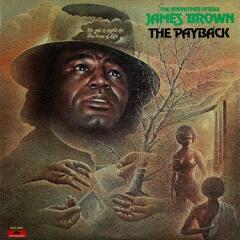
“The Payback” was written by James Brown, Fred Wesley and John Starks. It appears as the first song on Side A of James Brown’s studio album of the same name. Released as a single in February 1974, it went to #1 on the Billboard R&B Singles chart and #26 on the Billboard Hot 100 Singles chart. It has been certified Gold by the Recording Industry Association of America (RIAA). The song’s fat groove, provided by drummer Jabo Starks and bassist Fred Thomas, made the song a smash hit at dance clubs and has been sampled by many hip-hop artists over the years. Personnel on the record were: James Brown (lead vocals, electric piano), Jabo Starks (drums), Fred Thomas (bass), Jimmy Nolen, Cheese Martin (guitars), Maceo Parker (alto sax), St. Clair Pinkney (tenor sax), Fred Wesley (trombone), Hasaan Johnson, Jasaan Sanford, Ike Oakley (trumpet), and John Morgan (percussion).
The album The Payback was originally scheduled to be the soundtrack album for the film Hell Up in Harlem, but was rejected by the film’s producers. Brown released it himself and had the last laugh since it became known as a landmark album of funk music. Recorded between February and October 1973 and produced by James Brown, the album was released in December 1973 and went to #1 on the Billboard Soul Albums and #34 on the Billboard 200 Albums charts. It was certified Gold by the RIAA and two singles were released from the LP.
James Brown was an American singer and musician. One of the inventors of funk music, he is referred to as the “Godfather of Soul,” the “Hardest Working Man in Show Business,” “Mr. Dynamite” and “Soul Brother Number One.” He is an iconic figure in soul music, with a career that spanned more than five decades. He released 59 studio albums, 15 live albums, 49 compilation albums, two soundtrack albums and 144 singles. He is a member of the Rock and Roll Hall of Fame, the R&B Hall of Fame and UK Music Hall of Fame, and is a recipient of Kennedy Center Honors and a Grammy Lifetime Achievement Award. Brown died in Atlanta in December 2006 at the age of 73.