Every day, large volumes of associated gas are flared around the world, mostly because there’s not enough infrastructure in place to transport the gas to market. This isn’t just a colossal waste of energy — flaring generates a lot of carbon dioxide (CO2) and, according to a recent study, it’s only 91% efficient (on average) at zapping methane, a particularly potent greenhouse gas (GHG). But what if there was a cost-effective way to beneficially consume the gas that’s stranded in remote parts of the Permian, the Bakken and other major production areas? It turns out there is — by using the gas onsite to produce electricity to power portable, modular data centers used to support cryptocurrency mining, artificial intelligence (AI) programs like ChatGPT, and other high-tech endeavors requiring massive amounts of computation power and energy. In today’s RBN blog, we discuss the growing use of stranded natural gas as a power source for middle-of-nowhere data centers.
Crude-oil-focused producers have been flaring gas in the U.S. since the first oil was produced in western Pennsylvania more than 160 years ago. Back in the day, flaring seemed to make perfect sense. (At the time, no one really thought about the environmental fallout.) After all, there was no infrastructure in place to transport and process the volatile associated gas that emerged from wells with oil — the controlled combustion of the gas onsite made oil production much safer. Over time, if wells in a production area not too far from civilization were producing large volumes of associated gas, it made economic sense to develop gas-gathering systems and larger-diameter pipelines to deliver the gas to market. Still, gas flaring continued though to a somewhat lesser degree, both for safety and economic reasons — sometimes the gas volumes produced were too small to justify the cost of developing processing and takeaway infrastructure, and sometimes gathering and takeaway projects faced delays in securing rights of way or permits. During the Shale Era, vast amounts of gas were flared in some areas (especially the Bakken, but elsewhere too) as producers and midstreamers struggled to keep up with infrastructure needs. In 2011 and again in 2014, more than one-third of North Dakota’s produced gas was flared, spurring the state to implement rules that led to a steady ratcheting down in flared volumes to where it stands today at less than 5%.

The Natural Gas Master Class is a one-day online event focusing on understanding flow analysis, interpreting pipeline data and forecasting future flows. This course is designed to equip you with the knowledge and skills to effectively analyze the complexities of natural gas markets, flow analysis, and pipeline modeling. Join us online
October 21 | Online
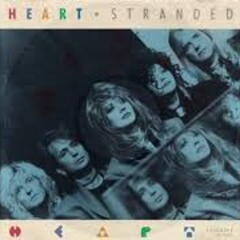
About the song
“Stranded” was written by Jaime Kyle and Jeff Harrington. It appears as the 10th song on Heart’s 10th studio album, Brigade. Released as a single in September 1990, it went to #13 on the Billboard Hot 100 Singles chart. The lead vocal on the song was sung by Nancy Wilson, and the video for the power ballad features live tour footage and many scenes of her walking alone. Heart guitarist Howard Leese makes an appearance during the guitar solo section, and one must ponder who had the highest hair in the video, Nancy or Howard. (Only the purple cans of extra-hold Aqua Net know for sure.) Personnel on the record were: Nancy Wilson (lead vocal, guitars, keyboards), Ann Wilson (backing vocals), Howard Leese (guitars, keyboards, backing vocals), Mark Andes (bass, backing vocals), Denny Carmassi (drums), Kim Bullard (keyboards), and Ritchie Zito (guitars).
Brigade was recorded in late 1989 at One on One Recording Studios in North Hollywood and A&M Studios in Hollywood, with Ritchie Zito producing. The album was released in March 1990 and went to #3 on the Billboard 200 Albums chart. Four singles were released from the LP. This album was made at the peak of the mid-1980s-to-early-’90s run of album-oriented-rock (AOR) power ballad hits for Heart. Many of the tunes on the album were written by outside writers with a focus on commercial radio success. It’s hard to believe this was the same band that had delivered hard rock hits such as “Barracuda” early on in their career. In the same way, Jefferson Airplane, the band that brought you “Crown of Creation,” evolved into one that delivered “We Built This City” (with similar financial gains). Brigade was certified 2x Platinum by the Recording Industry Association of America. MTV loved Heart and they sold millions of records during this period.
Heart is an American rock band formed in Seattle in 1973 by Roger Fisher and Steve Fasson. When they joined up with sisters Ann and Nancy Wilson, Michael Derosier and Howard Leese, the band had 1970s hits mixing hard rock with folk music. By 1982, Fisher, Fossan and Derosier had left and the band established a new popularity with a focus on power ballads and softer music. They disbanded in 1998 but have regrouped several times with the Wilson sisters being the only consistent members. With the release of the album Jupiter Darling in 2004, the band returned to Heart’s earlier hard rock roots. They have released 15 studio albums, nine live albums, nine compilation albums and 64 singles, and have sold more than 35 million records worldwide. Heart was inducted into the Rock and Roll Hall of Fame in April 2013. Twenty-seven members have passed through the band since its formation. Heart, fronted by Ann and Nancy Wilson, continues to tour.