Permian producers are churning out ever-increasing volumes of associated gas, all of which needs to find a home. New or expanded takeaway pipelines to Gulf Coast markets are an obvious option — and a few projects are in the works — but locking in capacity requires long-term commitments that many producers are loathe to make. As a result, the balance between Permian takeaway capacity and the volumes of gas that need to exit the basin is always on a knife’s edge, often resulting in a Waha basis so ugly that producers are essentially giving their gas away. But what if there was a way to put more Permian gas to good, economic use within the basin, and ideally very close to where it’s produced? Better yet, what if the producers could garner some environmental cred in the process? In today’s RBN blog, we discuss a trio of Permian projects — a couple of them involving top-tier E&Ps — that would use local gas to make gasoline, sustainable aviation fuel (SAF) and electricity.

Join industry leaders in Calgary on October 29 for market insights, technical presentations, Duvernay inventory analysis, an expert panel, and networking focused on the next chapter of Canadian energy.
Back in January, we stuck out our collective neck and provided a 2023 outlook for Permian crude oil and natural gas. It turns out — so far at least — that we were pretty much on target. (Dashed gold line in Figure 1 shows 2023 Permian gas forecast and right end of solid purple line shows actual year-to-date production.) According to RBN’s latest Crude Oil Permian and NATGAS Permian reports, August production is averaging 5.76 MMb/d and 16.8 Bcf/d, respectively — on track for the 6 MMb/d and 17.25 Bcf/d we predicted for year-end 2023. (Whew!) The point here is not to toot our own horn, but to say that Permian production continues to grow and that gas-related infrastructure in particular (gas gathering systems, gas processing plants, gas and NGL pipelines, and LNG export terminals) will need to continue to grow with it.
About the song
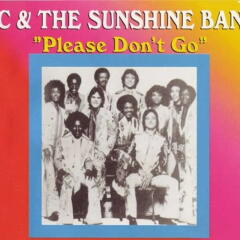
“Please Don’t Go” was written by Harry Wayne Casey (KC) and Richard Finch. It appears as the fourth song on KC and the Sunshine Band’s sixth studio album, Do You Wanna Go Party. Released as the second single from the album in July 1979, it went to #1 on the Billboard Hot 100 Singles chart. Shortly after the song’s release, the band broke up and KC started a solo career. Personnel on the record were: KC (lead vocal, keyboards), Jerome Smith (guitar), Richard Finch (bass, percussion), Robert Johnson (drums), Fermin Goytisolo (percussion), Ken Faulk, Winnie Tanno (trumpet), Jerry Peel, Joe Singer (French horn), Mike Lewis (tenor sax), Whit Sidener (baritone sax), and Beverly Champion, Donna Rhodes, Althea Tate (backing vocals).
Do You Wanna Go Party was recorded in late 1978 at TK Studios in Hialeah, FL, with Harry Wayne Casey and Richard Finch producing. The album contains the group’s last #1 single, “Please Don't Go.” Released in June 1979, the album went to #50 on the Billboard 200 Albums chart. Two singles were released from the LP.
KC and the Sunshine Band is an American disco/funk band that was formed in Hialeah, FL, in 1973. The band took its name from lead vocalist and band leader Harry Wayne Casey’s last name (KC) and the Sunshine Band came from the band’s home state of Florida, the Sunshine State. The band had a string of hits during the Disco Era in the 1970s, including six Top-10 singles. They have released 15 studio albums, two live albums, 12 compilation albums, and 49 singles. Twenty-eight members have passed through the band since its formation. Band leader and lead vocalist KC still performs concerts under the banner of KC and the Sunshine Band.