The gas that emerges from wells in U.S. shale plays differs widely in its characteristics and quality. In the aptly named “dry” Marcellus in northeastern Pennsylvania, the gas is almost all methane, with only minute volumes of NGLs and contaminants, and requires minimal treatment before it’s fed into transmission pipelines. At the other end of the spectrum, the associated gas from a subset of crude-oil-focused wells in the Permian has high levels of hydrogen sulfide (a potentially deadly chemical) and carbon dioxide (a potent greenhouse gas), as well as a lot of NGLs. If the H2S level in the gas is relatively low, it can be removed from the gas stream onsite with a chemical “scavenger,” but higher levels of H2S quickly make that method prohibitively expensive. Another alternative, an onsite amine treatment facility, is more economical for removing higher levels of H2S — and it removes CO2 as well — but air permits typically limit how much can be flared off, requiring the costly and time-consuming development of acid-gas injection wells. Yet another, more centralized approach to dealing with H2S and CO2 — one that permanently stores large volumes of both deep underground — is being implemented over the next few weeks in southeastern New Mexico, as we discuss in today’s blog.
According to our weekly NATGAS Permian report, residue natural gas production (that is, the gas left over after processing) in the extraordinarily fecund Permian Basin has been in record territory lately, regularly topping 13 Bcf/d. Given that producing crude oil is the primary aim of Permian E&Ps, the associated gas that emerges from wells in the Delaware, Central, and Midland sub-basins is of secondary concern — something to be dealt with and, if all goes well, something to goose profits, but not what gets producers up in the morning. In other words, it’s crude oil that makes the real money in the Permian, and the less complicated and less costly the associated gas side of production is to deal with, the better. That’s been especially true when local gas prices are low, as we’ve blogged about many times (see Hold on Loosely for our latest). To some degree, all this has led many Permian producers to steer clear of areas within the 70,000-square-mile play where the associated gas is what you might call “nasty,” with high concentrations of hydrogen sulfide and carbon dioxide that need to be removed before the associated gas can be piped to gas processing plants.
We should note upfront that “sour gas” is gas that has significant concentrations of H2S, and “acid gas” is any gas that has too much H2S and/or CO2, both of which can form acidic solutions when mixed with water or water vapor and cause corrosion in pipes and equipment. In the Permian, the H2S concentration in the gas emerging from wells varies widely, from only a few parts per million (ppm) to more than 100,000 ppm. (Yes, that’s 10% by volume!) Our understanding is that over 85% of the gas streams in the Permian are H2S-rich (more than 100 ppm) and over 40% are extremely rich in H2S (more than 10,000 ppm). Generally speaking, the H2S content in gas is higher in shallower geological formations, like the Guadalupian, and lower in deeper ones. The concentration is also higher in the Permian’s Central Basin than in the Midland or Delaware basins, though there are localized exceptions.

Canadian crude output is rising, requiring new export routes. As traditional pathways face constraints, the U.S. Rockies—especially the Guernsey, WY hub—are emerging as key corridors for moving Canadian heavy crude to downstream markets, including the Gulf Coast.
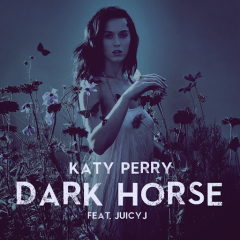
About the song
“Dark Horse” was written by Katy Perry, Jordan Houston, Lukasz Gottwald, Sarah Hudson, Max Martin and Henry Walker. It appears as the sixth cut on Katy Perry’s fourth studio album, Prism. Released as the third official single from the album in December 2013, “Dark Horse” (featuring Juicy J) went to #1 on the Billboard Hot 100 and Dance Club Songs Singles charts. It was recorded in 2013 at Playback Recording Studios in Santa Barbara, CA; MXM Studios in Stockholm, Sweden; Luke’s in the Boo in Malibu, CA; and Secret Garden Studios in Montecito, CA. It was produced by Dr. Luke, Max Martin and Cirkut. The video for the song, directed by Mathew Cullen, won Best Female Video at the 2014 MTV Video Music Awards. The song has been certified 11x Platinum by the Recording Industry Association of America (RIAA) and was the second-bestselling song worldwide in 2014. Personnel on the record were: Katy Perry (lead, backing vocals), Juicy J (featured rapper, backing vocals), Dr. Luke (programming), Max Martin (programming), and Cirkut (programming).
Prism was a prominently dance-oriented record for Katy Perry. Produced by Katy Perry, Klas Ahlund, Benny Blanco, Bloodshy, Cirkut, Dr. Luke, Greg Kurstin, Max Martin, Stargate and Greg Wells, the album was released in October 2013. It debuted at #1 on the Billboard Top 200 Albums chart, and it has been certified 2x Platinum by the RIAA. The album was nominated for a Grammy for Best Pop Vocal Album at the 57th annual Grammy Awards. Five singles were released from the LP.
Katy Perry (Kathryn Elizabeth Hudson) is an American singer, songwriter, record producer, television talent show judge and actress. She has released six studio albums, one live album, one compilation album, six EPs, and 39 singles. She has sold more than 143 million records worldwide. In September 2023, she sold her music rights to Litmus Music for an estimated $225 million. She has appeared in eight films and documentaries. She has won five American Music Awards, 11 ASCAP Awards, two Billboard Music Awards, 10 BMI Awards, one Brit Award, and four MTV Video Music Awards. Perry continues to record and perform, with her next scheduled performance at the Rock in Rio festival in Rio De Janeiro in September.