The 14 refineries in Louisiana and two just over the state line in southern Arkansas account for almost one-fifth of total U.S. refining capacity and can consume more than 3 MMb/d of crude oil from a wide range of domestic and foreign production areas. The sourcing of that crude has been shifting over the past few years and the pace of that shift is picking up as more U.S. Gulf production flows to Texas (and less flows to the Bayou State), new pipeline projects increase eastbound and southbound flows into Louisiana, and refineries modify their crude slates to optimize their economics. In today’s RBN blog, we begin a series on Louisiana’s refineries, the sourcing and delivery of their crude, and the forces that are shaking things up.
Everyone except dyed-in-the-wool Texans would admit that their Cajun and Creole neighbors in Louisiana serve better food — a feast of gumbo, jambalaya and crawfish trumps even the best brisket barbecue, right? They throw better parties, too — would you really rather go to Wurstfest in New Braunfels than Mardi Gras in the Big Easy? But let’s put those Texas vs. Louisiana rivalries aside for now because our focus in this blog series is Louisiana refineries, the crude oil they consume, where that oil comes from and how it’s delivered.
As we said in the introduction to today’s blog, there are 14 refineries in Louisiana and two in southern Arkansas. (Texas has 31!) For simplicity’s sake, the refineries can be put into one of three geographic buckets:
- Southeastern Louisiana. The eight refineries there (pink-shaded rows in Figure 1 below) have a combined capacity of more than 2.1 MMb/d; the largest by far are Marathon Petroleum’s 649-Mb/d refinery in Garyville and ExxonMobil’s 546-Mb/d facility in Baton Rouge.
- Southwestern Louisiana. The three refineries there (blue-shaded rows) — owned by CITGO, Phillips 66 and Calcasieu Refining — are all in the Lake Charles area; their capacities add up to 911 Mb/d.
- Northwestern Louisiana and Southern Arkansas. The five refineries there (green-shaded rows) are smaller — the largest is Delek US’s 85-Mb/d El Dorado Refinery (aka the Lion Oil Refinery) and two have a capacity of less than 10 Mb/d. Their combined capacity is 176 Mb/d.
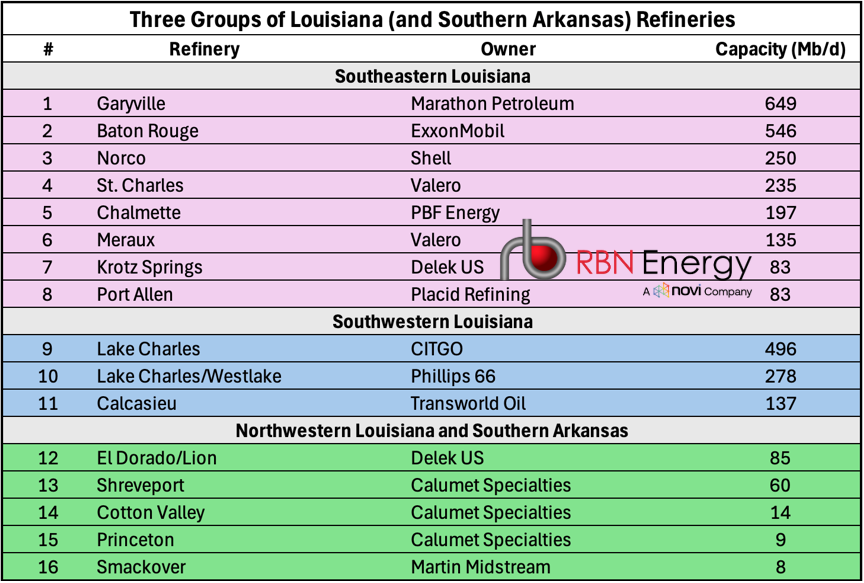
Figure 1. Three Groups of Louisiana (and Southern Arkansas) Refineries. Source: Novi Labs
Northeast Gas Demand Down as Summer Starts
Northeast gas demand declined week-on-week despite the start of summer, leading to low cash basis over the Juneteenth weekend.
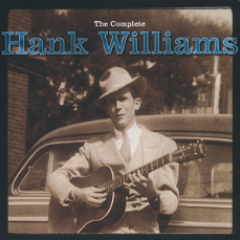
About the song
“Jambalaya (On the Bayou)” was written by Hank Williams and Moon Mullican. Williams started writing the song after hearing Cajuns on the tour bus for the Hadacol Caravan, which Williams was featured in, commenting on how they missed Cajun cooking. The melody of the song is based on the Cajun song “Grand Texas.” Williams recorded the song at Castle Studio in Nashville in June 1952. Personnel on the record were: Hank Williams (vocals, acoustic guitar), Chet Atkins (lead guitar), Chuck Wright (bass), Jerry Rivers (fiddle), and Don Helms (steel guitar). Released as a 78 RPM single in July 1952, it went to #1 on the Billboard Hot Country Singles chart and remained there for 14 weeks. The song has appeared on numerous Hank Williams compilation albums. Many artists have covered the song, including Jo Stafford, Brenda Lee, Fats Domino, and The Nitty Gritty Dirt Band. John Fogerty, under the name The Blue Ridge Rangers, released his version as a single in April 1973; it went to #16 on the Billboard Hot 100 Singles chart.
Hank Williams was an American country music singer, songwriter and musician. He is regarded as one of the most influential progenitors of the genre. When Hank sang a song, America listened. Born in Alabama, he learned guitar from blues musician Rufus Payne. Williams began his career playing in Montgomery-area venues and on local radio stations. He put out his first single, “Never Again,” on Sterling Records in January 1947, and signed a recording contract with MGM Records later that year. He released 12 studio albums, eight live albums, 25 compilation albums and 71 singles and has sold over 40 million records worldwide. Williams is a member of the Country Music Hall of Fame and the Rock and Roll Hall of Fame. Williams died of heart failure in the backseat of an Olympic Blue 1952 Cadillac convertible en route to a show in Canton, OH, on January 1, 1953. He was 29 years old.
"About the Song" -- written by Mickey McMahan , RBN Director of Musicology