


The Trump administration is trying to breathe new life into the long-dormant Alaska LNG project, talking up its strengths and encouraging potential Asian customers and investors to consider it. But the project, a multibillion-dollar plan to pipe natural gas from Alaska’s North Slope to Anchorage and Cook Inlet for liquefaction and export, faces huge financial and administrative hurdles, plus the challenges of building it in Alaska’s rugged terrain and often-harsh climate. In today’s RBN blog, we’ll examine Alaska LNG’s competitive position and whether its reduced shipping costs, coupled with federal support, might be sufficient to outweigh the construction costs and other major obstacles the project faces.

Join industry leaders in Calgary on October 29 for market insights, technical presentations, Duvernay inventory analysis, an expert panel, and networking focused on the next chapter of Canadian energy.
As we noted in Part 1 of this miniseries, President Trump’s backing has renewed interest in the long-dormant Alaska LNG project, which would enable exports of up to 20 million tons per annum (MMtpa; ~2.6 Bcf/d) and help meet local demand for gas around Cook Inlet. The concept of exporting LNG derived from Prudhoe Bay gas reserves has been a longstanding objective of the Alaska state legislature, which highly supports the project. But the effort has long been viewed with significant skepticism, given the inherent challenges of building a massive pipeline several hundred miles across the state’s mountainous midsection. Estimates put a final price tag at about $44 billion, with construction taking at least several years.
Developing and cementing the relationships needed to build any large-scale project can be challenging. We explained in our previous blog that Alaska LNG has several complicating factors to address, including securing the necessary volumes of feedgas from regional producers, the commercial structure of the pipeline, and the need to line up commitments with potential partners and offtakers. Today, we focus on the critical issues of financing the pipeline and LNG plant and its uncertain commercial prospects in a market already experiencing a glut of new U.S.-based projects looking for customers. (For a weekly analysis of North American LNG export activity and infrastructure developments, see our LNG Voyager report.)
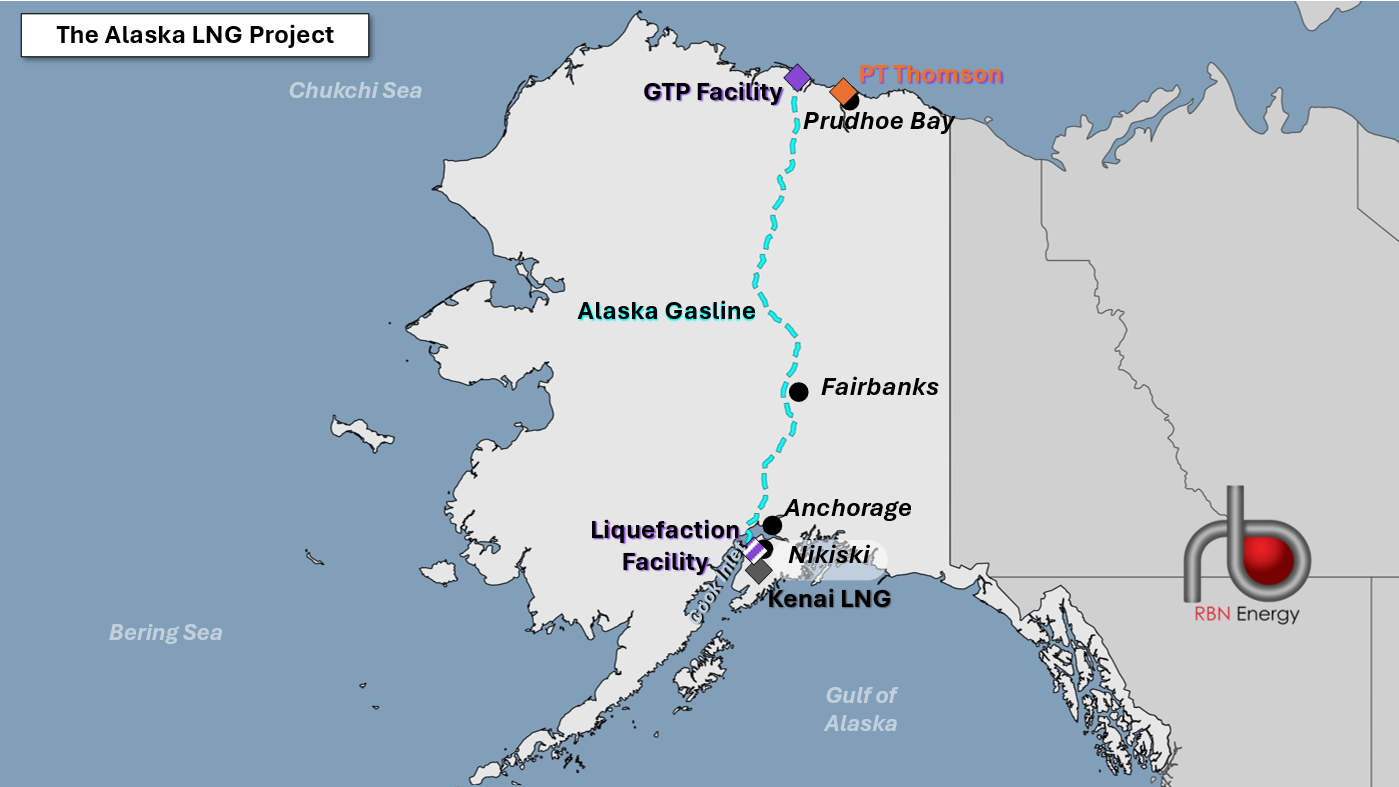
Figure 1. The Alaska LNG Project. Source: RBN
About the song
“Road to Alaska” was written by Barry and Maurice Gibb and appears as the fifth song on side two of the Bee Gees’ 10th studio album, To Whom It May Concern. Maurice Gibb’s rollicking and rambunctious bass playing propels the mid-tempo rocker that features Robin Gibb on lead vocals. Also of note is the half-cocked wah-wah solo of guitarist Alan Kendall. Personnel on the record were: Robin Gibb (lead vocals), Maurice Gibb (bass, keyboards, backing vocals), Barry Gibb (rhythm guitar, backing vocals), Alan Kendall (lead guitar) and Clem Cattini (drums).
To Whom It Mat Concern was recorded in January 1971 and January to April 1972 at IBC in London and produced by Robert Stigwood and the Bee Gees. It was the last album that the Bee Gees used IBC as their main studio. It continued the personal melancholic song narrative of their previous album, Trafalgar. Released in October 1972, it went to #35 on the Billboard 200 Albums chart. Three singles were released from the LP.
The Bee Gees were a rock vocal group formed in 1958 in Queensland, Australia, by brothers Barry, Maurice and Robin Gibb. The group wrote all of their own material. Earlier releases feature the vibrato-affected vocals of Robin Gibb, while the later disco-oriented songs featured Barry Gibb’s falsetto vocals. The group released 22 studio albums, four soundtrack albums (including the 16x Platinum Saturday Night Fever), two live albums, 15 compilation albums and 83 singles and have sold over 120 million records worldwide. They have won a Grammy Legend Award, are members of the Rock and Roll Hall of Fame, Songwriters Hall of Fame and Vocal Group Hall of Fame, and have a star on the Hollywood Walk of Fame. Maurice Gibb died in January 2003 at 53; Robin Gibb died in May 2012 at 62. The band officially retired in 2010. Barry Gibb is currently serving as executive producer on a Bee Gees biopic to be released in the future.






Comments
The article states: "puts the cost of the LNG plant itself at $29 billion."
I believe the $29 billion would include a North Slope gas conditioning plant as well as LNG tankers and is not the total for the LNG export facility. Probably on the order of $10 billion for each major component. Also, while there can be ice flows in lower Cook Inlet, Nikiski is an ice free port, so not sure if the articles conclusion on the class of tankers is on point.