This time last year, Appalachian natural gas production was approaching a steep springtime ledge as regional prices sank below economic levels and producers responded with real-time shut-ins. This year to date, regional gas prices have averaged $0.80-$0.90/MMBtu above 2020 levels for the same period, and production has been averaging more than 1 Bcf/d above year-ago levels. If production holds steady near current levels, the year-on-year gains would just about double to ~2 Bcf/d by mid-May, which is when the bulk of the springtime curtailments first took effect in 2020. This, just as Northeast demand takes its seasonal spring plunge, which means regional outflows are poised to rise in the coming weeks, potentially to record levels. How much more can the Appalachian takeaway pipelines absorb? In today’s blog, we continue our analysis of outbound capacity utilization, this time focusing on the routes to the Midwest.
This is Part 5 of our blog series breaking down the fundamental trends in the constantly evolving Appalachian gas market. In Part 1, we looked at the Northeast gas supply-demand trends that contributed to increased takeaway constraints and weaker Appalachia basis differentials in 2020, namely milder winter demand in early 2020 that led to record high storage levels, despite low rig counts and producer cutbacks in the spring and fall. Then, in Part 2, we delved deeper into Appalachian production and the disparate patterns emerging in each of the sub-regions.

The Canadian NATGAS Billboard is a weekly, early morning email and report that’s designed to keep physical and financial participants informed of the various fundamental components that make up the complex Canadian natural gas market. This service saves readers time and confusion by compiling all the most critical data points into one clear and concise report.
We shifted our focus to regional outflows and takeaway capacity utilization in Part 3, starting with a look at the record outflows during Winter Storm Uri in February, and a few weeks ago, in Part 4, we began a pipe-by-pipe analysis of Appalachia’s supply takeaway routes, starting with the Southeast and Gulf Coast corridors. From our analysis of those pipeline flows, we concluded that utilization on the six pipelines flowing south out of Appalachia averaged 80% in 2020 and was approaching 90% by the end of last year. Moreover, flows sustained at high rates through much of winter, and in March, they were averaging about 700 MMcf/d higher than last year, leaving less than 1.5 Bcf/d of upside potential for outflows heading into the spring season. Since our late-March analysis, southbound flows have fluctuated somewhat, largely driven by weather swings in the Northeast, but overall have climbed further, averaging 92% of capacity in April to date and even filling to more like 96% on some days.
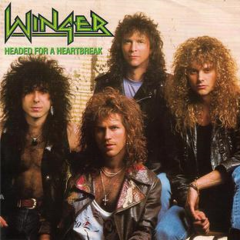
About the song
"Headed for a Heartbreak" was written by Kip Winger and appears as the 10th song on side two of Winger's debut album, Winger. Released as a single in May 1989, the song went to #19 on the Billboard Hot 100 Singles chart. Personnel on the record were: Kip Winger (lead vocals, bass, keyboards), Reb Beach (guitars, backing vocals), Paul Taylor (keyboards, backing vocals), and Rod Morgenstein (drums, backing vocals).
Winger was recorded at Atlantic Studios in New York City during 1988, with Beau Hill producing. Released in August 1988, the album went to #21 on the Billboard Top 200 Albums chart and has been certified Platinum by the Recording Industry Association of America. Four singles were released from the album.
Winger is an American hair metal band formed in New York City by Kip Winger in 1988. They have released six studio albums, one live album, two compilation albums, and eight singles. In the ’90s, the popular MTV series Beavis and Butt-Head constantly made fun of the band. This, along with the arrival of grunge, led to a fall in record sales and the dissolution of the band in 1994. The band has staged several reunion tours and released three new albums since then, the latest in 2014. Kip Winger also has a solo career, and the other band members are involved in various touring and recording projects.