Last year served as something of a bellwether for what’s to come for the Northeast gas market in the long term: increasing takeaway pipeline constraints and weakening gas price differentials by mid-decade. The region’s outflows surged to record highs in the fall of 2020 as production also reached fresh highs. Just a couple weeks ago, the region notched another milestone on the pipeline constraint yardstick: record outflows on some pipes and near-full utilization of southbound routes on the coldest days of winter — something we don’t normally see, as gas supply requirements in the Northeast peak with heating demand and less gas is available to flow out of the region. This time, the surge in outflows and the resulting constraints were driven more by spiking demand and gas prices downstream than by oversupply conditions at home, but the result was the same: the Northeast had by far the lowest prices in the country. This happened even as other regions recorded triple-digit, all-time high prices. Today, we examine how Appalachia outflows and takeaway capacity utilization shaped up during Winter Storm Uri.
Before last month’s Deep Freeze sent the commodity markets into a tizzy and dominated our attention, we had started this series on the Northeast gas market and its slow march toward becoming constrained, again, within the next five years. We return to that series today with Part 3, this time focusing on the Appalachian production basin’s pipeline takeaway flows and capacity utilization, including the impact of the Deep Freeze. To recap Part 1, until last year, Appalachian gas producers had enjoyed a two-year reprieve from the severe pipeline constraints and debilitating prices. The dog days were over, or at least on a hiatus. Takeaway capacity had finally caught up to, and briefly even exceeded, production growth as pipeline expansions were completed, and gas prices strengthened.
It didn’t last long though. In 2020, flows and pricing dynamics began showing signs of worsening pipeline takeaway constraints again due to a combination of resilient production volumes (short-term, economic shut-ins notwithstanding), lagging demand, and high storage levels. We sounded the alarm on the potential for a price meltdown by fall in our You’ve Got Your Troubles series last summer, and sure enough, Appalachian supply prices crashed in the fall of 2020, weakening relative to national benchmark Henry Hub (i.e. basis) and not only reversing the gains of the past few years but tumbling to a historic low of $0.28/MMBtu in the NGI daily gas price index on November 9. Moreover, that happened despite the rig count hitting a four-year low and shale producers’ best — even unprecedented — efforts to implement economic cutbacks in output during the spring and fall shoulder seasons. Ultimately, Northeast gas production last year managed to eke out year-on-year gains and even hit record highs by late 2020 (we discussed the production trend in more detail in Part 2), and it didn’t help that a mild winter had left a surplus in storage vs. previous years that lingered through injection season (April-October) and into early winter. As we illustrated in Part 1, record amounts of gas had to leave the region during the fall shoulder months, particularly in November, when curtailed production came back online but demand sagged due to unseasonably warm weather.

The Canadian NATGAS Billboard is a weekly, early morning email and report that’s designed to keep physical and financial participants informed of the various fundamental components that make up the complex Canadian natural gas market. This service saves readers time and confusion by compiling all the most critical data points into one clear and concise report.
About the song
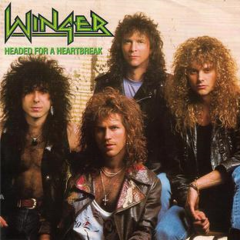
"Headed for a Heartbreak" was written by Kip Winger and appears as the 10th song on side two of Winger's debut album, Winger. Released as a single in May 1989, the song went to #19 on the Billboard Hot 100 Singles chart. Personnel on the record were: Kip Winger (lead vocals, bass, keyboards), Reb Beach (guitars, backing vocals), Paul Taylor (keyboards, backing vocals), and Rod Morgenstein (drums, backing vocals).
Winger was recorded at Atlantic Studios in New York City during 1988, with Beau Hill producing. Released in August 1988, the album went to #21 on the Billboard Top 200 Albums chart and has been certified Platinum by the Recording Industry Association of America. Four singles were released from the album.
Winger is an American hair metal band formed in New York City by Kip Winger in 1988. They have released six studio albums, one live album, two compilation albums, and eight singles. In the ’90s, the popular MTV series Beavis and Butt-Head constantly made fun of the band. This, along with the arrival of grunge, led to a fall in record sales and the dissolution of the band in 1994. The band has staged several reunion tours and released three new albums since then, the latest in 2014. Kip Winger also has a solo career, and the other band members are involved in various touring and recording projects.