Lithium is in high demand worldwide for the production of rechargeable batteries used in the rapidly expanding electric vehicle (EV) and utility-scale energy storage markets, as well as a plethora of everyday mobile devices. The problem is, there are relatively few places on the planet that offer rock formations or naturally occurring underground brine reservoirs conducive to the economic production of lithium — and even there the concentrations of lithium in the rock and brine are measured in parts per million. Now, a handful of companies in Alberta and elsewhere are exploring the potential for “direct lithium extraction” from oil and gas well brine, an alternative technique that some view as a potential breakthrough. In today’s RBN blog, we discuss the promise — and potential pitfalls — of lithium production from oil and gas brine.
They seem to be with us wherever we go — or don’t go — these days. Our digitized, wireless and cordless world has produced billions of devices in the form of smartphones, laptops, tablets, drills, grass trimmers, lawn mowers and, yes, even EVs, all of which are becoming so commonplace that we do not even seem to notice them anymore. You might be able to quickly come up with at least a couple of dozen other examples, but they all have something in common: rechargeable batteries that allow them to be used on the go without the fuss of being constantly plugged into an electric outlet or relying on a hydrocarbon-based fuel as part of an internal-combustion process. Also, utility-scale energy storage has been catching on in a big way — it involves series of massive, rechargeable batteries that sock away (mostly) renewable energy for use when demand peaks.

The steadily evolving energy transition will require a tremendous deployment of rechargeable batteries, especially for the rapidly increasing production of EVs as well as the power stations intended to balance renewable generation with load. The batteries that make it all possible likely contain lithium, one of the most in-demand metals on the planet and, so far, one of the best substances known to hold an electric charge for a reasonable length of time and be recharged almost as many times as needed.
Based on data from the U.S. Geological Survey’s (USGS) Annual Mineral Commodity Summaries, use in batteries constituted 74% of all lithium demand in 2021, up from a 39% share in 2016 and 27% in 2011 (left chart in Figure 1). Excluding U.S. output, which the USGS does not disclose, global production of lithium from all other countries has risen from 34,000 metric tons (MT) in 2011 to the USGS estimate of more than 100,000 MT in 2021 (green bars in right chart). Data from the Nevada Division of Minerals (NDM) reports lithium production of 1,160 MT in 2021, up from 759 MT in 2016 and well above the 271 MT produced in 2011. (The only active U.S. lithium production facility is in Nevada.) That would put U.S. production of lithium at less than 1% of global output. (Note that we have added in the NDM’s estimate of US lithium production to the charts in Figure 1.)
About the song
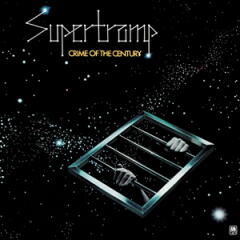
“Crime of the Century” was written by Rick Davies and appears as the fourth song on side two of Supertramp’s third studio album of the same name. Personnel on the record were: Rick Davies (vocals, Wurlitzer electric piano, acoustic piano, Hammond organ, synthesizers, harmonica), Rodger Hodgson (vocals, guitar, Wurlitzer electric piano, acoustic piano), John Anthony Helliwell (sax, clarinet, backing vocals), Dougie Thomson (bass), and Bob Siebenberg (drums, percussion).
The album, Crime of the Century, was recorded between February-June 1974 at Trident, Ramport Studios, and Scorpio Sound in London. Produced by Ken Scott and Supertramp, it was released in September 1974. The album went to #38 on the Billboard 200 Albums chart and has been certified Gold by the Recording Industry Association of America. Three singles were released from the LP, including “Bloody Well Right,” which went to #35 on the Billboard Hot 100 Singles chart.
Supertramp were an English rock band formed in London in 1969 by Roger Hodgson and Rick Davies. They were known for blending progressive rock with pop sensibilities which relied heavily on the sound of overdriven Wurlitzer electric pianos. They released eleven studio albums, six live albums, four compilation albums, and 26 singles. Roger Hodgson left the band in 1996, and Rick Davies continued the band with various personnel until 2015, when he acquired some health problems. Nineteen people have passed through Supertramp since its inception. Co-founder Roger Hodgson has released five studio albums since leaving the band and still tours occasionally as a solo artist.