Western Canadian natural gas producers are increasingly facing oversupply conditions and price volatility. While competition and pushback from growing U.S. shale gas supply continues to be a factor, producers are now also contending with fresh problems closer to home — namely transportation constraints right where production is growing the most, in central Alberta. This fall, the Alberta market experienced extreme bottlenecks that left production stranded and sent area gas prices reeling. The ramp-up of winter heating demand has since helped ease the constraints, but the problems are likely to return in the spring when demand is lower, leaving producers exposed to the risk of severe price weakness again in 2018 and limited in their ability to grow supply. Today, we continue our look at what’s behind the local constraints and the implications for production growth and prices in Western Canada.
This is Part 2 of our series on the Western Canadian gas market. In Part 1, we began with a macro view of the region. Prices at the national benchmark trading hub AECO in Alberta had a wild ride this fall. In recent months, we’ve seen prices swing by $1 or more from one day to the next (on a $1-2/MMBtu full price), settle at 10-year lows and even sell for less than zero for the first time ever in intraday trading. To understand the market dynamics behind the price volatility and weakness, we started with a look at the region’s supply and demand dynamics.
On the supply side, we noted that Canadian gas production has rebounded in the last several years and is currently at 10-year highs. National Energy Board (NEB) has total Canadian gas production averaging about 15.5 Bcf/d this year to date, which is the highest annual average since 2008. Moreover, PointLogic Energy estimates that, based on pipeline flow data, production receipts since November 1 (2017) have ramped up to well over 16 Bcf/d after new firm transportation capacity contracts kicked in on TransCanada’s regional pipeline systems. At the same time, domestic demand — for gas used in the oil sands production process and the power generation sector — has been growing, but not quite as fast as production. Then, there’s exports to the U.S. — the other major demand source for Canadian producers –– which have retreated to an average 5.4 Bcf/d this year to date, compared to 5.9 Bcf/d in 2016. The resulting balance from higher production and flat to lower demand has meant that storage has been near 5-year highs and at more than 90% of capacity.
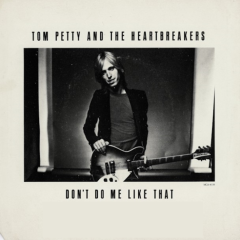
About the song
"Don't Do Me Like That" was written by Tom Petty and originally cut in 1975 at Shelter Records’ The Church Studio in Tulsa, OK, as a demo by his band from Gainesville, FL, called Mudcrutch. Mudcrutch members included future Heartbreakers Mike Campbell and Benmont Tench. That same year, Mudcrutch, along with Gainesville friend Charlie Souza on bass, made their only live appearance at The Cain's Ballroom in Tulsa, opening for country-swing band Asleep at the Wheel. Shelter co-owner & producer Denny Cordell pitched the song to the J. Geils Band to record as a single in 1975, but they passed on it, only to see it go to #10 on the Billboard Hot 100 in 1979, as the first single to be released from Tom Petty and the Heartbreakers’ third album, titled Damn the Torpedoes. It was also the first top 10 single for Tom Petty and the Heartbreakers and became a popular song in their live shows.