



The options for moving Western Canada’s natural gas supply out of the region are limited. This situation has become more acute in the past few years with the upswing in associated gas production from specific areas within the sprawling region, meaning that not all the takeaway pipelines are created equal in terms of being able to move this incremental gas supply to downstream markets. One pipeline system — TC Energy’s mammoth Nova Gas Transmission Ltd. (NGTL) network — is ideally located to help out, given that big parts of it run through the fastest-growing production areas. But it’s been running full and is increasingly constrained. Will the planned expansions to the NGTL system be enough? Today, we continue our series on the Western Canadian natural gas market with a look at TC Energy’s NGTL network, the largest and most geographically advantaged of the pipeline systems in the region.
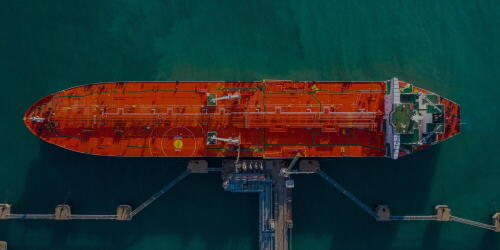
The Crude Voyager is a weekly analysis of U.S. Gulf Coast loading activity that explains the ebbs and flows of crude loadings, destinations, and geopolitical issues impacting U.S. exports. It outlines the major paths for laden tankers hauling U.S. crude all over the world and reflects the change in tanker departures to the main regions that consume U.S. crude.
This is Part 6 of this series on the Western Canadian natural gas market. In Part 1, we looked at the factors that have led to very weak prices for Western Canadian gas. These include rising and relentless competition from U.S. gas supplies, which have been beating back Western Canadian gas from markets where it traditionally dominated for years: Eastern Canada and parts of the U.S. Midwest and Northeast. This pressure combined with two other forces — rising supplies in Western Canada and limited pipeline takeaway capacity — to cause a pricing bloodbath at AECO, the regional benchmark. In Part 2, we explained why Western Canada’s gas supplies have continued to rise, despite a very weak pricing environment and the U.S. supply pushback. It comes down to this: as prices began to swoon in the past few years, Western Canadian gas producers sought to lower their production costs by focusing on unconventional plays such as the (now) celebrated Montney — the adjacent Duvernay too. As it turned out, many gas-targeted wells there also produced large quantities of economically attractive crude oil and NGLs — so much so that natural gas from these wells has become more of a by-product, with the higher-priced liquids providing the supporting economics for continued drilling, as well as continued increases in natural gas supplies.
Part 3 considered gas demand growth, with Alberta leading the way in the consumption of natural gas for power generation and oil-sands related activities. That demand growth, though impressive in recent years, and looking to rise further, has still not been enough to offset the strong increases in regional gas production. Part 4 started our review of gas pipeline capacity out of Alberta and BC with a look at the Westcoast Energy Pipeline (WEP) system (navy blue line in Figure 1). A pipeline rupture on WEP in October 2018 has been undercutting deliveries through the pipeline, but with operations expected to return to normal by November of this year, volumes will likely once again be testing takeaway capacity. Also, a modest expansion of 190 MMcf/d is underway with an in-service date in late 2021, but WEP remains only a small part of the need for additional takeaway capacity for Western Canadian gas producers. Then, last time, in Part 5, we shifted our attention to another big export pipeline: the Enbridge and Pembina-owned Alliance Pipeline (hot pink line in Figure 1), which moves liquids-rich “wet” gas from northeastern British Columbia (BC) and northwestern Alberta to the Aux Sable gas processing complex outside of Chicago. The bottom line on Alliance is this: export capacity out of Canada on the pipeline has been on the decline because more wet gas has been flowing into Alliance from the Bakken play in western North Dakota.

About the song
“Get Me Out of Here,” written by Stephan Jenkins, is the eighth track on the fifth studio album, Dopamine, by alternative rock band Third Eye Blind. The song and album were released in summer 2015 and reached #1 on the Billboard Independent Albums chart shortly after release. The song, along with many others on the Dopamine album written by Jenkins, took more than six years to finally reach completion, due to Jenkins’s frequent bouts with writer’s block and the band’s heavy touring schedule.
Third Eye Blind is an American alternative rock band formed in San Francisco in 1993. Originally consisting of the songwriting duo Stephan Jenkins and Kevin Cadogan, the band has also included Arion Salazar and Brad Hargreaves; the group released its first studio album in 1997. After the release of the band’s second album in 1999, Cadogan left the band, and numerous additional personnel changes have taken place over the years. Jenkins remains responsible for most of the band’s songwriting efforts, but frequently invites collaborations with other songwriters and other members of the band. Third Eye Blind remains active to this day, touring and releasing occasional extended singles.


