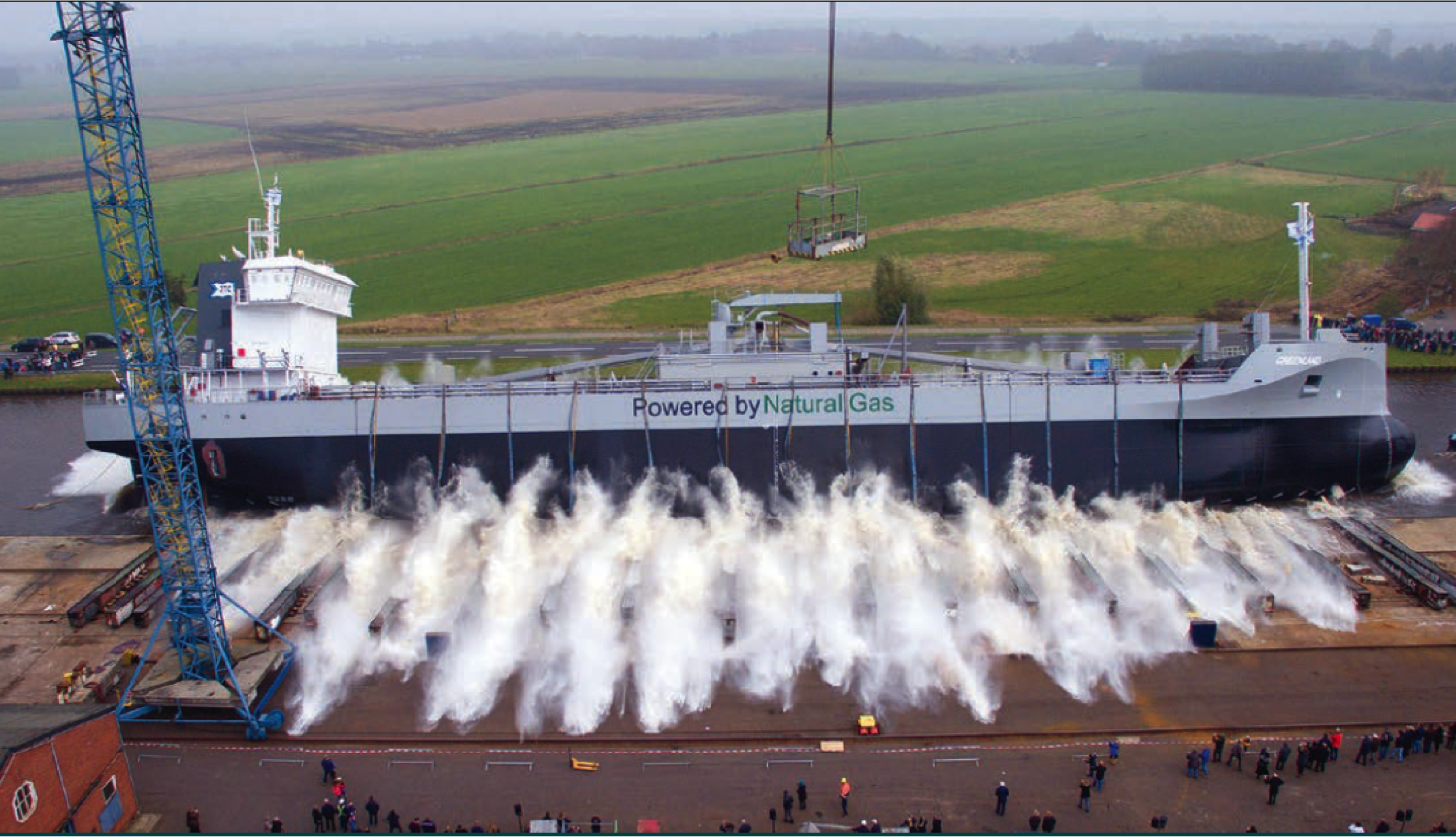
In January 2015 new international regulations came into force that reduced the permitted sulfur content in ships “bunker” fuel in Northern European and North American coastal regions. So far, international shipping companies and cruise lines have been responding to these rules primarily by switching to marine gasoil (MGO), burning lower-sulfur fuel oil, or sticking with higher-sulfur fuel oil and adding “scrubbers” to capture most of the sulfur being emitted by their ships’ engines. More recently, though, some of the shipping sector’s biggest players have unveiled plans to boost the use of liquefied natural gas (LNG) as a bunker fuel, figuring that LNG bunkering will not only help them meet existing regulations but the tougher rules likely to be implemented over the next few years. Today, we begin a short series on the opportunities and challenges associated with shifting ships from fuel oil to LNG.
Besides death and taxes, another certainty in today’s world is that the rules governing emissions from fossil-fired power plants, industrial boilers, and engines of just about every size and type will be tightened, and then tightened again. The same holds true, of course, for fuels used in ship engines (known as bunkers). The International Maritime Organization (IMO), which governs such things, in recent years has been implementing rules that gradually reduce emissions of sulfur (sulphur for many of our non-American readers). In January 2012, the “global” cap on sulfur content in marine fuel was reduced to 3.5% (from the old 4.5%), and in January 2020 it will likely be reduced to a much stiffer 0.5% (more on that in a bit). There are even tougher standards in place in the IMO’s “Sulphur Emission Control Areas” (SECAs, or sometimes ECAs), which include Europe’s Baltic and North seas and (more recently) areas within 200 nautical miles of the U.S. and Canadian coasts. In July 2010, the SECA sulfur limit in marine fuel was reduced to 1% (from the old 1.5%), and January 2015 the limit was ratcheted down again, this time to a very stringent 0.1%. Ships that ply SECA waters have the option of continuing to use higher-sulfur fuel oil and meeting the emission standards by installing post-combustion scrubbers that, as their names suggest, remove enough sulfur from the emissions to meet regulatory limits. (And, we should also point out, if a ship makes a run from, say, the non-SECA waters of Asia to the U.S. West Coast, it only needs to meet the SECA requirements during the last 200 miles of its journey—that is, it can switch from higher-sulfur to lower-sulfur fuel during the final part of its trip.)
Source: Sustainable Shipping Initiative
As we said in If the Price Is Right You Can Sail Away, prior to the January 2015 implementation of the 0.1% sulfur regulation for SECAs, ship owners and companies using their vessels to transport everything from dry bulk cargo to oil and even people (cruise liners) initially were concerned that the fuel/compliance costs would soar. After all, they knew (1) that fuel oil with 1% sulfur content is relatively inexpensive for refiners to produce (in part because it has already been widely mandated for use on dry land); (2) that many refiners would be unwilling to make major investments in reducing fuel oil’s sulfur content by another 90% (at least not without charging a significant premium for 0.1% sulfur fuel oil); (3) that a low-sulfur alternative already available—low-sulfur marine gasoil (MGO), a distillate fuel—was considerably more costly than fuel oil; and (4) that scrubbers don’t come cheap (Carnival Corp., the corporate parent of several cruise lines, is investing $400 million—or $5 million a hit, on average--to add scrubbers to 70 of its ships).
About the song
"Against the Wind" is a song by Bob Seger & The Silver Bullet Band from the 1980 album Against the Wind. It is the highest ranking single from the album, peaking at #5. In 1981, the song also won the Grammy award for Best Rock Performance by a Duo or Group with Vocal.