The record $120 billion upstream M&A spending spree in 2024 focused on the consolidation of Permian Basin positions by the major U.S. publicly traded oil and gas companies. With crude oil prices stagnant in the $70-$80/bbl range, producers were driven to boost Tier 1 acreage and capture operational synergies to fund the generous shareholder returns demanded by their investor base. When the dust cleared at year-end, the larger E&Ps we track — plus supermajor ExxonMobil — closed or announced deals on acreage that generated about 1.5 MMboe/d of production, almost 25% of their 2023 Permian output. In today’s RBN blog, we’ll analyze what this unprecedented consolidation means for Permian production going forward.

Join industry leaders in Calgary on October 29 for market insights, technical presentations, Duvernay inventory analysis, an expert panel, and networking focused on the next chapter of Canadian energy.
Production growth in the Permian, which generated about half of all U.S. crude oil output in 2024, has been under the microscope as the new administration promised a production surge. But “drill baby drill” has been thoroughly ignored by oil executives and analysts because of the potential damage to producer returns from lower oil prices. And as we pointed out recently in Slow Dancing, the 37 U.S. E&Ps we track eschewed organic growth in their 2025 investment programs, forecasting a 1% decline in capital investment after a 3% reduction in 2024. Total production for our universe of producers increased 7% from 2023 to 2024, driven by the acquisition surge.
Before the escalating trade war recently clobbered crude oil prices, producers forecast another 5% increase in 2025 over average 2024 output, mostly thanks to the full-year benefit from significant transactions that closed during the previous year. In other words, as we hinted at in the title of today’s blog, money spent on acquisitions can buy production growth. As an example, consider Diamondback Energy, which closed its $26 billion acquisition of Endeavor Energy Resources on September 1, 2024 (see You Belong To Me). Diamondback’s pre-close production in Q2 2024 was 475 Mboe/d and its Q3 output rose to 571 Mboe/d in Q3 (with one month of Endeavor) and 883 Mboe/d in Q4 with the full-quarter benefit. However, Diamondback’s average 2024 output was 598 Mboe/d, which means a significant increase in 2025 production was driven not by organic development but by the coming full-year benefit of the 2024 deal.
To analyze the level of organic Permian production growth targeted by the major E&Ps, we compared the forecast 2025 production by the 13 producers we cover that had at least 50 Mboe/d of operated production in the region (orange bars in Figure 1 below). We also included ExxonMobil and Chevron, the U.S.’s two integrated giants, which are also #1 and #2 in regional production. Then we compared those forecasts to the companies’ Q4 2024 Permian production (blue bars), which largely reflected the impact of the acquisitions closed during the year.
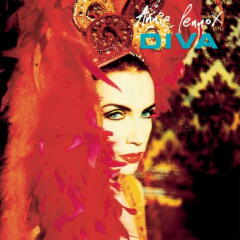
About the song
“Money Can’t Buy It” was written by Annie Lennox and appears as the sixth song on Lennox’s debut solo studio album, Diva. A music video, directed by Sophie Muller, featured Lennox in a red dress singing and dancing to her image in a mirror. The song puts forth the message that true love is more powerful than money, fame or fortune. Personnel on the record were: Annie Lennox (vocals, keyboards), Stephen Lipson (guitars, programming, keyboards), Peter-John Vettese (keyboards, programming), Marius DeVries (programming, keyboards), Luis Jarden (percussion), Ed Shearmer (piano), Doug Wimbish (bass), Keth LeBlanc (drums), Kenn Suzuki (guitar), Steve Jansen (drum programming), Paul Moore (keyboards), Dave DeFries (trumpet) and Gavyn Wright (violin).
Diva was recorded in 1991-92 at Mayfair and The Church in London and produced by Stephen Lipson. Released in April 1992, it went to #23 on the Billboard 200 Albums chart and has been certified 2x Platinum by the Recording Industry Association of America. Five singles were released from the LP.
Annie Lennox is a Scottish singer and songwriter. She achieved her first success with the new-wave band The Tourists in the late 1970s. She and fellow musician Dave Stewart went on to form the immensely successful multi-platinum duo, Eurythmics, in the 1980s. She and Stewart have broken up and reunited Eurythmics a few times over the years, always yielding success and major record sales. They have sold more than 80 million records worldwide. As a solo artist, Lennox has released six studio albums, a soundtrack album, a compilation album, an EP, and 23 singles. She has won eight Brit Awards, four Grammy Awards, and an MTV Video Music Award. She and her Eurythmics partner Stewart are members of the Rock and Roll Hall of Fame and the Songwriters Hall of Fame. Lennox continues to occasionally record and tour and made her last public appearance at the Royal Albert Hall in London in March with her Sisters: Annie Lennox and Friends show.