There’s no question, the pressures on many U.S. midstream companies have been steadily increasing for some time now, and the past few months have really tested them. Like exploration and production companies, refiners, and others in the energy space, midstreamers have seen their well-considered plans for 2020 upended by demand destruction, commodity-price gyrations, and cutbacks in capex, drilling, and production. While it may be tempting to simply wait out the last few weeks of this crazy, unforgettable year and hope that 2021 will be better, there’s actually at least some good news out there for the midstream sector, and good reason to believe that midstreamers have been positioning themselves to financially weather whatever next year may have in store. Today, we discuss highlights from East Daley Capital’s newly issued 2021 Midstream Guidance Outlook, which focuses on key trends affecting midstream asset owners.
Each holiday season for four years now, our friends at East Daley have delved into the trends and developments they see affecting the broader midstream sector in the months ahead. In a series of reports, they also assess how the ongoing evolution of the energy industry is likely to help or hurt a couple of dozen or so representative companies, as well as which midstreamers it believes will perform better or worse than consensus expectations. The first glimpse we get is their just-release 2021 Midstream Guidance Outlook – Fight or Flight: Taking Stock of the Midstream,” which lays out their view of the key market drivers impacting midstream companies as the energy world prepares to transition from the COVID era to (fingers crossed) a long-lasting post-pandemic period. Then, over the next few weeks, we’ll see the latest edition of East Daley’s annual Dirty Little Secrets report, with Part 1 providing an even-more-detailed analysis of midstream and market fundamentals and Part 2 featuring very granular, company-by-company reviews.
Last year’s report (see What I Like About You), focused on themes ranging from anticipated crude oil pipeline overbuilds and Permian production to the need for more natural gas supply rationalization as supply at the time was outpacing demand. The collapse of global economic activity and commodity prices earlier this year due to the COVID-19 pandemic exacerbated some of these issues and completely reversed others. As we head into 2021 — finally! — significant headwinds remain because lower production estimates portend reduced capacity utilization of infrastructure in many basins. We will discuss the negative effects of this excess capacity on midstream companies in upcoming installations, but today we’ll start by looking at some positive trends for the midstream sector amid challenging industry conditions.
About the song
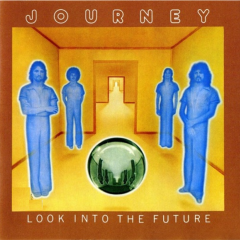
"Look into the Future" was written by Diane Valory and Gregg Rolie and appears as the first song on side two of Journey's second studio album of the same name. With a running time of over eight minutes, it was the longest song Journey had put out until that time. Personnel on the record were: Gregg Rolie (vocals, keyboards), Neal Schon (guitar), Ross Valory (bass), and Aynsley Dunbar (drums).
The Look into the Future album was recorded between August and October 1975 at The Automatt in San Francisco, with Glen Kolotkin and Journey producing. Released in January 1976, the album went to #100 on the Billboard Top 200 Albums chart. Two singles were released from the LP.
Journey is an American rock band formed in San Francisco in 1973 by two former Santana members: guitarist Neal Schon and keyboardist Greg Rolie. They were joined by bassist Ross Valory, guitarist George Tickner, and drummer Prairie Prince. Journey has released 14 studio albums, four live albums, one soundtrack album, two EPs, and 59 singles, and has sold over 80 million records worldwide. In 2017, the band was inducted into the Rock and Roll Hall of Fame. Their songs have appeared in numerous television shows, movies, and video games. Sixteen members have passed through the ranks of Journey since its inception. Under the direction of founding member Neal Schon, the band still records and performs.