


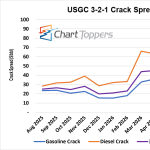
The USGC 3-2-1 crack spread (purple line in chart below) averaged $65/bbl in August, up from $62/bbl in July and more than two-and-a-half times the $25/bbl averaged a year earlier. Diesel cracks (orange line) led the rally, climbing from $33/bbl in February to $92/bbl in August. Gasoline cracks (blue line) rose from winter levels of $15-$18/bbl to $53/bbl in July before easing slightly to $52/bbl in August. Diesel cracks were up 226% year over year, while gasoline cracks increased 121%, leaving refining margins well above year-ago levels. The gap between diesel and gasoline cracks widened to approximately $41/bbl in August from $25/bbl in July. The August increase in the overall crack spread was therefore entirely driven by stronger diesel margins, as gasoline margins declined modestly from July.
Featured Articles
- Analyst Insight
USGC Crack Spread Turns Down the Volume After September Rally
USGC refining margins turned down the volume in early October after September’s rally, but the 3-2-1 crack spread remains more than two-and-a-half times its October 2025 average.
- Analyst Insight
USGC 3-2-1 Crack Spread Cools but Remains Strong
The USGC 3-2-1 crack spread has cooled from its spring highs, but refining margins remain exceptionally strong. June's average crack spread is running more than 100% above year-ago levels, supported by elevated gasoline and diesel cracks.


- Blog
Cracking the Code – What 2026’s Record Crack Spreads Tell Us About Refining Economics
Crude oil may get the headlines, but the fuels made from it have delivered some of the market’s biggest surprises of 2026. With supply disruptions, strained trade flows and compliance costs all shaping this year’s numbers, let’s look at what goes into a crack spread and what we can learn from it.
