


Michigan will study whether the state’s naturally occurring hydrogen deposits — also referred to as white hydrogen — have the potential to help some of the most pollution-heavy sectors of its economy, including manufacturing, heavy-duty transportation and maritime shipping, according to an executive order signed by Governor Gretchen Whitmer on January 15.
The Michigan Geologic Hydrogen Exploration and Preparedness Initiative, created by the governor’s order, aims to coordinate statewide planning, regulatory readiness, workforce and economic strategy, infrastructure assessment and environmental evaluation. Whitmer’s order also called on the state’s Department of Environment, Great Lakes and Energy to submit a report by April 1 on a variety of topics, including permitting, technical needs and opportunities, and the potential use of existing oil and gas wells and related infrastructure for use in geologic hydrogen production. (As we noted in Hard to Handle, hydrogen’s unique properties make using natural gas infrastructure a difficult task.)
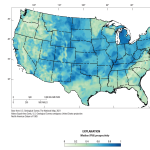
The first comprehensive map showing the prospective locations of naturally occurring hydrogen in the contiguous U.S. (see below) was published in January 2025 by the U.S. Geological Survey (USGS). The map assesses which regions have the necessary geological conditions — hydrogen sources, reservoir rocks and seals to trap the gas — for hydrogen accumulation. The map assigns relative prospectivity values from 0 to 1, and areas like Michigan with higher values (deep blue on the map) are likelier to contain geologic hydrogen accumulations than areas with lower values. But as we noted in Don’t Let Me Be Misunderstood, there is no strategy for accessing and developing those resources today.


