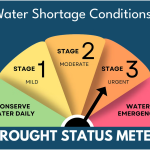
Refineries, petrochemical plants, an LNG export terminal and other large industrial water consumers in the bone-dry Corpus Christi area may be forced to significantly reduce their water consumption over the next few months if — as now seems very possible — the city declares a water emergency this spring or summer.
A severe, years-long drought has left the area’s two big, local water sources — Choke Canyon Reservoir and Lake Corpus Christi — at only 7.5% and 8.5% of capacity, according to a recent briefing by Corpus Christi City Manager Peter Zanoni, and led the area to ramp up its reliance on two far-away sources of water: Lake Texana and the Lower Colorado River, both of which are stressed too. Water from those sources, which currently provide more than two-thirds of the roughly 100 million gallons a day (MMgal/d) the area consumes, is piped more than 100 miles to Corpus Christi.
City officials have been taking several steps to quickly add more water supply in hopes of averting a water emergency declaration and mandated water use cuts. Most of these involve drilling new wells in outlying areas to provide tens of MMgal/d of additional supply over the next few months. Longer term, the city has resurrected a plan to build a 30-MMgal/d desalination plant along the Inner Harbor; that $1 billion facility, whose design contract the city council may approve as soon as April 24, would come online in late 2029.