



The U.S. power sector is undergoing a major expansion to keep pace with the rising demand for electricity from data centers and other consumers, and trying to do a lot at once. Keep a lid on greenhouse gas (GHG) emissions by adding wind, solar and other renewables. Maintain grid reliability by supplementing variable renewable energy with more around-the-clock sources like natural gas-fired power plants. Oh, and keep power costs down, too. That’s a big collective ask, and to help make it possible, power grids are turning to so-called “virtual power plants” (aka VPPs) that, with an assist from computers and software, aggregate smaller power sources, batteries and flexible demand to provide power to the grid much like a traditional combined-cycle plant would. In today’s RBN blog, we’ll introduce VPPs and explain why they’re worth learning about.
Everyone knows the generation sources contributing to the U.S. power grid come in a wide variety of forms — everything from nuclear, coal-fired and gas-fired plants to wind and solar farms. VPPs are a different animal altogether, consisting not of a single, relatively large stand-alone power source but a decentralized network of smaller, distributed energy resources (DERs) — “behind-the-meter” generators (including rooftop solar) and storage batteries, plus flexible load like electric vehicle (EV) charging devices, electric water heaters and smart thermostats that can ramp down when needed. These disparate sources operate in concert, managed by computers and advanced software.
VPPs aren’t just different, they’ve been flying largely under the radar but are more common than you may think. The Department of Energy (DOE) estimates the U.S. has 30 to 60 GW of VPP capacity today, equal to about 4% to 8% of peak electricity demand nationwide. The DOE predicts that VPP capacity in the U.S. could grow to 80 to 160 GW in just six years as grid operators around the country seek to quickly expand the availability of a reliable power source while holding down costs and minimizing GHG emissions.
We’ll begin by discussing in more detail how VPPs work. VPPs are “virtual” because the sources of supply and flexible demand are sprinkled throughout different areas (see Figure 1 below), and there is no central physical facility such as a traditional coal or gas plant. Instead, the operation of these small energy sources is connected via computers and software and, with an essential assist from batteries, work together to optimize their joint operation and help balance electricity supply and demand in the larger grid. VPPs enroll DER owners, including residential, commercial and industrial electricity consumers, in participation programs that offer rewards for contributing to grid operations.
What a Virtual Power Plant Consists of and How It Works
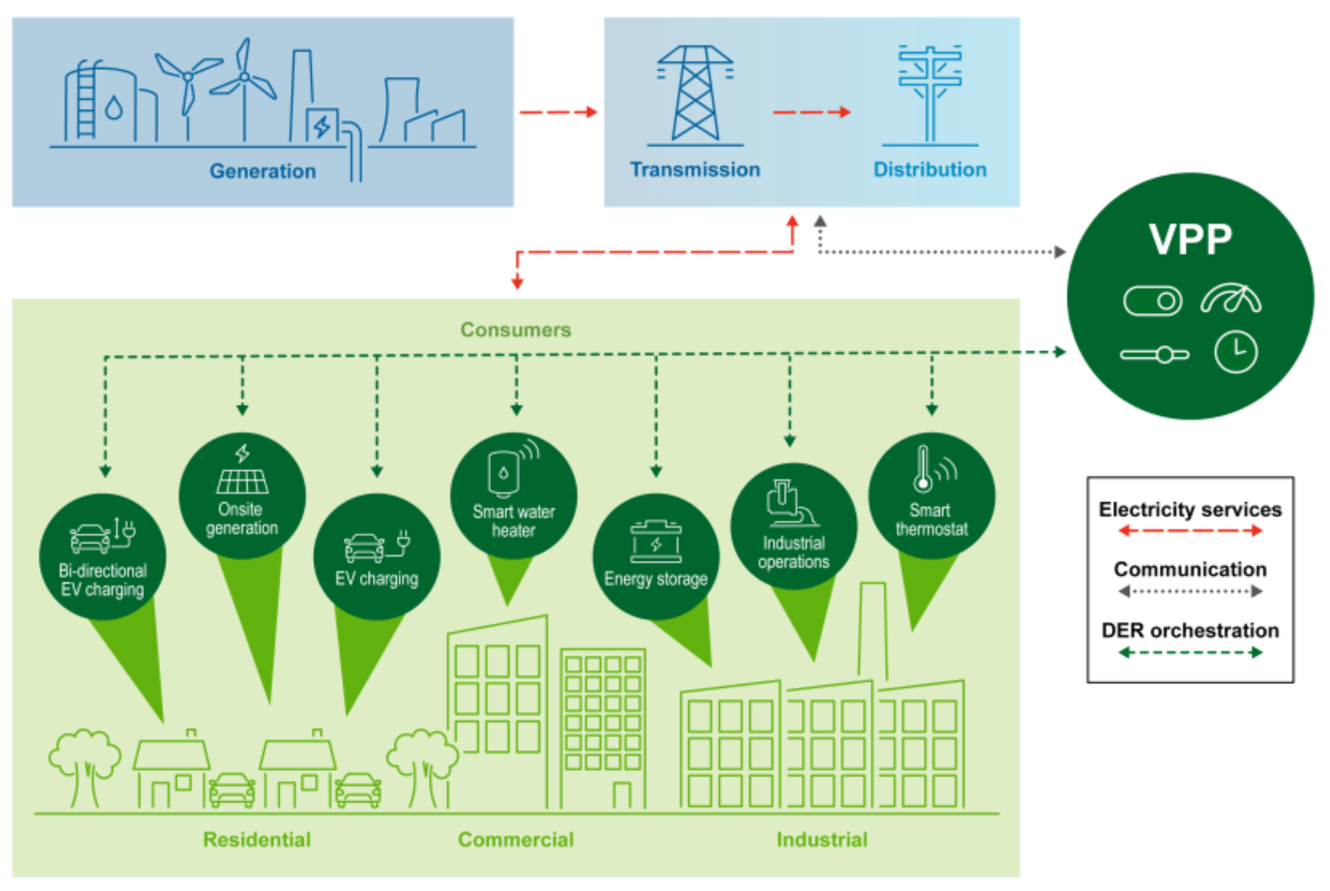
Figure 1. What a Virtual Power Plant Consists of and How It Works. Source: Department of Energy

About the song
“Virtual Insanity” was written by Jay Kay and Toby Smith and appears as the first song on Jamiroquai’s third studio album, Traveling Without Moving. Released as a single in August 1996, it went to #39 on the Billboard Hot 100 Singles chart. A unique video for the song, produced by British filmmaker Jonathan Glazer, received a large amount of airplay on MTV. At the MTV Video Music Awards in September 1997, the video won four awards, including Video of the Year. Personnel on the record were: Jay Kay (vocals), Toby Smith (keyboards), Stuart Zender (bass), Simon Katz (guitar), Derrick McKenzie (drums), Wallis Buchanan (didgeridoo) and Sola Akingbola (percussion).
Traveling Without Moving was recorded in early 1996 at Great Linford Manor in Milton Keynes, England. Produced by Jay Kay and Al Stone, the album was released in August 1996 and went to #24 on the Billboard 200 Albums chart. It has been certified Platinum by the Recording Industry Association of America. Five singles were released from the LP.
Jamiroquai is an English acid jazz and funk band formed in London in 1992 by vocalist Jay Kay. Lyrically, the group focuses on social and environmental issues. They have released eight studio albums, five compilation albums, and 29 singles. They have sold more than 26 million records worldwide. They have won a Grammy Award, an Ivor Novello Award, and four MTV Video Music Awards. They are working on their ninth studio album and will perform across Europe in November and December 2025 on their The Heels of Steel Tour (perhaps a pun on The Rolling Stones' 1989 Steel Wheels Tour).





Comments
What's with the derogatory title? "Vitual Insanity" as the title to an article about VPPs. Excuse me, but your ideology is showing.
In reply to Title by Stan Polak
Hey, thanks for your comment. When I'm crafting a song title for a blog, I try to find something that is similar to the topic or theme of the blog. In this case, When I was looking up songs related to "virtual," this was one of the first that popped up. Certainly, there are skeptics of virtual power plants - but if you read the entire blog - I believe you'll see we detail exactly what they are, how they have grown, and how the Department of Energy predicts they'll grow even more in the future. The report I mention is quite insightful and interesting. I'll be monitoring VPPs and very curious to see what transpires. You'll notice a new VPP was just announced days ago as well.