Despite the doom and gloom that many see in the global LNG market –– too much supply, weak demand growth, and low LNG prices –– the possibility remains that the sector may offer the opportunity for low-cost, highly responsive market participants to do quite well, and even thrive. How can that be? After all, we’ve just seen another year of low crude oil prices resulting in very low oil/natural gas margins, and the expectation of high oil/gas margins were critical in supporting the development of many U.S. liquefaction/LNG export projects. But a combination of responsive demand, low cost infrastructure development and the possibility that number of exporting countries could run out of gas at or near the end of their existing contracts could change the outlook for ongoing LNG export development. Today, we look at the LNG market in the context of themes discussed at the North American Gas Forum (NAGF). Warning: this blog includes a plug for this year’s NAGF conference.
Each fall, the NAGF gives natural gas producers, pipeline companies, LNG exporters and importers, major gas consumers and government officials an opportunity to examine the state of the natural gas industry in North America and debate policy directions. As in 2015, this year’s NAGF is expected to give particular attention to the international LNG market, which has been seen as “the next big thing” driving gas demand growth. At last year’s forum, the president of one of the major U.S. developers of new liquefaction/LNG export capacity presented an interesting and thorough assessment of the global LNG market into which the U.S. export projects are beginning to compete. Today, we look back at that presentation, and consider the challenges –– and potential –– ahead for U.S. LNG exporters in 2017 and beyond.

NATGAS Permian is a weekly natural gas fundamentals analysis focusing entirely on the key market drivers within the Permian basin. The report contains details and forecasts around natural gas production, demand, pricing, and a summary of pipeline outflows and capacities from the Permian to neighboring regions.
The NAGF is a prestigious, high-level policy gathering held each fall in Washington, DC –– this year’s forum runs October 2-4. Last year, in his presentation, Octavio Simoes, president of Sempra LNG (which is a partner in the Cameron LNG project now under construction in southwestern Louisiana) examined the gas demand markets in Europe and Asia; the development of indigenous gas supply in those regions; the fight for market share between pipeline gas and LNG; and the relative competitiveness of U.S. LNG export projects. In his talk, Mr. Simoes acknowledged the market’s challenges, but also reminded attendees of what spurred development of the first round of U.S. liquefaction/LNG export projects in the first place –– and why those drivers remain relevant today.
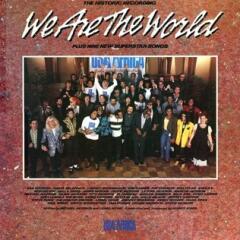
About the song
“We Are the World” was written by Michael Jackson and Lionel Richie and appears as the first song on side one of the album of the same name. “We Are the World” is a charity single recorded by the supergroup, USA for Africa, with all profits going to African relief. Harry Belafonte enlisted the help of Ken Kragen, who managed Kenny Rogers and Lionel Richie, to help find other artists to participate in the project.
Kragen and Belafonte started a foundation to help distribute funds to provide humanitarian relief to Africa in the form of food, water, clothing, medicines, tents, blankets, and refrigeration equipment. Over 70 recovery and development projects were launched in seven African nations. The projects included aid in agriculture, fishing, water management, manufacturing, and reforestation. Over $63 million in aid has been provided since the single’s release.
Quincy Jones agreed to produce the project with Michael Omartian. The recording took place at A&M studios in Hollywood in January 1985. The video for the song was shot in the same studio. Released in March 1985, it went to #1 on the Billboard Hot 100 Singles chart and has been certified 4x Platinum by the Recording Industry Association of America (RIAA). Since its initial release, the single has sold more than 20 million copies, making it the eighth best-selling physical single of all time. It won four awards at the 1986 Grammy Awards, and the video won two honors at the 1985 MTV Video Music Awards.
Quincy Jones was the conductor and, in order of appearance, featured vocalists were Lionel Richie, Stevie Wonder, Paul Simon, Kenny Rogers, James Ingram, Tina Turner, Billy Joel, Michael Jackson, Diana Ross, Dionne Warwick, Willi Nelson, Al Jarreau, Bruce Springsteen, Kenny Loggins, Steve Perry, Daryl Hall, Huey Lewis, Cyndi Lauper, Kim Carnes, Bob Dylan, and Ray Charles. The choir had 24 members, including: Harry Belafonte, Lindsey Buckingham, Bob Geldof, Sheila E, Waylon Jennings, Smokey Robinson, and others. Instrumentation was by: John Barnes (keyboards), David Paich (synthesizers), Michael Boddicker (synthesizers, programming), Ian Underwood (synthesizers, programming), Paulino da Costa (percussion), Louis Johnson (synth bass), Michael Omartian (keyboards), Greg Phillinganes (keyboards), and John Robinson (drums).
The album, We Are the World, was released in April 1985 and went to #1 on the Billboard 200 Albums chart. It has been certified 3x Platinum by the RIAA. Ken Kragen was the executive producer on the LP, and in addition to the title single, it contained nine additional songs by artists such as Bruce Springsteen, Prince, Chicago, Tina Turner, and Kenny Rogers.