


Global crude oil markets are undergoing a profound transformation. But it is mostly out of sight, out of mind for all but the most actively involved players in the physical markets. On the surface, it’s a simple change in the Dated Brent delivery mechanism: Starting May 2023, cargoes of Midland-spec WTI — we’ll shorten that to “Midland” for the sake of clarity and simplicity — could be offered into the Brent Complex for delivery the following month. This change has been in the works for years. Production of North Sea crudes that heretofore have been the exclusive members of the Brent club has been on the decline for decades. Allowing the delivery of Midland crude into Brent is intended to increase the liquidity of the physical Brent market, thereby retaining Brent’s status as the world’s preeminent crude marker, serving as the price basis for two-thirds or more of physical crude oil traded in the global market. So far, the new trading and delivery process has been working well. Perhaps too well. For the past two months, delivered Midland has set the price of Brent about 85% of the time. The number of cargoes moving into the Brent delivery “chain” process has skyrocketed, and most of those cargoes are Midland. Is this just an opening surge of players trying their hand in a new market, or does it mean that the Brent benchmark price is becoming no more than freight-adjusted Midland? In today’s RBN blog, we’ll explore this question, and what it could mean for both global and domestic crude markets.

The Natural Gas Master Class is a one-day online event focusing on understanding flow analysis, interpreting pipeline data and forecasting future flows. This course is designed to equip you with the knowledge and skills to effectively analyze the complexities of natural gas markets, flow analysis, and pipeline modeling. Join us online
October 21 | Online
Before we get into the weeds — which we’ll need to do, given that we’re talking about Brent — let’s first hit a few high points of what’s been happening over the past two months. Midland deals have dominated the Dated Brent pricing mechanism, setting the price 95% of the time in May and 75% in June. North Sea crudes, which for decades have set the price for 100% of Brent, have been relegated to only 5% and 25%, respectively, in May and June. Likewise, most of the cargoes going into the Brent Forward Placement market (“the chains” – in other words, the process of converting a futures deal to a physical cargo) have also been Midland, almost guaranteeing that any buyer of “Brent” these days is going to be receiving barrels of Midland crude. Before the Midland-into-Brent era, 7-10 cargoes per month were delivered into the forward placement chain. Since May that monthly number has doubled. Even for a market that has been preparing for this event for years, it is a big deal.
About the song
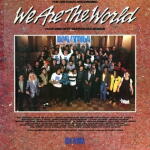
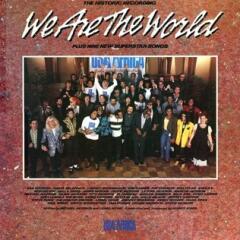
“We Are the World” was written by Michael Jackson and Lionel Richie and appears as the first song on side one of the album of the same name. “We Are the World” is a charity single recorded by the supergroup, USA for Africa, with all profits going to African relief. Harry Belafonte enlisted the help of Ken Kragen, who managed Kenny Rogers and Lionel Richie, to help find other artists to participate in the project.
Kragen and Belafonte started a foundation to help distribute funds to provide humanitarian relief to Africa in the form of food, water, clothing, medicines, tents, blankets, and refrigeration equipment. Over 70 recovery and development projects were launched in seven African nations. The projects included aid in agriculture, fishing, water management, manufacturing, and reforestation. Over $63 million in aid has been provided since the single’s release.
Quincy Jones agreed to produce the project with Michael Omartian. The recording took place at A&M studios in Hollywood in January 1985. The video for the song was shot in the same studio. Released in March 1985, it went to #1 on the Billboard Hot 100 Singles chart and has been certified 4x Platinum by the Recording Industry Association of America (RIAA). Since its initial release, the single has sold more than 20 million copies, making it the eighth best-selling physical single of all time. It won four awards at the 1986 Grammy Awards, and the video won two honors at the 1985 MTV Video Music Awards.
Quincy Jones was the conductor and, in order of appearance, featured vocalists were Lionel Richie, Stevie Wonder, Paul Simon, Kenny Rogers, James Ingram, Tina Turner, Billy Joel, Michael Jackson, Diana Ross, Dionne Warwick, Willi Nelson, Al Jarreau, Bruce Springsteen, Kenny Loggins, Steve Perry, Daryl Hall, Huey Lewis, Cyndi Lauper, Kim Carnes, Bob Dylan, and Ray Charles. The choir had 24 members, including: Harry Belafonte, Lindsey Buckingham, Bob Geldof, Sheila E, Waylon Jennings, Smokey Robinson, and others. Instrumentation was by: John Barnes (keyboards), David Paich (synthesizers), Michael Boddicker (synthesizers, programming), Ian Underwood (synthesizers, programming), Paulino da Costa (percussion), Louis Johnson (synth bass), Michael Omartian (keyboards), Greg Phillinganes (keyboards), and John Robinson (drums).
The album, We Are the World, was released in April 1985 and went to #1 on the Billboard 200 Albums chart. It has been certified 3x Platinum by the RIAA. Ken Kragen was the executive producer on the LP, and in addition to the title single, it contained nine additional songs by artists such as Bruce Springsteen, Prince, Chicago, Tina Turner, and Kenny Rogers.



Comments
Would have been nice to see an example. Is there not a problem of timing. For instance, I would have thought that acargo of WTI M will arrive 20days later than a cargo of Dated Brent. So aren't we comparing two prices that may be 20days apart? Or is that not a problem becasue Dated Brent also loads 10-30 day (so on average 20 days) into the future