On July 20, 2020, Chevron struck the first major energy sector deal since the onset of the pandemic, announcing a $13 billion agreement to acquire U.S. E&P Noble Energy. The transaction comes 15 months after the oil major bowed out of a bidding war with Occidental Petroleum to acquire Anadarko Petroleum, a landmark, $56 billion deal in which the winner may eventually end up as the loser after taking on massive debt. Oxy is just one example of how the sharp decline in oil demand and prices has ravaged producer cash flows and earnings, virtually freezing the M&A market. Despite widespread speculation that a resumption in deal activity would target the most distressed E&Ps, Chevron has broken the market wide open with a blockbuster deal for a premier E&P. The target this time, Noble Energy, has a portfolio very similar to that of Anadarko, and is being acquired at a small fraction of the cost. Today, we examine the strategies that drove this transaction, the impacts on buyer and seller, and the implications for the upstream M&A market going forward.
Earlier this week, in Stayin’ Alive, we looked at last year’s bidding war for Anadarko and its aftermath from Oxy’s perspective. Here’s a brief summary, this time highlighting Chevron’s motivations. On April 12, 2019, Chevron signed an agreement to acquire Anadarko for $50 billion: $25 billion in equity, $8 billion in cash, the assumption of $15 billion in net debt, and the $2 billion book value of non-consolidated interests. The targeted E&P was producing 701 Mboe/d (thousand barrels of oil equivalent per day) of oil and gas, 65% from U.S. onshore (the Permian’s Delaware Basin and the Denver-Julesburg, or DJ, and Powder River basins in the Rockies), 20% from the U.S. Gulf of Mexico, and 15% from international assets (Mozambique, Algeria, and Ghana). Anadarko also owned a 55% stake in midstream firm Western Midstream Partners (market cap, $4.4 billion).

The RBN Crude Oil Analytic Suite gives you access to four weekly reports covering crude oil markets, including: Crude Billboard, Crude Permian, Crude TradeView, and Crude Voyager.
For Chevron, the crown jewel in the portfolio was Anadarko’s 127 Mboe/d of current production and 240,000 net acres in the Permian, most of it adjacent to Chevron’s acreage in the Delaware Basin. Acquiring these assets would have vaulted Chevron into a position as the top Permian producer and accelerated its drive to nearly quadruple its output in the play to 900 Mboe/d by 2023. Another key target for Chevron was Anadarko’s stake in the major LNG development project offshore Mozambique, which would have complemented Chevron’s legacy Australian LNG assets.
About the song
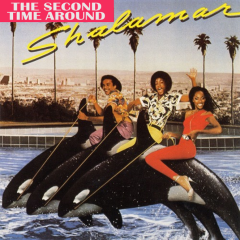
"The Second Time Around" was written by Leon Sylvers III and William Shelby. The song appears as the first song on side two of Shalamar's third studio album, Big Fun. Released as the first single from the album in October 1979, it went to #1 on the Billboard Hot Soul and U.S. Dance charts and #8 on the Billboard Hot 100 Singles chart. Personnel on the record were: Jody Watley, Jeffrey Daniel, and Howard Hewett (vocals), with accompaniment at times provided by 33 studio musicians.
Big Fun was recorded during 1979 at Studio Masters in Los Angeles and Jack Clement Studios in Nashville. Produced by Leon Sylvers III, the LP was released in August 1979 and went to #4 on the Billboard R&B chart and #23 on the Billboard Top 200 Albums chart. It has been certified Gold by the Recording Industry Association of America.
Shalamar is an American disco, R&B, and soul music vocal group put together in Los Angeles in 1977 by Soul Train's Don Cornelius and Dick Griffey. Singers Jody Watley and Jeffrey Daniel were originally dancers on the Soul Train television show when they joined Shalamar. The version of the band with Watley, Daniel, and Howard Hewett would earn five Gold and two Platinum records for the group. All three of these singers would eventually depart from the group. Jody Watley went on to a successful career as a solo artist, releasing nine studio albums, one live album, two compilation albums, one EP, and 24 singles. She still records and tours as a solo artist. Jeffrey Daniel released one solo studio album, and rejoined Shalamar in 1999. Howard Hewett released seven studio albums, two live albums, one compilation album, and 24 singles. He also rejoined Shalamar in 1999. Along with Carolyn Griffey (Dick Griffey's daughter), Hewett and Daniel comprise the current lineup of Shalamar. Shalamar released 10 studio albums, six compilation albums, and 34 singles. They still perform live, and have tour dates booked in the UK starting in September.