
- Blog

Enter Sandman - Atlas Energy Brings an Innovative Sand Solution to the Permian Basin

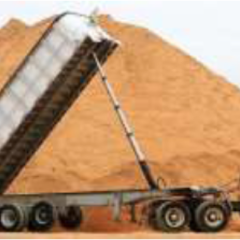
A first-of-its-kind frac sand logistics solution set to debut in the Permian Basin later this year may help transform the way proppant is delivered to support hydraulic fracturing operations there. If it works as advertised, it will represent another advance in the streamlining of oil and gas production in the U.S.’s most prolific shale play. In today’s RBN blog, we‘ll explore how Atlas Energy Solutions aims to mechanize the delivery of sand to crude-oil-focused well sites in the Permian. 

- Blog

Wipe Out! - Putting Frac Sand Supply, Demand and Prices in Perspective

The accelerating trend toward high-intensity completions in the Permian, SCOOP/STACK, Marcellus/Utica, Haynesville and other key shale plays is sharply increasing demand for frac sand. As a result, there's upward pressure on sand prices and there are shortages of certain grades of sand that may continue into 2018.  There is also increased interest in developing sand mines near production areas. It’s important to remember, though, that (1) there’s no evidence that sand-supply issues will seriously curtail drilling and completion activity, and (2) higher sand costs can be offset by the production gains that usually come from using a lot more sand. Today we continue our surfing-themed series on sand costs and water-disposal expenses with a look at the forecast for 2017-18 demand for frac sand, sand pricing trends, efforts to develop regional sand supply sources and the bottom-line upside of high-intensity completions.

- Blog

Wipe Out! - How Rising Sand Prices and Supply Concerns Threaten Producer Profitability

The techniques used to wring increasing volumes of crude oil, natural gas and natural gas liquids (NGLs) out of shale continue to evolve, and as they do, producers are facing mounting costs for securing frac sand and for disposing of produced water from the wells. These costs are squeezing producer profits, and—in an era of sustained low hydrocarbon prices—sometimes even flip production economics from favorable to unfavorable. Today we continue our surfing-themed series on sand costs and water-disposal expenses with a look at how sand use in shale plays has evolved—and how these changes affect the bottom line.

- Blog

Wipe Out! - How Soaring Sand Costs and Water-Disposal Expenses Threaten Producer Gains in Key Shale Plays

Author Housley Carr

In the past few years, producers in shale and tight-oil plays have made great strides in reducing their drilling costs and improving the productivity of their wells. But the trends toward much longer laterals and high-intensity well completions have significantly increased the volumes of sand being used—some individual well completions use enough sand to fill 100 railcars or more! An even bigger concern for many producers is the rising cost of disposing of produced water—that is, the water that emerges with hydrocarbons from these supersized wells. Today we begin a surfing-themed series that focuses on how the two key components of any beach vacation—sand and water—are impacting producer profitability.

- Blog

Don't Call It a Comeback - It's Not Your Father's Haynesville Natural Gas Shale Play

After spending the past few years on the backburner with declining production volumes, the Haynesville Shale natural gas play, which straddles the Northeast Texas-Louisiana border, is back in the headlines. Rig counts in the region have doubled in the Haynesville in the past six months or so. Exco Resources—which has four rigs operating there currently—last week said it is divesting its Eagle Ford assets in favor of boosting drilling investment in the Haynesville. At the same time, there’s a new crop of operators in the play dedicated specifically to drilling in the Haynesville. While total basin production volumes have yet to take off, all signs point to a Haynesville resurrection of sorts. But there are also early clues that much has changed since the first go-round and the drilling profile of today’s Haynesville is likely to look much different than it did nearly 10 years ago. Today we begin a look at RBN’s latest analysis of production economics in the Haynesville Shale.

- Blog

Faster Horses - The Four Things Driving 2017's 'Different Kind of Recovery'

Author Housley Carr

A number of indicators suggest that the energy slump that started in the latter half of 2014 has bottomed out, and that happy days are here again (at least for now).  Who would have thought back in the good ol’ days three years ago this month—when the spot price for crude oil was north of $100/bbl and the Henry Hub natural gas price averaged $5.15/MMbtu—that Friday’s $54 crude and $2.63 gas would be seen as anything but a catastrophic meltdown. But not so. The fact is that in 2017, producers in a number of basins can make good money at these price levels.  Consequently, drilling activity is coming on strong. Crude oil production is up more than 500 Mb/d since October 2016 to 9 MMb/d, a level not seen in almost a year. And gas output has also been poised to rise, if only real winter demand had kicked in this year. What’s going on? Today we discuss the fact that what we have here, folks, is a rebound unlike any we’ve seen before.

- Blog

Long Train Running – Bringing Drilling Supplies to the Shale-Rail Revolution

RBN blog pages are replete with discussions of the Shale–Rail revolution.  We’ve shown how rail has become a formidable competitor to pipeline transportation.  Twice as much crude oil moves by rail out of the Bakken versus pipe.  Almost 100 new rail terminals will be built during 2012-13.  But that’s not the only impact that shale is having.  Most of the vast quantities of materials that support shale drilling arrive by rail.  Among these are proppants (sand, ceramics), pipe, lubricating chemicals, and water.  Today we examine the other end of the shale-rail revolution – the inbound material supply chain.