Since the start of this year, Canadian heavy crude oil prices have been steadily improving relative to the light crude oil benchmark of West Texas Intermediate (WTI). Improved access to and through the U.S. as far south as the Gulf Coast has contributed to these better conditions. At the same time, the traditional driver of increasing refinery demand after the end of the most recent maintenance season is being aided by the restart of two Midwest refineries that have typically been consumers of Canadian heavy oil. With international competitive pressures also easing and export buyers remaining active in the Gulf Coast, heavy oil prices could remain in a sweet spot for a good portion of this year. In today’s RBN blog, we look at why international competition for Canadian heavy crude will only intensify next year as vastly increased export access from Canada’s West Coast becomes available.
Western Canada’s heavy crude oil — and its pricing — seem to be in a good place these days. Unfettered by infrastructure constraints such as insufficient pipeline export capacity, Canadian heavy crude oil has been flowing without a hitch to where it is needed most. The price discount applied to Western Canadian Select (WCS), the heavy oil price benchmark in Western Canada, has been narrowing against important trading hubs in the North American oil trading complex such as Cushing, OK, and the Gulf Coast, increasingly reflecting a price difference that is based only on quality and pipeline transportation costs. To top things off, it appears that exports of Canadian heavy crude from the Gulf Coast have rebounded in recent months and may be contributing to the narrowing of the price discount applied to WCS. What once seemed impossible — a Canadian crude whose price may be more closely linked to international oil market developments — may finally be with us to stay.

In Part 1 of this series, we reviewed many of the strange events that have disrupted the price of Canadian heavy oil in the past few years. The extraordinary blowout of the price differential between WCS at the Western Canadian trading hub of Hardisty, AB, to WTI to near $50/bbl late in 2018 was the result of rising production running up against insufficient pipeline export capacity. A solution — if you can call it that — involved the provincial government of Alberta (home to the vast majority of Canada’s heavy oil production) ordering a reduction in output to better align supplies with pipeline capacity, a move that promptly reduced the immense pricing differential closer to historical averages.
About the song
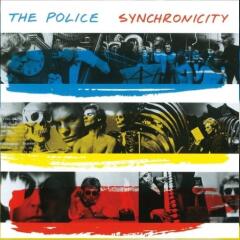
“Synchronicity I” and “Synchronicity II” were written by Sting (Gordon Sumner) and appear as the first and sixth songs on side one of The Police’s fifth studio album, Synchronicity. “Synchronicity I” was released as a single only in Japan, while “Synchronicity II” was released as a single in the U.S. and the UK in October 1983. It went to #16 on the Billboard Hot 100 Singles chart. According to Sting, the synchronicity lyrical theme in both songs refers to Carl Jung’s theory on the subject. With lyrics referring to “the din of Rice Krispies” and “the slime of a dark Scottish lake,” one has to ponder if the reference is to Jungian Theory or Aleister Crowley eating breakfast at Boleskine House. Both songs feature a heavy use of synthesizers. Personnel on the record were: Sting (vocals, bass), Andy Summers (guitar, keyboards), and Stewart Copeland (drums, percussion).
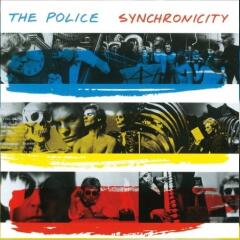
The album, Synchronicity, was the final studio album from The Police. Recorded between December 1982-February 1983 at AIR in Monserat and Le Studio in Quebec, the album was released in June 1983. Produced by The Police and Hugh Padgham, it went to #1 on the Billboard 200 Albums chart and has been certified 8x Platinum by the Recording Industry Association of America. Five singles were released from the LP.
The Police were an English rock band formed in London in 1977. The popular lineup of the band featured Sting, Andy Summers and Stewart Copeland. Four people have passed through the band since its inception. Emerging from the late-seventies British New Wave scene, the band played a blend of punk/pop, reggae and soft jazz. They released five studio albums, three live albums, four soundtrack albums, seven compilation albums, one EP, and 26 singles. They have sold more than 75 million records worldwide. They have won five Grammy Awards and were inducted into the Rock and Roll Hall of Fame in 2003. The band broke up in 1986 but have reunited a few times for select shows and appearances. All three band members have gone on to success in solo ventures. As a solo artist, Sting has released 15 studio albums, five live albums, 10 compilation albums, five EPs, and 51 singles. He has sold more than 25 million records worldwide. He has received a CBE from Queen Elizabeth II, was awarded a Polar Music Prize, a Kennedy Center Honor, a star on the Hollywood Walk of Fame, and is a member of the Songwriters Hall of Fame.