In the past, Canadian heavy oil was all too often the sick man of the North American oil market. Plagued by a limited number of refinery outlets and numerous episodes of insufficient pipeline export capacity from Western Canada, it was often subject to far larger price discounts versus the light crude oil price benchmark of West Texas Intermediate (WTI) than was justified by quality and pipeline transportation costs alone. In the past few years, however, improved pipeline export capacity to and through the U.S. has expanded the number of refineries Canadian heavy oil can reach, and the expansion of crude oil export terminals along the Gulf Coast has resulted in greatly improved exposure for Canadian barrels to buyers in international markets. The end result has been a closer alignment of Canadian heavy oil pricing in its home base of Alberta with those in the Midwest and Gulf Coast.
The machinations of Western Canadian Select (WCS), the price benchmark for the region’s heavy oil production, remain a hot topic for the crude oil market and RBN blog readers. With more than 90% of Canada’s crude oil exports to the U.S. being heavy in nature — and typically linked to the WCS benchmark in some way — the price drivers of this closely watched price marker have affected billions of dollars in investment decisions from the production to the refining side of the business. They also generated an overt political response a few years ago in Alberta, home to the vast majority of Western Canada’s heavy oil production in the form of bitumen from the oil sands.

Join Backstage Pass, your gateway to exclusive industry insights, connections, and resources across energy markets. Gain direct access to RBN's extensive archive covering crude oil, NGLs, LNG, natural gas, refined products, renewables, and energy transition.
The key thing with the WCS price is that because of the Canadian heavy oil’s characteristics (low API, high sulfur, etc.) it would be expected to trade at a discount to benchmark lighter crude oil. In the case of WCS, this is usually expressed as a discount to WTI to factor in the additional costs associated with transporting the heavy oil to other parts of North America and processing it, as well as other extraneous factors ranging from regional inventory levels, the availability of pipeline export capacity, the price of competing heavy oil supplies, and refinery demand (or lack thereof), just to name a few. For top value to be realized, Canadian producers of heavy oil prefer a narrower price differential to WTI that more accurately reflects quality and transportation differences, rather than wider discounts where other factors beyond quality and transportation might further undercut the value of heavy oil.
About the song
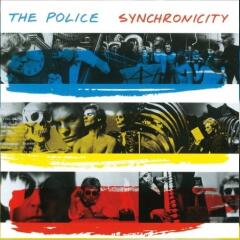
“Synchronicity I” and “Synchronicity II” were written by Sting (Gordon Sumner) and appear as the first and sixth songs on side one of The Police’s fifth studio album, Synchronicity. “Synchronicity I” was released as a single only in Japan, while “Synchronicity II” was released as a single in the U.S. and the UK in October 1983. It went to #16 on the Billboard Hot 100 Singles chart. According to Sting, the synchronicity lyrical theme in both songs refers to Carl Jung’s theory on the subject. With lyrics referring to “the din of Rice Krispies” and “the slime of a dark Scottish lake,” one has to ponder if the reference is to Jungian Theory or Aleister Crowley eating breakfast at Boleskine House. Both songs feature a heavy use of synthesizers. Personnel on the record were: Sting (vocals, bass), Andy Summers (guitar, keyboards), and Stewart Copeland (drums, percussion).
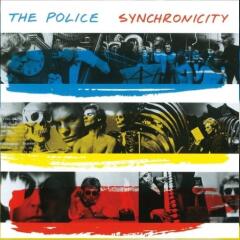
The album, Synchronicity, was the final studio album from The Police. Recorded between December 1982-February 1983 at AIR in Monserat and Le Studio in Quebec, the album was released in June 1983. Produced by The Police and Hugh Padgham, it went to #1 on the Billboard 200 Albums chart and has been certified 8x Platinum by the Recording Industry Association of America. Five singles were released from the LP.
The Police were an English rock band formed in London in 1977. The popular lineup of the band featured Sting, Andy Summers and Stewart Copeland. Four people have passed through the band since its inception. Emerging from the late-seventies British New Wave scene, the band played a blend of punk/pop, reggae and soft jazz. They released five studio albums, three live albums, four soundtrack albums, seven compilation albums, one EP, and 26 singles. They have sold more than 75 million records worldwide. They have won five Grammy Awards and were inducted into the Rock and Roll Hall of Fame in 2003. The band broke up in 1986 but have reunited a few times for select shows and appearances. All three band members have gone on to success in solo ventures. As a solo artist, Sting has released 15 studio albums, five live albums, 10 compilation albums, five EPs, and 51 singles. He has sold more than 25 million records worldwide. He has received a CBE from Queen Elizabeth II, was awarded a Polar Music Prize, a Kennedy Center Honor, a star on the Hollywood Walk of Fame, and is a member of the Songwriters Hall of Fame.