Faced with sustained sub-$2/MMBtu natural gas prices and dim prospects for significant gas-demand growth until sometime next year, a number of major gas-focused E&Ps have been tapping the brakes on production and trimming their planned 2024 capex. But one company — Chesapeake Energy, slated to become the U.S.’s largest gas producer thanks to a recently announced acquisition — has taken a more dramatic step, implementing a novel strategy that will slash production by 25% but leave the E&P ready to quickly ramp up its output as soon as demand and prices warrant. In today’s RBN blog, we’ll review the 2024 guidance of the major U.S. gas producers and delve into the analysis of Chesapeake’s unusual approach.
Natural gas prices have declined severely over the past two or three weeks, and a few days ago (February 20) the March contract settled at $1.576/MMBtu. In nominal dollars, that was the lowest front-month price since the summer of 2020, but in real, inflation-adjusted terms it was the lowest price of the 21st century. The primary culprits are record-high production, which reached 106 Bcf/d in December 2023, combined with one of the mildest winters since the 1950s in many major U.S. heating markets. As a result, gas-storage levels are now more than 25% higher than the five-year average.

The Natural Gas Master Class is a one-day online event focusing on understanding flow analysis, interpreting pipeline data and forecasting future flows. This course is designed to equip you with the knowledge and skills to effectively analyze the complexities of natural gas markets, flow analysis, and pipeline modeling. Join us online
October 21 | Online
Lower natural gas prices are having a predictable impact on gas producer profits and cash flows. Although a couple of smaller producers have yet to report Q4 2023 results, the seven large gas-focused E&Ps that we monitor reported year-end pre-tax operating income and operating cash flows down 86% and 67%, respectively, from Q4 2022. Although their remarkable focus on investment discipline and operational efficiency have allowed producers to stay in the black, the continuing decline in natural gas prices in Q1 2024 threatens further erosion in profitability — and in the cash-flow generation that funds the modest shareholder returns some companies in the gas-focused peer group have managed to sustain.
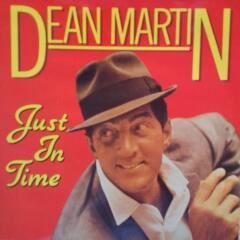
About the song
Jule Styne wrote the melody and Betty Cowden and Adolph Green wrote the lyrics to “Just in Time.” The song first appeared in a 1956 musical, The Bells Are Ringing. Dean Martin and Judy Holliday sang it in the 1960 film version of the musical. It appears as the sixth song on side two of Dean Martin’s sixth studio album, This Time I’m Swingin’! Other artists who have recorded the song include Peggy Lee, Frank Sinatra, and Tony Bennett. Bennett released a single of it in 1956 and recorded it a second time with Michael Bublé as part of his 2006 album, Duets. Bennett continued performing the song live until his retirement concert at Radio City Music Hall in 2021 at the age of 95. Personnel on Martin’s rendition were: Dean Martin (vocals), Nelson Riddle (band leader, arranger), Al Hendrickson (guitar), Joe Comfort (bass), Alvin Stoller (drums), William Miller (piano), and various studio musicians (horns, strings).
This Time I’m Swingin’! was recorded in May 1960 at Capitol Recording Studio in Hollywood with Lee Gillette producing and Nelson Riddle arranging and conducting. It was released in October 1960.
Dean Martin (Dino Paul Crocetti) was an American singer, actor, comedian, and television host. His professional career got started in 1946 as half of the comedy duo Martin & Lewis, which included Jerry Lewis. After he ended his gig with Lewis in 1956, Martin went on to establish himself as a singer and joined with Frank Sinatra, Sammy Davis Jr., Peter Lawford, and Joey Bishop to form The Rat Pack in Las Vegas. He was the host of a successful television variety program, The Dean Martin Show, in the 1960s while achieving a string of hit singles and albums as a recording artist. Martin released 37 studio albums, 20 compilation albums, one EP, one soundtrack album and 108 singles and appeared in 65 motion pictures. He has a Grammy Lifetime Achievement Award, has his foot and handprints at the Grauman Chinese Theater in Hollywood, and has a star on the Hollywood Walk of Fame. Martin died at his Beverly Hills home on Christmas Day 1995 at the age of 78.