
Shell’s two major September developments — the closing of its C$26 billion (US$16.4 billion) acquisition of Canadian conventional producer ARC Resources and its final investment decision (FID) for the C$33 billion doubling of LNG Canada capacity — mark strategic milestones in its resumption of upstream growth after an extended reshaping of its portfolio since 2020. Shell’s cautious, returns-driven approach to the energy transition and the pandemic price shock have led it to refocus on core LNG growth, augmented by deepwater and onshore natural gas production. In today’s RBN blog, we analyze how Shell’s upstream strategy has taken a different path from fellow supermajors ExxonMobil and BP.
The severe downturn triggered by the onset of the pandemic in 2020 marked a major inflection point for all oil and gas producers, including the major international integrateds. As we outlined recently in Gimme Three Steps, ExxonMobil stayed committed to investing through the cycle in large, long-life, low-cost resources. Instead of investing in renewable energy generation, Exxon focused on reducing emissions from operations and lower-carbon solutions such as carbon capture and sequestration (CCS).
In stark contrast, BP in 2020 announced a strategy to cut oil and gas production by 40% and direct investment to renewable power such as offshore wind and solar. Three years later, BP did a strategic U-turn, walking back renewable investment and refocusing on upstream growth, as we described in Back in the High Life Again.
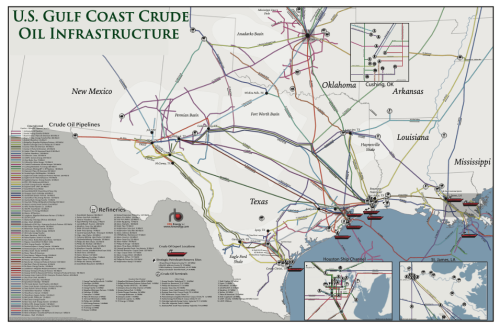
RBN’s US Gulf Coast Crude Oil Infrastructure Map - is up-to-date and provides a clear and comprehensive view into North America’s most dynamic and important crude oil market landscape.
Shell struck a middle path. The company rebased its dividend in 2020 and undertook major portfolio reviews that led to asset sales, which reduced output in the short term, but it did not commit to long-term production cutbacks. In terms of the energy transition, Shell maintained its net-zero target but explicitly capped investment in lower-carbon platforms to a relatively small share of capital employed.
Now, after several years of asset sales and declining output, Shell is returning to upstream growth. At its 2025 Capital Markets Day, the company targeted about 1% annual growth in combined Conventional Gas and Integrated Gas (primarily LNG) production through 2030 while keeping liquids output near 1.4 MMbbl/d. The strategy centers on deepwater oil, LNG and low-cost gas rather than rebuilding the broad asset base Shell sold off earlier in the decade.
Projects starting between 2025 and 2030 were expected to provide more than 1 MMboe/d of peak capacity at an average breakeven of about $35/bbl. The Whale platform in the offshore Gulf and the Mero-4 project offshore Brazil began producing in 2025. The next wave of projects includes Bonga North (offshore Nigeria), Crux (offshore western Australia), Gato do Mato (offshore Brazil), Manatee (offshore Trinidad and Tobago), the North Field expansions (Qatar), Rosmari/Marjoram (offshore Malaysia), and Sparta (U.S. Gulf). Shell owns only partial interest in many of those projects. New volumes must also offset natural declines, maintenance and production-sharing contract effects, which is why more than 1 MMboe/d of project capacity initially translated into only about 1% annual companywide growth.
The September acquisition of ARC Resources (yellow bar segment at right in Figure 1 above) changed the outlook. The transaction added about 370 Mboe/d of output, more than 1.5 million net Montney acres and roughly 2 billion boe of proved-plus-probable reserves. Shell now expects its new projects and Canadian assets to provide about 1.4 MMboe/d of peak capacity by 2030, while combined Conventional Gas (orange bar segments) and Integrated Gas (gray bar segments) production is now expected to grow about 4% annually from 2025, while crude oil, synthetic oil and NGLs (blue bar segments) fall by about 16%.
About the song
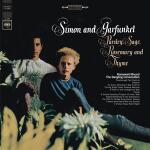
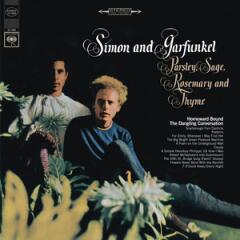
“Homeward Bound” was written by Paul Simon and appears as the fourth song on side one of Simon & Garfunkel’s third studio album, Parsley, Sage, Rosemary and Thyme. Simon wrote the song in 1964 while living in London, and it is thought to have begun life while Simon was waiting for a train at Widnes railway station. The song talks about the loneliness and frustrations of a traveling musician on the road. Released as a single in January 1966, it went to #5 on the Billboard Hot 100 Singles chart. A live version was included on Simon & Garfunkel's Greatest Hits album, released in 1972. Personnel on the record were: Paul Simon (vocals, guitar), Art Garfunkel (vocals), Carol Kaye (bass), Hal Blaine (drums), and Larry Knechtel (organ).
Parsley, Sage, Rosemary and Thyme was recorded between December 1965 and August 1966 at Columbia Studios in New York City and produced by Bob Johnston. The album was released in October 1966 and went to #4 on the Billboard 200 Albums chart, and has been certified 3X Platinum by the Recording Industry Association of America. Four singles were released from the LP.
Simon & Garfunkel was an American musical duo formed by singer, songwriter and musician Paul Simon and singer Art Garfunkel. The two met at school in Queens, NY, where they started singing harmonies together, and Simon began writing songs. While still in their teens, they were billed as Tom & Jerry (named after the popular Hanna-Barbera television cartoon series), and released a single, “Hey Schoolgirl,” on Big Records that went to #49 on the Billboard Hot 100 Singles chart in 1957. This led to the duo making an appearance on American Bandstand. As Simon & Garfunkel, the duo signed with Columbia Records in 1963 and released their debut album, Wednesday Morning, 3 A.M., in October 1964. An electric remix of “The Sound of Silence” became their first #1 single in September 1965. They released five studio albums, four live albums, a soundtrack album, 13 compilation albums, an EP, and 26 singles. They have sold over 100 million records worldwide. The duo last appeared together at the 2010 New Orleans Jazz and Heritage Festival. They have won a Brit Award and 14 Grammy Awards. They were inducted into the Rock and Roll Hall of Fame in 1990, and the Vocal Group Hall of Fame in 2006. Both Simon and Garfunkel have successful careers as solo artists. Garfunkel had to cancel his upcoming U.K. solo concerts due to a respiratory infection. Simon wrapped up his A Quiet Celebration Tour in July.
"About the Song" -- written by Mickey McMahan , RBN Director of Musicology