There has been a lot of acrimony and polarization among the natural gas industry, the environmental community, various consumer advocates, industrial energy users, organized power markets and renewables developers in recent years. However, the ongoing government efforts to prop up the power sector’s coal-fired and nuclear generators have succeeded in uniting all those disparate interests into a single voice saying a single word: No! Today, we discuss the history of the administration’s planned support of coal and nuclear, the unusually unified reaction to it from groups that are more often at odds with each other, and some underlying assumptions about natural gas that aren’t — well — how the gas industry says it works.
The past few years have seen big shifts in the share of U.S. electricity generation coming from various sources. For example, coal-fired power plants, which provided 48% of the 4.1 billion megawatt-hours (MWh) of electricity produced in 2008, accounted for only 30% of the 4.0 billion MWh produced in 2017 (blue line in Figure 1), according to the Energy Information Administration (EIA). And, with the huge run-up in U.S. natural gas production since 2008 (with its resulting downward pressure on prices) — and the implementation of new environmental regulations, including the Mercury & Air Toxics Standards (MATS) rule, which made coal-fired power less economic — the mix turned upside-down. Natural gas-fired power plants, which 10 years ago generated only 21% of the power produced in the U.S., accounted for 32% last year (orange line), edging out coal for the second year in a row. We’ve discussed the competition between coal and gas several times (see This Gas Is Made for Burnin’ and Part 1 and Part 2 of “Torn Between Two Fossil Fuels”). We’ve also looked at the many challenges facing the nuclear power sector (gray line shows its flat share of U.S. power generation) — high maintenance and safety-compliance costs for existing nuclear plants and gargantuan cost overruns for new ones (see Atomic) — and at the inroads being made by wind and solar power, especially in states like California that are taking aggressive steps to reduce their greenhouse gas emissions (see California Sunset).
About the song
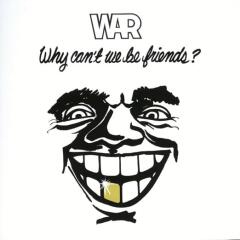
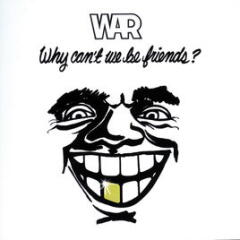
“Why Can’t We Be Friends?” is a hit single by the funk band War off their 1975 album of the same name. The song, written by the group, rose to #6 on the U.S. Billboard Hot 100 and #9 on the U.S. Billboard R&B chart. The personnel on the recording are: Papa Dee Allen (percussion and vocals), Harold Ray Brown (drums and vocals), B.B. Dickerson (bass and vocals), Lonnie Jordan (keyboards and vocals), Charles Miller (sax and vocals), Lee Oskar (harmonica and vocals), and Howard E. Scott (lead vocals and guitar).
“Why Can't We Be Friends?” has been used in a number of television shows, movies, and commercials over the years. It was played in outer space when NASA beamed it to the linking of Soviet cosmonauts and U.S. astronauts for the Apollo-Soyuz Project. The Why Can’t We Be Friends? album also included the hit “Low Rider.”
War started as a world music R&B unit from Long Beach, CA. The group was discovered by producer Jerry Goldstein and singer Eric Burdon (The Animals) while playing at the Rag Doll nightclub in North Hollywood, CA, in 1969. Goldstein signed them to a management/production deal, and Burdon used them as his backup band for two albums. The first, Eric Burdon Declares War, yielded the big hit, “Spill the Wine.” Eric Burdon and War have the distinction as being the last band that played with Jimi Hendrix, as Hendrix joined them at their gig at Ronnie Scott’s club in London for a rousing jam on the song “Tobacco Road” the night before he passed away. War went off on their own in 1971 and released their first album (entitled War) the same year. The group’s most successful album was their fifth LP, The World Is a Ghetto, which went to #1 on the U.S. Billboard Album & R&B charts and yielded the hit singles “The Cisco Kid” and “The World Is a Ghetto.” The LP was listed as Billboard’s #1 album of 1973.
War has released 18 studio albums (Including the two with Eric Burdon), three live albums, seven compilation albums and 60 singles during their career so far. Lonnie Jordon, the only member from the original band, still tours with other musicians under the War name.