The U.S. gas market in April — the first month of the official storage injection season — was anything but typical. Production was at record highs, nearly 8.0 Bcf/d higher than last year. At the same time, weather in April was exceptionally cold, which meant storage activity remained in withdrawal mode on a net U.S. basis through the first three weeks of the month — a first for the April gas market going back at least eight years. That anomaly, in turn, led to an expanding deficit in storage compared to previous years, deferring the inevitable — shoulder season weather and supply surpluses — for another month. But now, in May, with the cold-weather effects on gas demand fading and record production levels here to stay, the market is bracing for a storage tsunami. The question is, will it be enough to erase the massive inventory deficit compared to recent years? Today, we update our analysis of the gas market balance and implications for the 2018 injection season.

The Natural Gas Master Class is a one-day online event focusing on understanding flow analysis, interpreting pipeline data and forecasting future flows. This course is designed to equip you with the knowledge and skills to effectively analyze the complexities of natural gas markets, flow analysis, and pipeline modeling. Join us online
October 21 | Online
This is the latest of our regular updates of the gas market fundamentals. When we last checked in on the gas supply and demand balance last month in Ghost On the (Trading) Floor, the market was exiting a withdrawal season with a massive 700-Bcf deficit in storage compared with the prior winter (2016-17), despite record production levels and lackluster winter weather and demand. But as we noted then, that year-on-year storage differential was due more to an incredibly mild winter last year than to this winter being particularly cold. In fact, putting it into historical context, winter 2017-18 ranked the ninth-warmest in nearly five decades. In other words, had winter 2016-17 been a more normal one, this past winter would have come out much less bullish by comparison, particularly given the supply surplus — the implication being that as soon as the cold weather and related heating demand dissipated, soaring production volumes would inundate the market and rapidly shrink the year-on-year storage deficit. But that didn’t happen, at least not in April.
Rather, in the past month, the market has only expanded the deficit versus last year — to more than 900 Bcf. That’s because, as we alluded to above, fundamentals in April veered far from the norm. In a typical April (over the past five years), the market injects about 175 Bcf into storage. In contrast, this April, the EIA reported withdrawals totaling more than 70 Bcf through the first three weeks of the month. One small withdrawal in April is not unusual per se. But a look at the historical EIA storage data since 2010 tells us this will be the first time in at least eight years that storage will end with a net withdrawal for April.
Figure 1 below summarizes the fundamentals that led to the string of late-season withdrawals, using monthly average supply and demand volumes from RBN’s NATGAS Billboard report. The graph shows the year-on-year change for each of the supply and demand components and the resulting balance (supply minus demand), with a red bar indicating a decline from last year and a blue bar representing an uptick from last year.
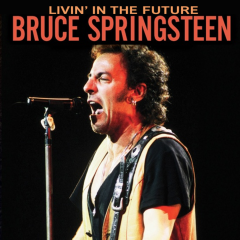
About the song
"Livin' in the Future" is the third song off of Bruce Springsteen's 15th studio album, Magic. It was the first Springsteen album in five years featuring the E Street Band, and was produced by Brendan O'Brien, who utilized a more organic sound hearkening back to earlier Springsteen & E Street Band recordings. Upon its release, Bruce stated "that even though it's a song called ‘Livin' in the Future,’ it's really about what's happening now." Released on September 25, 2007, Magic debuted on the U.S. Billboard Top 200 charts at #1. It has since sold over 1 million copies in the U.S. to date. Rolling Stone magazine ranked it at #2 on their list of the Top 50 Albums of 2007. The personnel on "Livin' in the Future" is: Bruce Springsteen - lead & backing vocals, guitar, keyboards, percussion; Roy Bittan - piano, organ; Clarence Clemons - sax & backing vocals; Danny Federici - organ, keyboards; Nils Lofgren - guitar & backing vocals; Patti Scialfa - backing vocals; Garry Tallent – bass; Steven Van Zandt - guitar & backing vocals, and Max Weinberg - drums. Soozie Tyrell plays violin on the cut.
Bruce Springsteen released his debut album, Greetings from Asbury Park, N.J. in 1973. He has recorded 18 studio albums and five live albums to date. He has won one Academy Award, four AMA Awards, one Brit Award, two Golden Globe Awards, one Juno Award, five MTV Video Music Awards, and 20 Grammy Awards. He was inducted into the Rock and Roll Hall of Fame in 1999, Songwriters Hall of Fame in 1999, and the New Jersey Hall of Fame in 2007. In 2009, he was the recipient of the Kennedy Center Honors; in 2013, he won MusiCares Person of the Year, and in 2016, he received the Presidential Medal of Freedom.