For years now, the international LNG trade has been based primarily on long-term contracts between buyers and sellers, and those deals have been indexed to oil prices. That long-standing regime is now tottering, however, and a New World Order that would add considerable flexibility to LNG trading—and increase the role of the LNG spot market—may be in the offing. That would have huge implications for U.S. natural gas producers who want to export increasing amounts of liquefied gas. Today, we begin an examination of market forces reshaping how LNG is bought and sold worldwide, and why that matters to those active in the Marcellus, the Barnett Shale and other major plays.
Considering how important a player the U.S. has always been in worldwide energy production and consumption, the country’s experience with the liquefied natural gas (LNG) sector has been limited—at least until now. Sure, a few LNG import facilities have been in place here for decades. (Distrigas, near Boston, has been operating since 1971, but other early facilities were mothballed in the 1980s or ‘90s before being restarted in the 2000s--just before we realized that the U.S. has far more natural gas underfoot that we had thought.) But LNG imports peaked in 2007, when they averaged only 2.1 Bcf/d—a drop in the U.S. gas demand bucket. Now, with lower-48 U.S. gas production averaging more than 70 Bcf/d in 2014 (up from 53 Bcf/d six years earlier) and likely to average 73 or 74 Bcf/d this year, four of those LNG import facilities are being revamped by adding LNG liquefaction facilities (for billions of dollars) so they can export U.S.-sourced gas, with the first (Cheniere Energy’s Sabine Pass) planned to start up before the end of the year. As we said in Is That All There Is? (our recent LNG export series), these first four LNG export projects (most backed by long-term liquefaction tolling agreements, with LNG pricing based on Henry Hub gas) by 2018-19 will liquefy up to 6 Bcf/d of gas from domestic plays; another few export projects under development may boost gas use for export by half (to 9 Bcf/d) by 2020-21. A slew of other LNG export projects are stacked up behind them, but their fate (and the prospects for boosting LNG exports to 12 or 15 Bcf/d by the mid-2020s) may well depend on how the international LNG market—now in considerable turmoil—sorts itself out over the next two or three years.

Source: Tokyo Gas
Before we delve into what’s been causing that upheaval, let’s take a quick look at how the LNG trade developed. The idea of oil-indexing the price of natural gas itself (and later LNG) was born in the Netherlands in the mid-1960s, when the Dutch were trying to optimize the profitability of domestically produced gas sold to others in Western Europe. When LNG exporting and importing began in earnest (to Japan, in the late 1960s), LNG prices were fixed at first, but starting with the OPEC oil crisis in 1973-74 (when oil prices soared, putting LNG at a steep discount to oil) a series of steps (and missteps) were made to link oil and LNG prices, all with the aim of mitigating the risks faced by LNG buyers and sellers (mostly sellers) —and the developers of capital-intensive LNG export facilities. Now, long-term, oil-indexed contracts account for most of the LNG delivered worldwide, especially in Asia, where the vast majority of the new LNG demand is coming from. Oil-indexing has worked well for the most part, protecting LNG buyers and sellers from worst-case scenarios and giving developers of LNG export facilities the confidence they (and their lenders) needed to invest billions of dollars on their projects. But that model for doing things is being up-ended. First, expectations about U.S. natural gas production declines and ever-rising imports of LNG proved horribly wrong. Only 10 years ago, the U.S. Energy Information Administration (EIA) was estimating that this year (2015) we would be importing 120 billion cubic meters of LNG (equivalent to 12 Bcf/d). Oops. Now it looks like we’re headed toward exporting 6 Bcf/d of LNG by 2020 and half again as much by 2025 (see Figure #1).
About the song
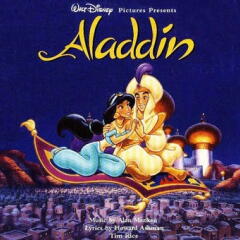
“A Whole New World”, known all too well by the parents of any children born since 1987, was a Number 1 hit from Aladdin, Disney’s 1992 animated feature film. The song, sung by Brad Kane and Lea Salonga, won an Oscar for Best Original Song and a Grammy for Song of the Year.