In just a few months’ time, it’s become easier to get regulatory approval to use unmanned aerial systems—more commonly known as drones—and the number of ways drones can be employed by the oil and gas sector has grown substantially. In fact, drones are getting involved in just about everything: geologic mapping, site surveying, methane detection, pipeline inspection—you name it. Today, we explore how drone use in the energy sector is quickly morphing from geeky to mainstream.
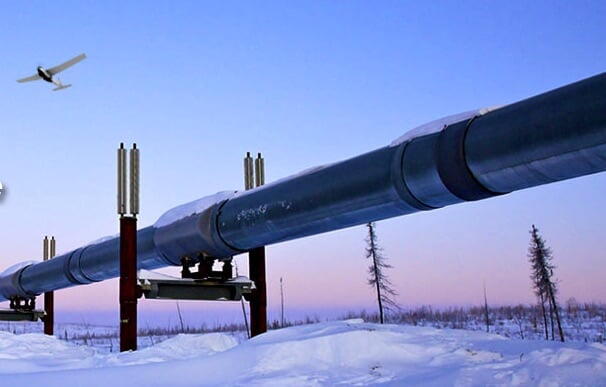
When the National Aeronautics and Space Administration (NASA) sent the Mars Curiosity rover to the “red planet” three years ago it fitted the high-tech dune buggy with a methane sniffer (formal name: Tunable Laser Spectrometer). The scientific value of the sniffer was that the presence of methane (aka CH4 or the main ingredient in natural gas) can suggest the possibility of life (though not necessarily Martians). Now, NASA’s Jet Propulsion Laboratory, which makes a bundle of money licensing the technology NASA develops, is working with Pacific Gas & Electric (PG&E) on a methane sniffer small enough to mount on an unmanned aerial system (UAS) and sensitive enough to help PG&E detect even very minor natural gas leaks along its 48,000 miles of California gas transmission and distribution pipelines. If they succeed (and it seems likely they will), expect to see methane-sniffing drones hovering over gas pipelines near you—and over oil and gas production areas. And, as we’ll get to, methane detection and pipeline inspections are only the tip of the iceberg of what a drone/UAS can help energy-sector companies do.
Source: AeroVironment
In our initial look at drones and their potential applications (My Da-Rona—Drones Are Preparing For Take-off In The Oil And Gas Industry), we said that a drone is a power-driven aircraft (other than a model aircraft) flown remotely by human operators “on the ground.” In the post-9/11 era the use of drones has become more common, at first by the military (and national security agencies such as the CIA), and more recently by police departments and the U.S. border patrol. Because of the potential for collisions with planes and other conventional aircraft, however, the Federal Aviation Administration (FAA) for some time had been slow to allow the commercial use of drones. Now, with more experience with UAS technology under its belt, the FAA has been moving more quickly to expand the allowable use of drones—with certain restrictions. In February 2015 the FAA proposed a framework of regulations to govern the use of smaller drones (those that weigh less than 55 pounds) that, among other things, would require that the UAS be operated only during daylight hours and within the operator’s “visual line of sight” (VLOS). The drone also couldn’t fly any higher than 500 feet or any faster than 100 miles per hour, and it would need to stay out of airport flight paths and restricted air space. The proposed rule is not final yet though, and for now to use a UAS for commercial purposes you need to get what’s called a Section 333 exemption.
About the song
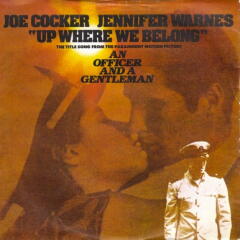
“Up Where We Belong” was a Number 1 hit on the U.S. Billboard Hot 100 for Joe Cocker and Jennifer Warnes in 1982. The song played during the final scene of “An Officer and a Gentleman,” when Richard Gere’s character, wearing his dress whites, arrives at Debra Winger’s factory and carries her away while her co-workers cheer and cry. The song won an Oscar; so did Louis Gossett Jr., for best supporting actor.