The oil price meltdown earlier this year and demand destruction wrought by COVID-19 forced Canadian crude oil producers to throttle back output. At the height of the cutbacks in May, almost 1 MMb/d of oil supply had been curtailed due to uneconomic prices and/or lack of downstream demand. With oil prices and demand having staged a partial recovery in the past few months, production is rising off the lows and producers are talking about even higher supplies in the months ahead, with the prospect of returning to pre-pandemic levels. Today, we begin a short series that reviews the recent production pullback and discusses how producers are positioning themselves for a resurgence of their oil supplies.
Crude oil production in Western Canada never seems to be able to catch a break. Congested pipelines, government-imposed production curtailments in Alberta that started in 2019 (and still remain officially in place), and wild price swings in what routinely seem to be some of the cheapest heavy oil barrels around have dealt numerous crushing blows to an industry at the heart of one of the largest oil-producing regions in the world. Things came to a head (again) with the short-lived Saudi-Russia driven oil price crash in March of this year and subsequent COVID-led demand destruction as consumers followed shelter-in-place orders. The Canadian heavy oil price benchmark, Western Canadian Select (WCS), reached all-time lows in April, printing single digits for much of that month. The negative demand impacts from the sudden reduction in flying and driving arrived around the same time, and resulted in refineries rapidly cutting production runs. That meant less crude oil was needed from major producing regions like Western Canada.

Join Backstage Pass, your gateway to exclusive industry insights, connections, and resources across energy markets. Gain direct access to RBN's extensive archive covering crude oil, NGLs, LNG, natural gas, refined products, renewables, and energy transition.
The double whammy of lower prices and lower demand forced a rapid rationalization of costs and reductions in oil production levels across the region’s major producing regions. Alberta, being Canada’s largest producing region by far, took the brunt of the declines, with output falling 790 Mb/d from February, just before the downturn, to May, the month in which the cutbacks were at their peak (blue bar segments in left chart in Figure 1). We estimate that Saskatchewan’s oil output declined by about 140 Mb/d (red bar segments) and that of Manitoba’s fell by about 10 Mb/d (green bar segments). [British Columbia’s oil output is close to negligible and is not included.] That adds up to a total decline across the three provinces of 940 Mb/d between February and May (dashed black oval in left graph). [We’ll discuss the June production data in a moment.]
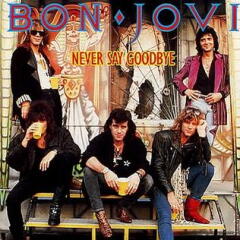
About the song
"Never Say Goodbye" was written by Jon Bon Jovi and Richie Sambora and appears as the ninth song on Bon Jovi’s third studio album, Slippery When Wet. Released as a single outside the U.S. in June 1987, the song still went to #11 on the Billboard Rock Tracks chart and #28 on the Hot 100 Airplay Survey. Personnel on the record were: Jon Bon Jovi (lead vocals, rhythm guitar), Richie Sambora (lead guitar, backing vocals), Alec John Such (bass, backing vocals), Tico Torres (drums, percussion), and David Bryan (keyboards, backing vocals).
Slippery When Wet was recorded at Little Mountain Sound Studios in Vancouver, BC, with Bruce Fairbairn producing. The album was released in August 1986 and went to #1 on the Billboard Top 200 Albums chart. It has been certified 12x Platinum by the Recording Industry Association of America. Four singles were released from the album.
Bon Jovi is an American rock band formed in Sayreville, NJ, in 1983 by Jon Bon Jovi, Richie Sambora, David Bryan, Tico Torres, and Alec John Such. Such was replaced by Hugh McDonald in 1994 and Sambora by Phil X in 2013. Bon Jovi has released 15 studio albums, three live albums, five compilation albums, five EPs, and 66 singles. The band has sold over 130 million records worldwide, and has won two American Music Awards, one Billboard Music Award, one Brit Award, one Grammy Award, two MTV Video Music Awards, and two World Music Awards. Bon Jovi was inducted into the Rock and Roll Hall of Fame in 2018. The band has completed a new album, but the release date and touring plans are on hold due to COVID.