The Biden administration has placed some big bets on clean hydrogen, seeing it as a replacement fuel for some hard-to-abate industries and putting it at the heart of its long-term decarbonization efforts. But while clean hydrogen has significant long-term potential — backed by major subsidies, including the 45V production tax credit (PTC) — figuring out a path to a greater role in the U.S. energy mix is more complicated than it might seem. The proposed rules around the tax credit have stirred up a hornet’s nest worth of criticism from those who think the guidance might ultimately do more harm than good. In today’s RBN blog, we’ll preview our latest Drill Down Report on the incentives — primarily the 45V tax credit — intended to expand the clean hydrogen industry and examine some of the barriers to significant growth.
Development of a clean-energy economy was a key plank in President Biden’s campaign platform four years ago and it has remained a priority since he took office in January 2021. With a focus on the short-term changes necessary to make any long-term goals viable, Biden set out some ambitious 2030 targets: at least 80% of U.S. power generated by renewable sources, a 50%-52% reduction (from 2005 levels) in greenhouse gas (GHG) emissions, and production of 10 million metric tons per annum (MMtpa) of clean hydrogen (ramping up to 20 MMtpa by 2040 and 50 MMtpa by 2050).

The administration was able to steer passage of two important pieces of legislation in its first two years: the Infrastructure Investment and Jobs Act (IIJA, better known as the Bipartisan Infrastructure Law) was passed in November 2021 and the Inflation Reduction Act (IRA) became law in August 2022. Among other things, the IIJA established $8 billion in federal funding for the development of a clean-hydrogen industry, including $7 billion for a series of regional hubs (see The Contenders for more) to be developed across the country. The IRA, widely seen as a game-changer regarding incentives around clean energy, includes provisions on everything from methane emissions and electric vehicles (EVs) to carbon capture and sequestration (CCS) and alternative fuels, but one of the most significant elements was the inclusion of the 45V tax credit.
Passage of the IRA set off intense debate (and lobbying) about how the guidelines around the 45V tax credit would be written and implemented. While some industry groups argued for looser guidelines around the PTC that would allow the clean hydrogen industry to grow quickly, others called for a stricter set of rules from the start, arguing that an approach that was too lax would fail in the ultimate goal to substantially decrease GHG emissions. Those guidelines were widely expected to be announced by August 2023, but as summer turned into fall, and fall into winter, it was clear that the debates over 45V were continuing inside the Biden administration. The rules were finally rolled out in December. Publication of the proposed rulemaking began a 60-day comment period, which concluded February 26.
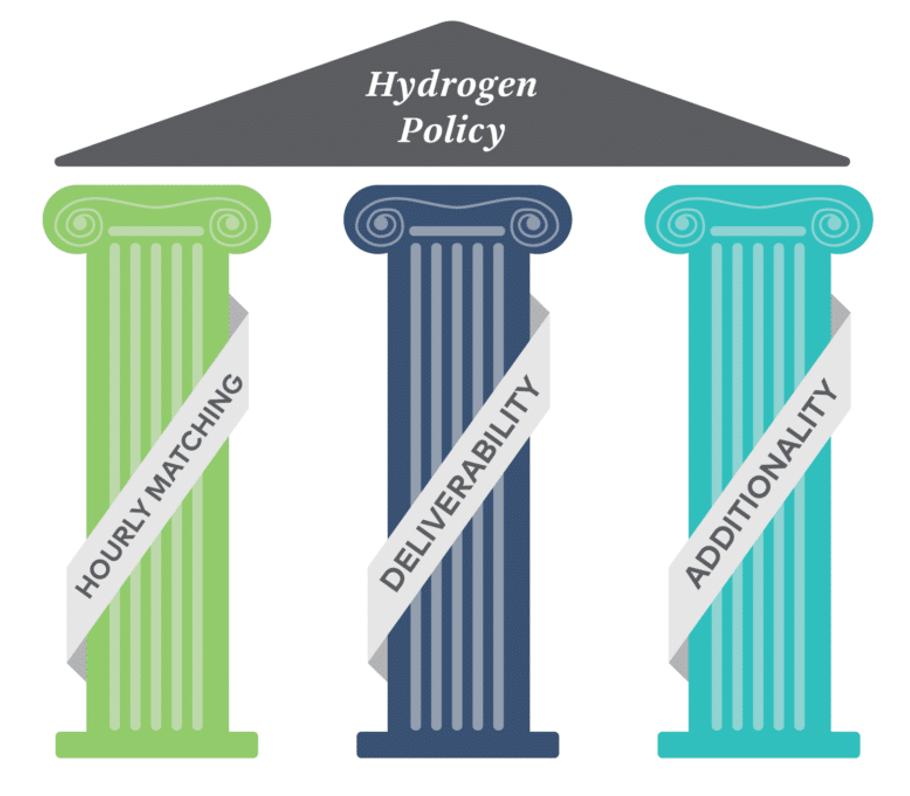
Figure 1. The “Three Pillars” of Clean Hydrogen Production. Source: 3Degrees
About the song
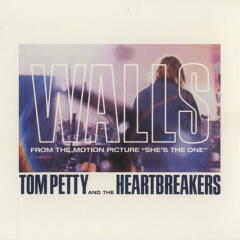
“Walls (Circus)” was written by Tom Petty and appears as the first song on Tom Petty and the Heartbreakers’ ninth studio album, She’s the One (Songs and Music from the Motion Picture). Released as the first single from the album in July 1996, it went to #1 on the Billboard Adult Alternative Songs and #69 on the Billboard Hot 100 Singles charts. Personnel on the record were: Tom Petty (lead vocals, guitar, harpsichord), Mike Campbell (six- and 12-string guitar, Marxophone), Benmont Tench (keyboards), Howie Epstein (bass, backing vocals), Curt Bisquera (drums), Lindsey Buckingham (backing vocals), and Chris Trujillo (percussion).
She’s the One (Songs and Music from the Motion Picture) is the soundtrack for the 1996 film She’s the One, written and directed by Edward Burns. Some of the songs on the album were tunes left over from the Wildflowers album when it was decided to be released as a single rather than a double LP. The songs for the album were recorded between 1992-96 at Sound City in Van Nuys and Village Recorders and Andora Studios in Los Angeles. It was produced by Rick Rubin, Tom Petty and Mike Campbell. Released in August 1996, it went to #15 on the Billboard 200 Albums chart and has been certified Gold by the Recording Industry Association of America. Three singles were released from the LP. A completely different version of the album was released on Record Store Day in early 2021 under the title Angel Dream. “Walls (Circus)” was not included in this release.
Tom Petty was an American rock and roll singer, songwriter and guitarist. He was the leader of Tom Petty and the Heartbreakers, Mudcrutch, and was a member of the supergroup the Traveling Wilburys. His professional career started with the Gainsville, FL, band Mudcrutch, which would evolve into Tom Petty and the Heartbreakers. He released 13 studio albums with the Heartbreakers, two with Mudcrutch, three with the Traveling Wilburys, and three as a solo artist. He released 68 singles and has sold more than 80 million records worldwide. He won a Billboard Music Award, three Grammy Awards, a Billboard Century Award, a George and Ira Gershwin Award, an ASCAP Golden Note Award, three MTV Video Music Awards, and has a star on the Hollywood Walk of Fame. Tom Petty and the Heartbreakers were inducted into the Rock and Roll Hall of Fame in December 2001. Petty died at his home in Malibu in October 2017 at the age of 66.