At this time last year, the U.S. natural gas market was exiting an extremely bearish winter, the gas storage inventory was nearly 500 Bcf higher, and prompt month prices for the CME/NYMEX Henry Hub natural gas futures contract were more than $1.00/MMBtu lower. The question on our minds then was how far would production have to decline or how much demand was likely to show up to prevent storage capacity constraints by fall. In either case, the overarching sentiment was that prices would have to remain relatively low to balance the market. Now we’re exiting an almost equally mild winter, but a combination of lower production and higher exports has drawn down storage to well below year-ago levels, and the question occupying the market is more along the lines of, just how bullish could the market get this year? Today, we wrap up our look at injection season storage scenarios for the next seven months.
To understand how natural gas storage and prices could play out later this year, we started in the last episode of “You Keep Me Hangin’ On” by looking at some plausible supply/demand balance scenarios for the 2017 injection season (April through October). Since the relative strength or weakness of the market compared to history can tell us a good deal about storage and price direction, we compared those possible scenarios to the same period in 2016 to get the year-on-year changes in the balance. For the first set of scenarios, we assumed gas production—the biggest driver on the supply side—imports and exports remain flat, either to the recent 30-day average, as in the case of production and exports (given they are less seasonal), or to the same period in 2016 in the case of imports, since those volumes are seasonal. We then applied these assumptions against different scenarios for U.S. demand (i.e. power generation, industrial and residential/commercial usage). Since these demand sectors are highly susceptible to weather and weather will always be the big natural gas wildcard, we used recent historical data to represent a spectrum of possible demand outcomes, including: last year, 3-year average, 3-year high and 3-year low.

The NATGAS Appalachia weekly report provides the data and insights to monitor the northeast natural gas market’s twists and turns and identify the risks and opportunities along the way, including tracking supply-demand trends, outbound capacity and their impact on takeaway pipeline utilization, and regional prices.
You can see the details of each scenario in that last episode, but in short what we found is that if production and exports remain flat to recent levels through injection season, and imports are flat to the same period in 2016, it would only take U.S. demand coming in slightly above the 3-year average to result in a tighter gas market balance in 2017 versus 2016. To put that in perspective, at the 3-year average, U.S. demand would be nearly 1.0 Bcf/d lower than it was last year. In other words, demand could decline versus 2016 to some extent and still result in a tighter balance. If U.S. demand stays flat to last year (also the record-high on a seasonal average basis), it would leave the market nearly 2.0 Bcf/d shorter supply year on year, and if demand actually grew year on year to the 3-year high, it would leave the market 2.3 Bcf/d shorter versus 2016. Another way to look at those scenarios is they imply that it would take a considerable drop in the U.S. consumption for the market to turn more bearish compared to 2016. And that’s without even accounting for growth in export demand, which as we noted last time is all but inevitable this year.
About the song
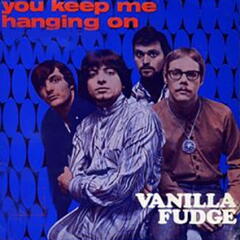
"You Keep Me Hangin' On" was a #1 hit on the Billboard Hot 100 for The Supremes in 1966. Written by the trio of Lamont Dozier and brothers Brian and Eddie Holland, it was one of their songs that defined the Motown sound of the late 1960s. In 1967 a vastly different rock version of the tune was released by Vanilla Fudge; it became that band’s biggest hit. Since then, cover versions of the song have returned it to the Billboard Hot 100 several more times, making it one of only six songs to achieve that feat.