In March 2020, the collapse of the OPEC-plus coalition, the initiation of COVID-19 lockdowns, and other factors pushed the U.S. E&P sector to the brink of insolvency. Crude oil prices had crashed to $20/bbl — one-third their level at the start of that fateful year — and producers had shifted to survival mode, slashing capex, cancelling infrastructure projects, and eyeing new, more dire worst-case scenarios. Who would have thought that only 22 months later E&Ps would be winning back investors and enjoying sky-high share prices? Of course, the recovery in commodity prices played a major role in this reversal. But another driver has been an unexpected wave of corporate consolidation that has allowed many E&Ps to boost their inventories of high-margin assets, accelerate free cash flow generation, and grow shareholder returns while slashing capital and corporate expenditures. In today’s RBN blog, we examine the forces behind — and the implications of — the most important surge of corporate upstream deals in two decades.
In the past 18 months, the value of announced U.S. corporate transactions in the E&P space soared to $82 billion, more than eight times the total of the previous 12 months. Most significantly, these deals involving publicly traded companies accounted for three-quarters of total M&A transaction value and included more than 20 transactions valued at over $400 million. Concurrently, several major private equity firms have been merging their portfolio companies into a single entity — or “smash-co,” to use the industry term.

This combination of public and private deals is the most impactful wave of corporate consolidation among E&Ps since the turn of the century two decades earlier, when a plunge in oil prices spurred mega-deals that helped to form many of today’s supermajors (Exxon/Mobil, BP/Amoco/ARCO, and Chevron/Texaco) and large independents (Anadarko/Union Pacific/Kerr McGee, ConocoPhillips/Burlington Resources, and Devon/Mitchell Energy/Ocean Energy). The oil price crash in 2014 seemed to be setting up the same predator-prey scenario, as many producers had bloated balance sheets from massively outspending cash flow to build acreage inventories in multiple unconventional plays. But, with few exceptions, that didn’t happen and we didn’t see a big wave of consolidation. Instead, companies turned inward, shedding non-core assets to concentrate on core plays.
About the song
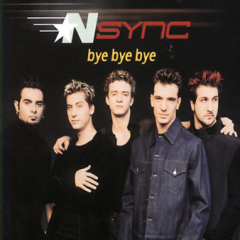
“Bye Bye Bye” was written by Kristian Lundin, Jake Schulze, and Andreas Carlsson and appears as the first song on NSYNC’s third studio album, No Strings Attached. Released as the first single from the LP in January 2000, “Bye Bye Bye” went to #4 on the Billboard Hot 100 Singles chart. The video for the song — directed by Wayne Isham, with a budget of $1 million — has had over 280 million views on YouTube and won two awards at the 2000 MTV Video Music Awards. Personnel on the record were: Lance Bass, JC Chasez, Joey Fatone, Chris Kirkpatrick, Justin Timberlake (lead, backing vocals), Michael Railton (keyboards), Michael Thompson, Esbjorn Ohrwall (guitars), Guy Roche (keyboards, drum programming), Casey LaPoint (harp), and Michael Tucker (Roland TR-909).
No Strings Attached was recorded between February 1999 and January 2000 at Battery Studios in New York City, Cheiron in Stockholm, and Cove City Sound in Orlando, FL. It was produced by Kevin Antunes, Babyface, Kevin Briggs, JC Chasez, Riprock ’n’ Alex G, Kristian Lundin, Richard Marx, Rami Yacoub, Veit Benn, Teddy Riley, Guy Roche, Jake Schulze, and Justin Timberlake. The LP was engineered and mixed by David Cole, Mick Guzanski, Scott Humphrey, Mario Lucy, George Mayers, Pat McMakin, Carl Nappa, Dushyant Bhakta, Chris Trevett, Michael Tucker, Franz Verna, Tom Bender, Charles McCrorey, Cesar Ramirez, Jason Piske, Chaz Harper, Dag Gabrielsen, Adam Barber, Jim Amatiello, Joe Smith, Brady Barnett, OK Hee Kim, Joe Woods, Shane Stoneback, Bray Merritt, and Toby Dearborn. Released in March 2000, the album went to #1 on the Billboard 200 Albums chart and has been certified 11x Platinum by the Recording Industry Association of America. Four singles were released from the LP.
NSYNC was a boy band formed in Orlando, FL, by Chris Kirkpatrick in 1995. Kirkpatrick was joined by Timberlake, Chasez, Fatone, and Bass. The group has roots in Orlando as members of The Mickey Mouse Club TV show and entertainers at Universal Studios Florida. Original manager Lou Pearlman set the group up with a house in Orlando where they rehearsed, continuously learning dance routines and singing harmonies together. NSYNC has released four studio albums, three compilation albums, one soundtrack album, one holiday album, and 18 singles and has sold more than 70 million records worldwide. The band has won three American Music Awards, five Billboard Music Awards, and seven MTV Video Music Awards. The band took an indefinite hiatus after 2002 but have reunited a couple of times for special events. All five members have gone on to successful solo careers, with Justin Timberlake going on to sell over 88 million records worldwide as a solo artist. He has won 10 Grammy Awards, three Brit Awards, nine Billboard Music Awards, four Prime Time Emmy Awards, and a Contemporary Icon Award from the Songwriters Hall of Fame. In addition to his music career, Timberlake has had starring roles in four motion pictures.