It’s no surprise that the onset of the COVID-19 pandemic early this year shut down upstream mergers & acquisition (M&A) activity, just as it did America’s corporate offices, restaurants, entertainment venues, and schools. U.S. M&A deal flow slowed to a trickle in the first half of 2020 as companies’ valuations dropped along with bid prices and E&P executives struggled to realign expenditures with dwindling cash flows. But, as we’ve seen in the past, energy-commodity price crashes eventually spur a resurgence in M&A activity. The dam finally broke in late July, when Chevron announced a $13 billion takeover of Noble Energy, followed in short order by other, major corporate consolidations that brought the deal value total for the last five months to nearly $50 billion. This time was different in one important way, though: Instead of the strong preying on the weak, the strong merged with the strong in low-premium, all-stock transactions. Today, we analyze this new paradigm and delve into the details of the high-value deals.
First, some perspective on the history of upstream-sector M&A. Since the breakup of Standard Oil’s monopoly over a century ago, the oil industry has evolved in response to changing price environments. From their common ancestor, the Seven Sisters continued to dominate the oil patch. Today’s major integrated companies and large, independent E&Ps were generally formed in three waves of consolidation that followed major price crashes. The first was in the early to mid-1980s, when oil prices began to fall from the peak in those days near $40/bbl. The pieces that were to become today’s super-majors began to come together with the mergers of Phillips Petroleum/General American, Standard Oil (CA)/Gulf Oil, Texaco/Getty Oil, Mobil/Superior Oil, Royal Dutch/Shell Oil, and BP/Standard Oil (OH). The second oil price plunge in the late 1990s led to the merger wave that largely finished the process of forming the industry’s giants, with BP grabbing ARCO and Amoco, Exxon merging with Mobil, Total acquiring PetroFina and Elf Acquitaine, and Chevron buying Texaco. Large E&Ps followed suit in the early 2000s, as Anadarko bought Union Pacific Resources and Kerr-McGee, Devon snatched Mitchell Energy and Ocean Energy, Alberta Energy and Pan Canadian merged to form Encana (now Ovintiv), ConocoPhillips purchased Burlington Resources, and Pioneer Natural Resources nabbed Evergreen Resources.

The Crude Oil Billboard keeps readers at the forefront of the U.S. crude oil market by offering access to data and information moments after its release. Say goodbye to PDF reports that come out after the market has already moved on.
The 2014-15 oil price plunge seemingly created the conditions for another major consolidation wave. But it did not happen because the bid-ask spread between cautious buyers and sellers seeking high premiums was still too wide. Transaction activity did re-emerge somewhat as prices recovered. However, instead of huge corporate mergers, companies began shedding non-core assets to dramatically narrow their strategic focus to a handful of core, unconventional resource plays. They generally used the proceeds from divestitures and rising equity valuations to target large asset packages and pure-play producers in their core areas. These deals were driven by the desire to expand drilling inventories as well as secure additional current production. Cash-flow multiples in corporate transactions averaged 5x to 6x and implied acreage values for the oil-weighted plays ranging from $35,000 to $70,000 per acre. Equity made up approximately 70% of deal value, on average, with cash and net debt averaging 15% each. The competition for acreage in the Permian, Eagle Ford, SCOOP/STACK and other plays resulted in successful bidders paying significant premiums to current stock prices for the small, pure-play E&Ps. For example, the premiums over the prior-day closing price was 29% for Concho Resources’ $9.7 billion purchase of RSP Permian, 35% for Encana/Ovintiv’s $7.7 billion acquisition of Newfield Energy, and 37% for EQT Resources’ $8.2 billion merger with Rice Energy.
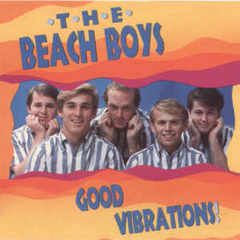
About the song
"Good Vibrations" was written by Brian Wilson and Mike Love. Recorded between February and September 1966 at Western, Columbia, Gold Star, and Sunset Sound in Hollywood, CA, the tune would represent a milestone in pop singles. Wilson recorded over 90 hours of music during this time to create short, interchangeable sections of music that would later be molded into pop songs for the proposed Beach Boys Smile album, the follow-up to Pet Sounds. Smile was not released as a Beach Boys album until 2004, when Wilson issued a revised and re-recorded version of it under the title: Brian Wilson Presents Smile. Produced by Brian Wilson, and released as a stand-alone single in October 1966, "Good Vibrations" went to #1 on the Billboard Hot 100 Singles chart. The song, at four minutes and 15 seconds long, with its shifts in keys, groove, and timbre — not to mention the use of an Electro-Theremin — was groundbreaking for a pop single in 1966. Beach Boys (and Beatles) publicist Derek Taylor described the song as a "pocket symphony." It became The Beach Boys’ first million-selling single, and the first single to be certified Gold by the Recording Industry Association of America. It was also the last #1 song Brian Wilson wrote. It has since been certified Platinum by the RIAA. Personnel on the record were: Brian Wilson (vocals), Carl Wilson (lead vocals), Mike Love (co-lead vocals), Dennis Wilson (organ), Hal Blaine (drums, timpani, percussion), Al De Lory (piano, harpsichord), Larry Knechtel (organ), Jesse Ehrlich (cello), Tommy Morgan (harmonica), Al Casey (guitar), Ray Pohlman, Carol Kaye (electric bass), Lyle Ritz (acoustic bass), Jim Horn (piccolo), and Paul Tanner (Electro-Theremin). "Good Vibrations" was featured as the first song on side two of The Beach Boys 12th studio album, Smiley Smile. Released in September 1967, the LP went to #41 on the Billboard Top 200 Albums chart.
The Beach Boys are an American rock band formed in Hawthorne, CA, in 1961 by brothers Brian, Carl, and Dennis Wilson, their cousin Mike Love, and friend Al Jardine. Nine members have passed through the band since its inception. The Beach Boys have released 30 studio albums, eight live albums, 23 EPs, and 71 singles; have sold over 100 million records worldwide; and are members of the Rock and Roll Hall of Fame. Dennis Wilson died in 1983, and Carl Wilson passed away in 1998. Brian Wilson continues to record and tour as a solo artist. Al Jardine does occasional work as a solo artist and touring member of The Beach Boys. Mike Love, who owns the rights to name of the touring Beach Boys, still tours with various touring musicians, and has U.S. dates booked for the band starting in March 2021.