U.S. crude oil exports have averaged a staggering 1.6 MMb/d so far in 2018, up from 1.1 MMb/d in 2017, and the vast majority of these export volumes — 85% in 2017 — have been shipped out of Texas ports, with Louisiana a distant runner-up. The Pelican State has a number of positive attributes for crude exporting, though, including the Louisiana Offshore Oil Port (LOOP), the only port in the Lower 48 that can fully load the 2-MMbbl Very Large Crude Carriers (VLCCs) that many international shippers favor. It also has mammoth crude storage, blending and distribution hubs at Clovelly (near the coast and connected to LOOP) and St. James (up the Mississippi). In addition, St. James is the trading center for benchmark Light Louisiana Sweet (LLS), a desirable blend for refiners. The catch is that almost all of the existing pipelines at Clovelly flow inland — away from LOOP — many of them north to St. James. That means infrastructure development is needed to reverse these flows southbound from St. James before LOOP can really take off as an export center. Today, we consider Louisiana's changing focus toward the crude export market and the future of regional benchmark LLS.

Crude Oil Permian provides detailed analysis of the fundamental drivers impacting the Permian Basin crude oil market including weekly data, analysis and market intelligence updates of: Permian crude oil supply and demand, pipeline outflows and capacity, prices, and infrastructure updates.
Through the second half of the 20th century and the first few years of the 21st, it was a given that crude oil would flow north on pipelines from the Gulf Coast to Midwest refineries — after all, Texas and Louisiana had long been the traditional centers not only of oil production but of crude imports. Speaking of imports, it had been a widely held expectation since about 1970 that U.S. oil production was on the decline and that U.S. refineries would be importing an ever-increasing share of their oil needs. That expectation led to the development of LOOP (yellow triangle in Figure 1), which — thanks to its location in deep water 18 miles off the coast of Port Fourchon, LA — can offload a wide range of crude-carrying vessels, including Ultra Large Crude Carriers (ULCCs), VLCCs and smaller ships. LOOP also receives crude from offshore production in the Gulf of Mexico (GOM), and (increasingly during the Shale Era) from Jones Act vessels transporting domestic crude, mostly from marine docks in Corpus Christi.
LOOP started commercial operation in 1981, and in the past 37 years, it has received more than 12 billion barrels of foreign and domestically produced crude. From LOOP, crude flows through the 48-inch-diameter LOOP Pipeline (red line) to the 72-MMbbl crude storage, blending and distribution hub in Clovelly, LA (green triangle). In addition to receiving crude from LOOP, Clovelly is the pipeline destination for other offshore GOM crude production and — since 2013 — for crude moving east on Shell Midstream Partners’ Zydeco Pipeline (blue line), which can transport up to 350 Mb/d from storage terminals in Houston and Port Arthur/Beaumont, TX, and Lake Charles, LA.
About the song
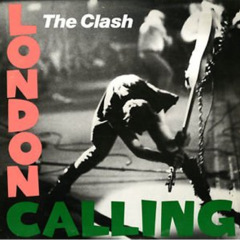
"London Calling" is a single from a 1979 album of the same name by the British punk rock band The Clash. The London Calling album, which consisted of two LPs, hit the U.S, charts in January 1980, where it topped out at #27 on Billboard's Top 200 Albums chart in the U.S. — It would eventually reach platinum status.
The album's title track, written by Mick Jones and John Strummer, features The Clash's post-punk sound, electric guitar and vocals, and was influenced by the nuclear reactor accident at Three Mile Island in Pennsylvania in March 1979. It also delves into the tumultuous times going on in the UK involving unemployment, racial conflict, and drug usage. The title alludes to the BBC World Service's station identification — “This is London calling ..." — which was used during World War II, often in broadcasts to occupied countries.
The Clash was formed in London in 1976, and after some personnel changes, officially disbanded in 1986. The band released six studio albums, two live albums, eight compilation albums, and 31 singles, and was inducted into the Rock and Roll Hall of Fame in 2003.