The numbers out of Eddy and Lea counties in southeastern New Mexico are nothing short of staggering. Crude oil production at 2.3 MMb/d, or one-sixth of total U.S. output. Natural gas production north of 9 Bcf/d and rising fast. More than 90 active rigs — again, one-sixth of the U.S. total. Many top E&Ps are stoked about the Northern Delaware Basin because of its stacked benches of high-quality, crude-saturated shale and carbonate formations. But much of the associated gas emerging from wells in Lea County is “off-spec” — tainted by levels of hydrogen sulfide (H2S) and carbon dioxide (CO2) that need to be dealt with — and producers and midstreamers have been scrambling to develop the sour-gas-related infrastructure required to support production growth. In today’s RBN blog, we begin a detailed look at the Northern Delaware’s existing and planned infrastructure for handling sour gas, including special gas gathering systems, amine treatment facilities, acid gas injection (AGI) wells, sweet gas pipelines and processing plants.

The NATGAS Appalachia weekly report provides the data and insights to monitor the northeast natural gas market’s twists and turns and identify the risks and opportunities along the way, including tracking supply-demand trends, outbound capacity and their impact on takeaway pipeline utilization, and regional prices.
It wouldn’t be an exaggeration to say that New Mexico’s Eddy and Lea counties are now the epicenter of U.S. hydrocarbon production. As the Energy Information Administration (EIA) recently pointed out, the side-by-side counties (total population ~140,000) accounted for an astounding 52% of total U.S. crude oil production growth from 2020 to 2024 — a nearly 1 MMb/d increase in only four years (mustard-brown layer and bar segments in Figure 1 below). Lea County alone produced an average of 1.2 MMb/d of crude and 4.3 Bcf/d of gas in June, according to ShaleXP, and Eddy’s output (a little gassier) averaged about 900 Mb/d and 5 Bcf/d. Eight counties on the Texas side of the Permian — six in the Midland Basin and two in the Delaware — accounted for another 40% (or ~760 MMb/d) of the 2020-24 gain in total U.S. crude production (burgundy and red layers and bar segments).

Figure 1. Eddy and Lea Counties’ Shares of U.S. Crude Oil Production and Production Growth. Source: EIA
Not for nothing did Eddy and Lea take center stage. Instead, over the past several years a handful of Permian producers — EOG Resources, Devon Energy, Mewbourne Oil, Occidental Petroleum and Matador Resources among them — (1) came to understand just how much crude oil was trapped within the thousands of vertical feet of shale and carbonate formations in the Northern Delaware and (2) perfected the drilling-and-completion techniques to free that crude (and lots of NGLs-rich associated gas) in an increasingly systematic, efficient and economic manner. Nowadays, it’s common for newly completed horizontal wells in the two counties to produce between 60 Mbbl and 120 Mbbl of crude oil in their first 30 days of operation, and for multi-well pads to produce several hundred thousand barrels a month.
About the song
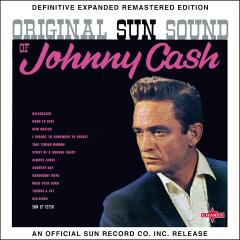
“New Mexico” was written by Johnny Johnson and Leon Lambson. It appears as the third song on side two of Johnny Cash’s 13th studio album, The Original Sun Sound of Johnny Cash. It was never released as a single. The song portrays the troubles that some cowboys encountered while driving a herd of cattle across New Mexico, only to find no paycheck at the end of their endeavor. Personnel on the record were: Johnny Cash (lead vocal, rhythm acoustic guitar), Luther Perkins (lead electric guitar), and Marshall Grant (bass).
The Original Sun Sound of Johnny Cash is a compilation album of songs Cash recorded for Sam Phillips’s Sun Records label in Memphis from 1955 to 1958. Cash had three singles for Sun Records that charted, but none of them are on this collection. Released in November 1964, the album did not make the charts. One single was released from the LP.
Johnny Cash was an American country music singer and songwriter. Because of his all-black stage apparel, he became known as “The Man in Black.” He rose to popularity in the mid-1950s, performing rockabilly and country music with his Memphis trio, The Tennessee Three. He released 68 studio albums, four soundtrack albums, 16 live albums, 105 compilation albums and 70 singles and has sold over 90 million records worldwide. Cash appeared in 17 films and documentaries and several television shows, including The Johnny Cash Show, which he hosted for 58 episodes from 1969 to 1971. He has won four ACM Awards, an American Music Award, nine CMA Awards, 20 Grammy Awards and an MTV Video Music Award, and is a member of the Country Music Hall of Fame, Gospel Music Hall of Fame, Grammy Hall of Fame, and Rock and Roll Hall of Fame. Cash has received Kennedy Center Honors and has a star on the Hollywood Walk of Fame. Johnny Cash died in Nashville in September 2003 at 71.