The long-term contract has been the cornerstone of the global LNG industry since its inception. Such contracts between upstream LNG producers and downstream utility companies have provided buyers with security of supply over a protracted period while guaranteeing producers sufficient income to justify the investment in export facilities and shipping fleets. But times are changing, with significant LNG volumes under long-term contracts scheduled to expire by 2031. In today’s RBN blog, we look at the potential implications for LNG buyers and producers around the world, the options available to them, and how their choices may impact LNG commercial models.

The long-term LNG contract, typically running for 20-25 years, has allowed producers, over time, to expand production — all LNG plants have spare capacity — with the result that a short-term market has developed, generally defined as contracts of four years or less. In 2023, short-term volumes of LNG — which includes cargoes that were transacted on a spot basis — accounted for 35% of global LNG imports, or 141 million metric tons (MT), compared to only 19%, or 41.6 million MT, in 2010. The increase in short-term trade is a reflection of the increasing commoditization of LNG. Although the long-term contract remains, for now, the major medium for contracting LNG supply, accounting for 260 million MT (34.4 Bcf/d) of 2023 imports, more than 100 million metric tons per annum (MMtpa; 13.2 Bcf/d) of global long-term contracts are due to expire by 2031, as shown in Figure 1 below.
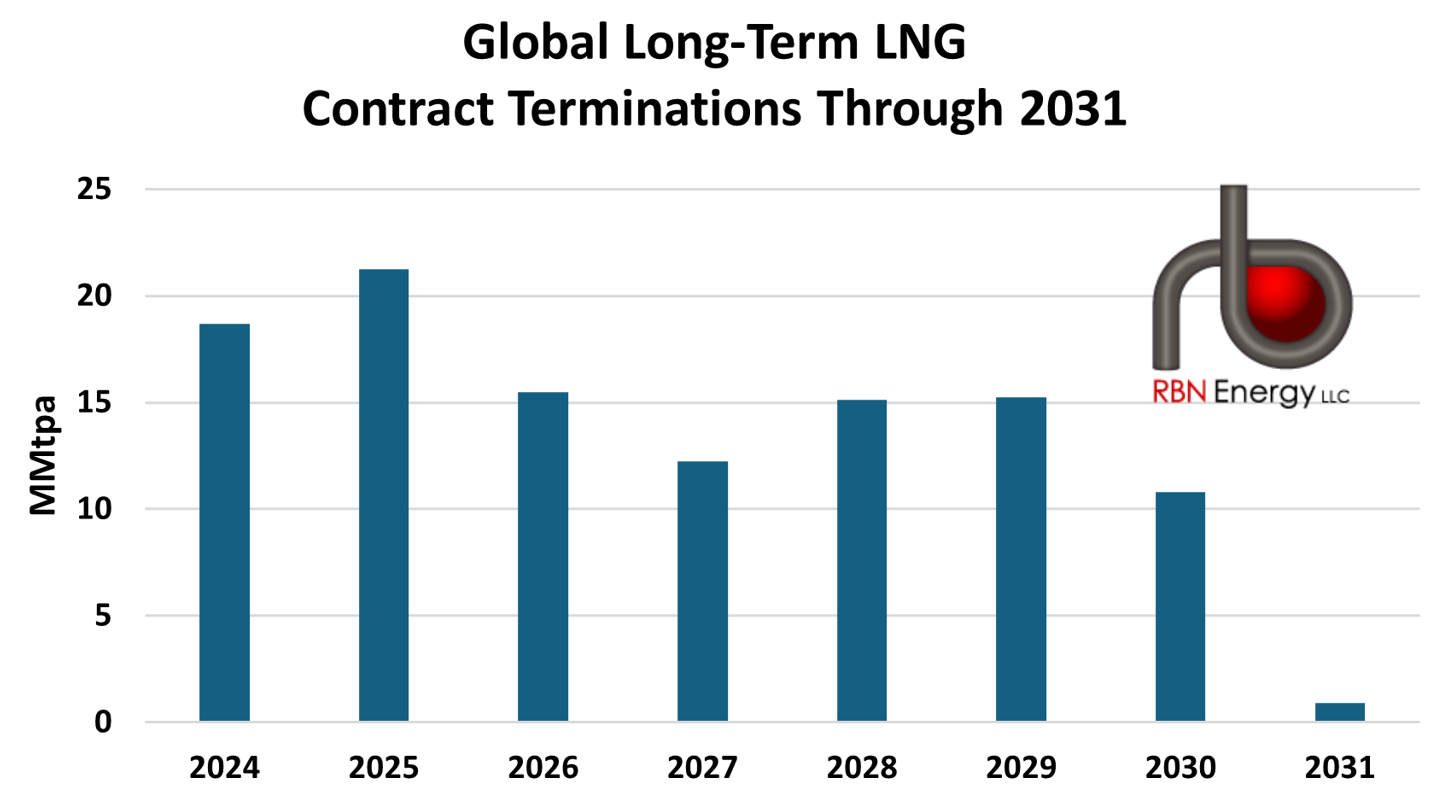
Figure 1. Long-Term LNG Contract Terminations Through 2031. Source: GIIGNL
We should emphasize that the impact of this trend, should it continue, would affect U.S. LNG contracts at a later date. The first U.S. LNG export facility, Cheniere’s Sabine Pass in Louisiana, shipped its first cargo in 2016, so any long-term contracts for that site would likely go until at least 2036. Meanwhile, Calcasieu Pass has 20-year contracts that haven’t even started yet. Likewise, most of the new U.S. projects being built offer 20-year contracts that won’t even begin until the end of this decade. (To track the progress of U.S. LNG export projects under development, see our weekly LNG Voyager report.) It’s also important to note that the need for project financing — and the long-term commitments that provide it — is not needed for terminals that have already been built and the original 20-year-old deals underpinning them have expired, which makes shorter arrangements more viable. In addition, some of the long-term commitments signed recently for projects under development also provide volumes today — bridging cargoes intended to meet a buyer’s potential supply gap.
About the song
“Breaking Up Is Hard To Do” was written by Neil Sedaka and Howard Greenfield and was released as a single in June 1962 where it went to #1 on the Billboard Hot 100 Singles chart. It is considered Sedaka’s signature song and has appeared on many of his greatest hits collections. He has released two different versions of the song, one recorded in 1962 and the other in 1975, where it also appeared on his Overnight Success studio album. In addition to Sedaka’s version, Lenny Welch, and The Partridge Family had Top 40 hits with the tune. Personnel on Sedaka’s 1962 record were: Neil Sedaka (lead vocal), Al Casamenti, Art Reyerson, Charles Macy (guitar), Ernie Hayes (piano), George Duvivier (bass), Gary Chester (drums), Artie Kaplan (saxophone), George Devens, Phil Kraus (percussion), Seymour Barah, Morris Stonzek (cello), David Gulliet, Joseph Haber, Harry Kohon, David Sackson, Louis Stowell (violin), and The Cookies (Dorothy Jones, Earl-Jean McCrea, Margaret Ross Jones) (backing vocals),
The 1975 album, Overnight Success, was recorded in 1974 at Clover Recording Studios in Los Angeles and produced by Robert Appere and Neil Sedaka and released in 1975. The new version of “Breaking Up is Hard to Do” appears as the last song on side two. "Bad Blood," with uncredited backing vocals from Elton John, was released as a single from the album and went to #1 on the Billboard Hot 100 Singles chart. The album had a stellar group of A-list L.A. session players including Steve Cropper, Dean Parks (guitar), Leland Sklar (bass), Nigel Olson (drums), Mitt Holland (percussion), and David Foster (keyboards).
Neil Sedaka is an American singer, songwriter and pianist. As a Brill Building writer in New York City, he had his greatest success in the 1950s and 1960s with several hit records of his own. With a presence as a host on music television shows such as Don Kirshner’s Rock Concert and Midnight Special in the 1970s, Sedaka received a new receptive audience for his music. He had two #1 singles in 1975 with “Bad Blood” and “Laughter in the Rain.” He has released 26 studio albums, 27 compilation albums, five live albums, 10 EPs and 90 singles and has sold more than 40 million records worldwide. He is a member of the Songwriters Hall of Fame and has a star on the Hollywood Walk of Fame. Now 85 years old, Sedaka still occasionally makes a live appearance.