The natural-gas market disruptions hitting the Texas-Louisiana coast so far in 2020 — a pandemic, the collapse of the LNG export market, a rare hiccup in Permian gas production, and multiple hurricanes —threw a big wrench into market expectations. Everything had been moving along pretty smoothly since mid-2016, when the first of a series of new liquefaction trains came online at Sabine Pass LNG. As new LNG export capacity started up at Sabine Pass, Corpus Christi, Cameron, and Freeport, so did relatively steady, predictable growth in feedgas demand. Then came this crazy, unforgettable year. Still more liquefaction capacity started up, but LNG export volumes plummeted, mostly due to very weak export economics. Recently, LNG exports have been picking up and, whenever hurricanes stop pounding the Gulf Coast, the U.S. will likely finally experience the full impact of all 9.15 Bcf/d of export capacity operating at full strength, requiring nearly 10 Bcf/d of feedgas across the U.S, almost 9 Bcf/d of which is located in Texas and Louisiana. Gas flow patterns across Louisiana’s dense network of pipelines already are shifting in response to the incremental demand and are signaling increased supply competition along the Gulf Coast this winter. Today, we continue our series discussing the changing flow patterns along the U.S. Gulf Coast, this time providing an overview of the main drivers of those shifts to date, including LNG feedgas demand and Northeast inflows.
As we said in Part 1, the rise of U.S. LNG exports in recent years has made the Louisiana and Texas Gulf coasts the epicenter for natural gas demand and a prime destination for gas supply from all directions. As LNG, power, and industrial demand for gas along the Gulf Coast skyrocketed and offshore production dwindled, what used to be a prolific supply region has turned into a center for gas consumption. That flip, combined with supply and demand trends elsewhere in the U.S. — particularly the rise of Marcellus/Utica production in what was traditionally a demand market — upended interregional gas flows and, more than that, redefined how the entire U.S. gas market balances.

From when Sabine Pass LNG’s first liquefaction train came online in mid-2016 to the beginning of 2020, U.S. LNG export capacity grew from zero to 7.2 Bcf/d, and of that capacity, 6.4 Bcf/d is located along the Gulf Coast in Louisiana and Texas. During that time, the feedgas demands to run those facilities, which include not only the gas that gets liquefied but also gas that is used to power the liquefaction process, grew consistently with capacity. With all of the terminals in the U.S. operating at full capacity except for outages or plant and pipeline maintenance or weather-related disruptions, LNG feedgas peaked at 9.3 Bcf/d in January 2020. And while disruptions — COVID-related through the spring and summer and hurricane-related in the past few months — have prevented that level of demand since, additional LNG trains continued to be added this year, bringing the current total export capacity to 9.15 Bcf/d.

About the song
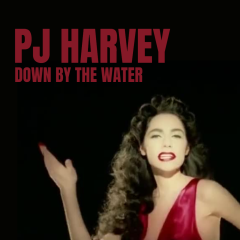
"Down by the Water" was written by PJ Harvey and appears as the seventh track on Harvey's third studio album, To Bring You My Love. Released as the first single from the album in February 1995, the song went to #2 on the Billboard Top Modern Rock Tracks chart and #48 on the Billboard Hot 100 Singles chart. Personnel on the record were: PJ Harvey (vocals, organ), John Parish (percussion), Joe Gore (guitar), Sonia Slany (violin), Jocelyn Pook (viola), Jules Singleton (viola), Sian Bell (cello), and Pete Thomas (string arrangements).
To Bring You My Love was recorded between September and October 1994 at Townhouse Studios in London. Produced by Flood, Harvey, and John Parish, it was released in February 1995. The album went to #2 on the Billboard Top Modern Rock chart and #40 on the Billboard Top 200 Albums charts. Heavily influenced by American blues music, it remains one of Harvey's best-selling albums. Three singles were released from the LP.
PJ (Polly Jean) Harvey is an English musician, singer, songwriter, sculptor, and poet. She has released nine studio albums, one soundtrack album, one EP, three compilation albums, and 23 singles. Harvey has won one Ivor Novello Award and was awarded a Member of the Order of the British Empire (MBE) for services to music in 2013. She has sold over 1.5 million albums in the U.S. Harvey continues to record and tour.