More propane production. More exports. More inventories. The U.S. propane market, already oversupplied, is becoming even more so, putting additional downward pressure on prices. At the same time, surging demand from LNG exports and gas-fired power generation is pushing natural gas prices higher. In other words, a Btu of propane is getting cheaper just as a Btu of natural gas is getting more expensive. And the lopsidedness doesn’t stop there: Electricity prices are climbing too, in part due to higher natural gas fuel costs, further tilting the scales in propane’s favor. The big question is whether these shifting fuel-price relationships will move the needle on “retail” propane demand. In today’s RBN blog, we’ll dig into what’s driving the price shifts, how the markets connect, and how much relative pricing matters when it comes to domestic propane consumption.
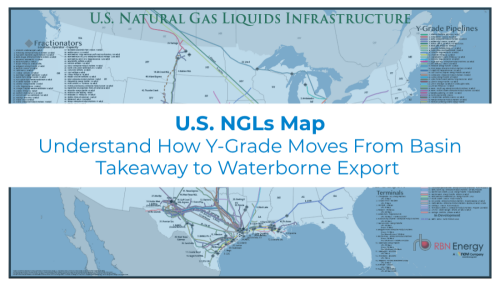
Visualize the infrastructure behind U.S. NGL movement.
The U.S. NGLs Map provides a comprehensive view of the transport, processing, and export networks moving NGLs across the U.S.
Before we dive in, we should note that on December 4, RBN will present a one-day Propane Master Class that will examine how propane fundamentals shape markets. Designed for commercial and analytical professionals, the program combines real-world data, expert insight, and hands-on modeling exercises to show how production, infrastructure, demand, and pricing come together to shape propane economics across North America and beyond. For more information, click here.
As we detailed in Where You Gonna Go, the U.S. propane market has been oversupplied for years — and the propane surplus keeps growing right along with all the other NGLs. Most of that increase is tied to Permian crude oil production. It has been relatively flat for months, but that has not slowed propane. That’s because Permian production is getting gassier, meaning a higher gas-to-oil ratio, and the gas has been getting richer, producing more NGLs — and thus more propane — per Mcf (thousand cubic feet of gas).
U.S. propane production growth has been astronomical. As shown in the left graph in Figure 1 below, since 2017, propane from gas processing (blue layer) is up an incredible 8% CAGR (compound average growth rate) or up about 1 MMb/d over the eight-year period. During the same timeframe, refinery production of propane (green layer) is down slightly, so the increase is all coming from NGLs extracted from natural gas.

About the song
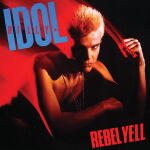
“Rebel Yell” was written by Billy Idol and Steve Stevens and appears as the first song on side one of Billy Idol’s second studio album of the same name. The song title came to Idol after he was at a party for The Rolling Stones, and Keith Richards and Ronnie Wood were passing a bottle back and forth of the Kentucky bourbon whiskey, Rebel Yell. A video for the song, directed by Jeff Stein, was shot in front of a live audience. The front rows of the crowd are yelling the chorus refrain of ”More! More! More!” along with the band. The video received massive airplay on MTV. The single was released in October 1983 and went to #9 on the Billboard Mainstream Rock Singles chart and #46 on the Billboard Hot 100 Singles chart. Personnel on the record were: Billy Idol (vocals, rhythm guitar), Steve Stevens (lead guitar, keyboards), Phil Feit (bass), Judi Dozier (keyboards), Gregg Gerson (drums), and Keith Forsey (drum programming).
The album Rebel Yell was recorded in 1983 at Electric Lady, RPM, and Media Sound in New York City, with Keith Forsey producing. Released in November 1983, it went to #6 on the Billboard 200 Albums chart and has been certified 2X Platinum by the Recording Industry Association of America. Four singles were released from the LP. “Eyes Without a Face” went to #4 on the Billboard Hot 100 Singles chart, becoming Idol’s first Top 10 hit in the US.
Billy Idol (William Michael Albert Broad) is an English rock musician, singer, songwriter and actor. He began his music career in 1976 as a guitarist in the British punk band Chelsea. After a few weeks in the band, he split with guitarist Brian James and formed Generation X. They released three studio albums before breaking up in 1981. After teaming up with KISS manager Bill Aucoin in New York City, Idol re-released his last single with Generation X, “Dancing With Myself,” as a solo artist. It went to #21 on the Billboard Hot Dance Club Play Singles chart and became a hit in dance clubs. He followed that up with releasing his eponymous debut solo studio album in July 1982. Idol has released nine studio albums, two live albums, seven compilation albums, three EPs and 38 singles and has sold more than 40 million records worldwide. He has won an ASCAP Award, an MTV Video Music Award, and has a star on the Hollywood Walk of Fame. In July 2025, a bio-doc of his life, Billy Idol Should Be Dead, premiered at the Tribeca Festival in New York City. Idol still records and tours and will be appearing at select dates in Brazil in November.
"About the Song" -- written by Mickey McMahan , RBN Director of Musicology