So far in April, there was an unexpected run-up in propane prices early in the month, followed by a 21% swoon in the past 15 days of trading. The forward curve suggests smooth sailing from now through next winter season, but that seems unlikely, given recent market developments. Propane inventories, which are supposed to be building this time of year, actually fell last week, putting stocks at 16.9 MMbbl below this point in 2020, according to EIA statistics released last week. The data also showed that weekly exports spiked to the second-highest peak of all time at 1.7 MMb/d, while production declined two out of the past three weeks. And just over the horizon, there’s the potential for a big increase in Chinese propane demand as new petrochemical plant capacity comes online over the next three years. Today, we look at how these issues are likely to shape the propane market over the next few months and suggest that you consider attending our upcoming virtual conference, where we will pose these questions to industry leaders from production, midstream, exports, and retail market segments.
If you don’t follow U.S. propane prices on a regular basis, Figure 1 will catch you up with the recent twists and turns. Before the meltdown in April 2020, the Mont Belvieu propane price was averaging about 40 c/gal, then dropped to 25 c/gal during the COVID crash. But in very short order the price was back up to 50 c/gal all through last summer, before taking off like an Elon Musk rocket in January 2021. The price bounced around in the 90s c/gal range, spiking up to $1/gal during the February Deep Freeze. This month, however, propane prices have come back to earth, standing at only 78.3 c/gal as of yesterday. Will the price of propane continue to fall? Well, the ICE forward curve says no (dashed red line in Figure 1). It’s flat as a board out through February 2022, averaging 76 c/gal, more than 30% above the 2020 price level for the same months in the prior year. Just as we’ve detailed in other recent propane blogs, including Should I Stay Or Should I Go?, the #1 culprit for projections of stronger prices this year is exports, followed by the #2 factor: a kick from higher crude oil prices.

Figure 1. Mont Belvieu Propane Price and Forward Curve. Sources: IHS OPIS, ICE
Figure 2 puts the onslaught of propane exports in perspective. The left graph, from our NGL Voyager Report, shows the long-term trend, with exports increasing from only about 100 Mb/d in 2011, to 900 Mb/d in 2017, then to more than 1,200 Mb/d in 2020. Note that the market absorbing most of those barrels is Asia, blasting from zero in 2011 to 700 Mb/d last year, with Japan, China, South Korea, Indonesia, and Taiwan receiving most of the volumes. Essentially 100% of the incremental U.S. propane production has moved to export markets.
About the song
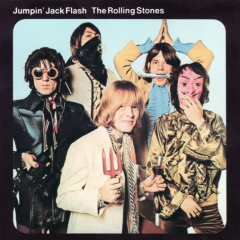
“It’s a gas gas gas” is refrain at the end of each verse of “Jumpin’ Jack Flash,” written by Mick Jagger and Keith Richards. The tune was released as a non-album single by The Rolling Stones in June 1968. Produced by Jimmy Miller, the song went to #3 on the Billboard Hot 100 Singles chart. It is the band’s most-performed live song — they have played it more than 1,100 times in concert. A live version first appeared on The Rolling Stones’ album Get Yer Ya-Yas Out in 1970 and has appeared on six live albums since. It was also performed in The Rolling Stones Rock and Roll Circus, a movie released in 1968.
The song’s title comes from Mick Jagger’s gardener, Jack Dyer, whom Jagger referred to as Jumpin’ Jack. Recording of the song began during the sessions for The Rolling Stones’ Beggars Banquet album in 1968. The unique guitar sound on the recording was accomplished by using two acoustic guitars, one tuned to open D and the other utilizing Nashville high-string tuning. Both guitars were then plugged into a Phillips cassette recorder and played back through an extension speaker. Personnel on the record were: Mick Jagger (lead, backing vocals, maracas), Keith Richards (lead guitar, acoustic guitar, bass, backing vocals), Bill Wyman (Hammond organ), Brian Jones (rhythm guitar), Charlie Watts (drums), Ian Stewart (piano), and Jimmy Miller (backing vocals).
The Rolling Stones are an English rock band formed in London in 1962. Eight members have passed through the band since its formation. The band still includes founding members Mick Jagger and Keith Richards. Ronnie Woods joined them in 1974 after the departure of guitarist Mick Taylor. Brian Jones died in 1969. Bill Wyman retired from the band in 1993. Bassist Darryl Jones has toured and recorded with the band since Wyman's departure. Charlie Watts died in 2021. The Rolling Stones have released 30 studio albums, 33 live albums, 29 compilation albums, three EPs and 121 singles. The band has won one Billboard Music Award, 11 Grammy Awards, three MTV Video Music Awards, and two World Music Awards. The Stones were inducted into the Rock and Roll Hall of Fame in 1989 and the UK Music Hall of Fame in 2004. They continue to record and tour. Their latest album, Hackney Diamonds, will be released October 20.